
The gaming & tech site for Ticino and Italian-speaking Switzerland
The gaming & tech site for Ticino and Italian-speaking Switzerland
Yoshi and the Mysterious Book

5.25
✓ What we like
- Simplified, yet impactful gameplay with Yoshi's typical moves
- Plenty of creatures, old and new acquaintances in a varied and never-tiring level design
- 🟢 Backtracking for completionists, but never tedious
- The art direction is inspired by the first chapter of the series starring Yoshi
What we don't like
- 🔴 Framerate sometimes drops in certain specific contexts
- They could have dared more with the roles of Baby Bowser and Kamek.
- 🔴 The absence of a health bar or the inability to get a game over won't appeal to everyone
Yoshi was born as a supporting character for Super Mario. Initially conceived as a horse, he was later introduced as a “mount” in the famous 2D platformer Super Mario World on Super Nintendo. The first game that saw him as the protagonist, Super Mario World 2: Yoshi's Island, dates back to 1995. This title serves as a prequel in the Super Mario universe, featuring the famous stork carrying baby versions of Mario and Luigi and an accident caused by Kamek. Over the years, there have been other 2D scrolling titles on home consoles and beyond, and Nintendo Switch 2 is no exception, with the arrival of Yoshi and the Mysterious Book, scheduled for May 21, 2026. For this installment as well, Nintendo has decided not to deviate from the Platform genre, but has partially changed the approach to how levels/stages are visible in the overworld by introducing a talking encyclopedia called Enzo. Essentially, the impression it gave us during our play sessions is that of an interactive encyclopedia where Enzo explains to Yoshi, and by extension, to the player, all the fauna of Yoshi's world as well as their behavior in levels built around them, even being able to nickname them at will. But let's proceed in order.
A treasure hunt with the talking encyclopedia
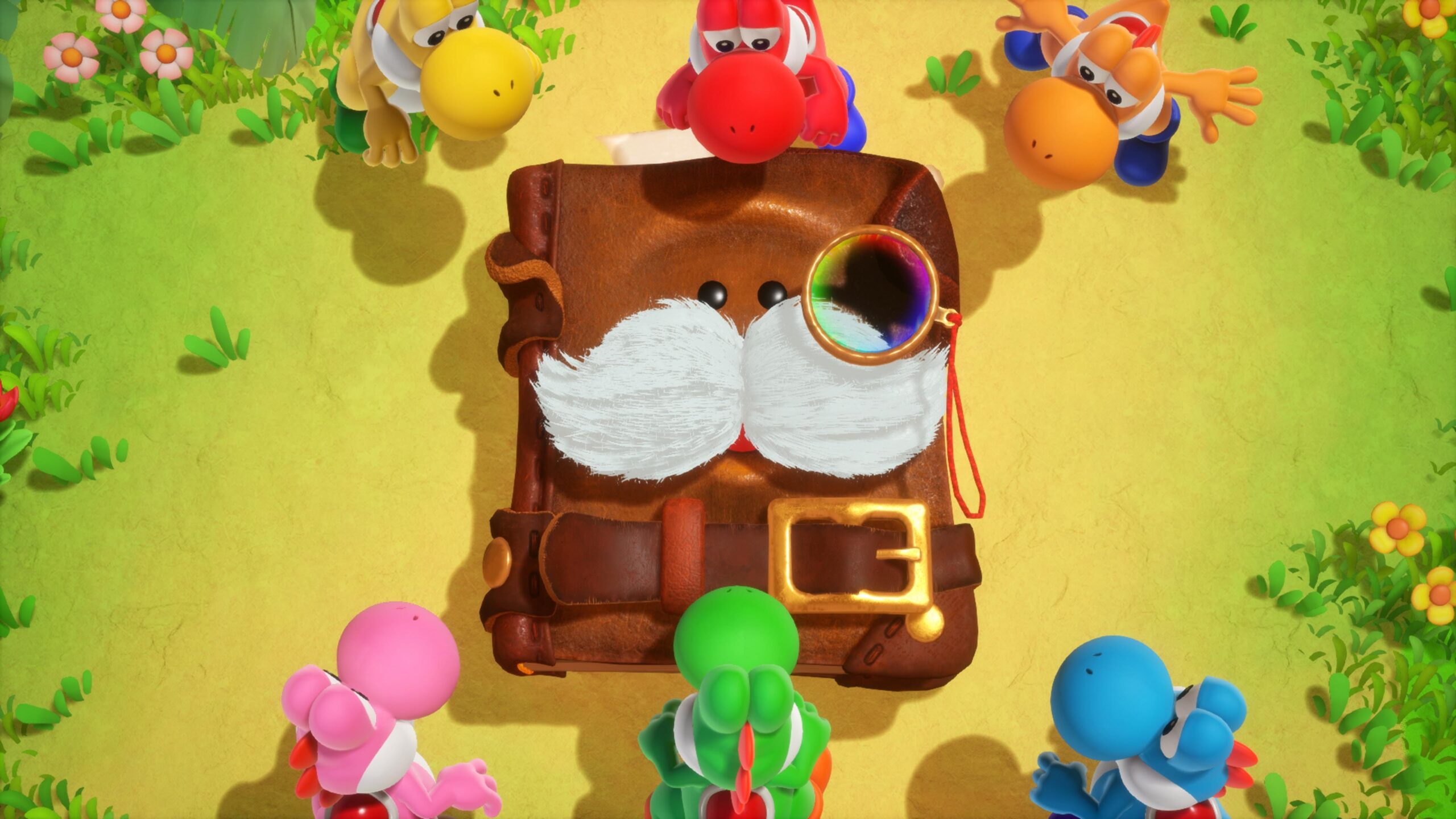
The core mechanic, as mentioned earlier, revolves around the living encyclopedia called Enzo, which serves as a sort of narrative and progression “hub” throughout the different game worlds. When Yoshi finds a creature in the book's pages, he can use its characteristics and abilities to solve the puzzles presented in the levels and, by doing so, complete them. The levels are to be explored, proceeding by analogy, like a sort of treasure hunt for situations that arise as soon as Yoshi completes a required action. These actions will appear in the book of the creature protagonist of the level, explaining it in different contexts. Furthermore, the pages dedicated to creatures can be completed with new behavioral “situations” that are unlockable even in subsequent levels. In fact, if we take the example of the flower, it appears on multiple occasions (not just in world one, to be clear), giving the player the opportunity to complete the pages of that creature even in other contexts. Vertical exploration represents a significant new element. In fact, there are levels structured more vertically (like the one dedicated to the bird-shaped umbrella), and levels structured more horizontally, as is customary for the series (as in the first introductory levels of world 1).
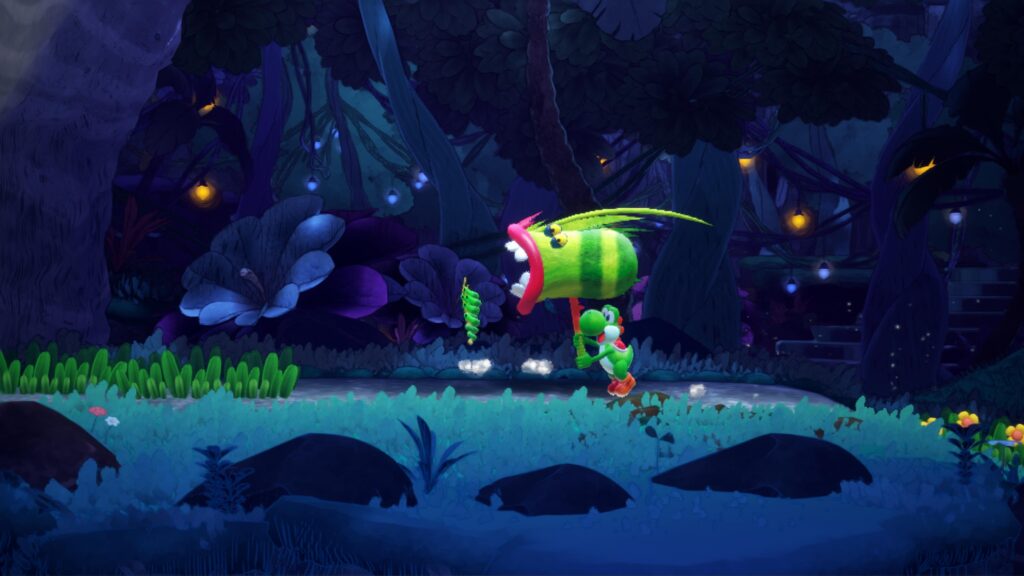
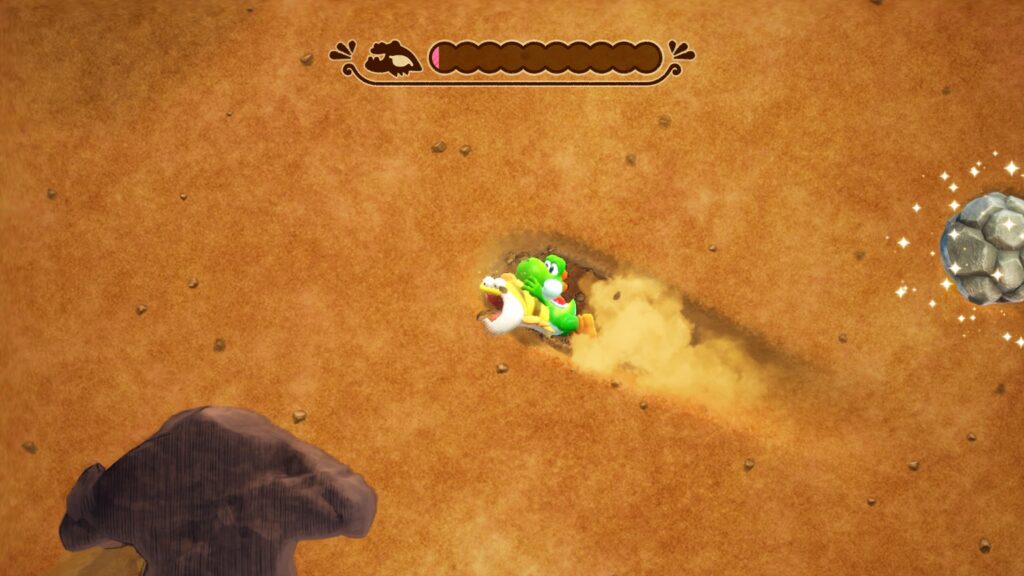
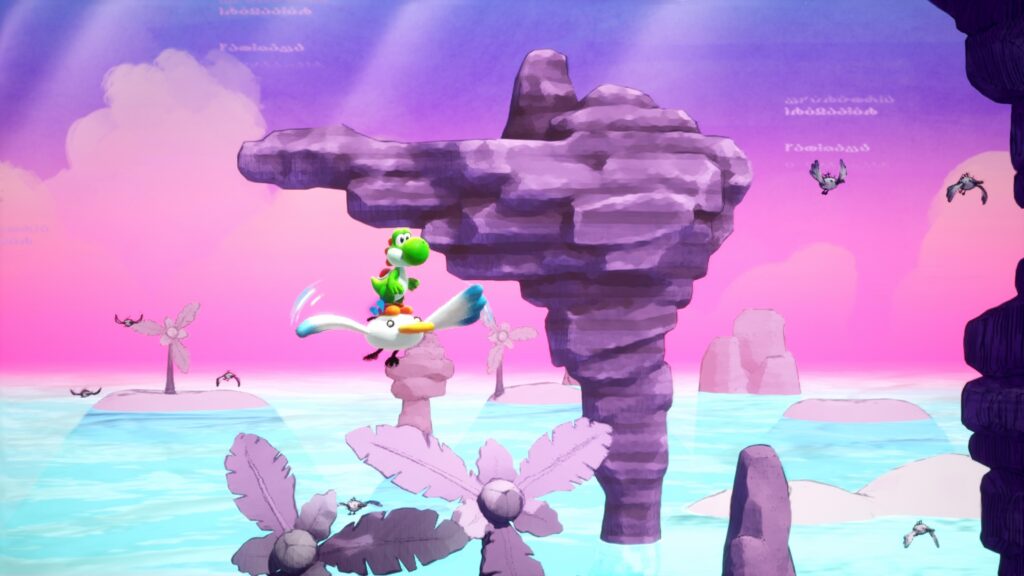
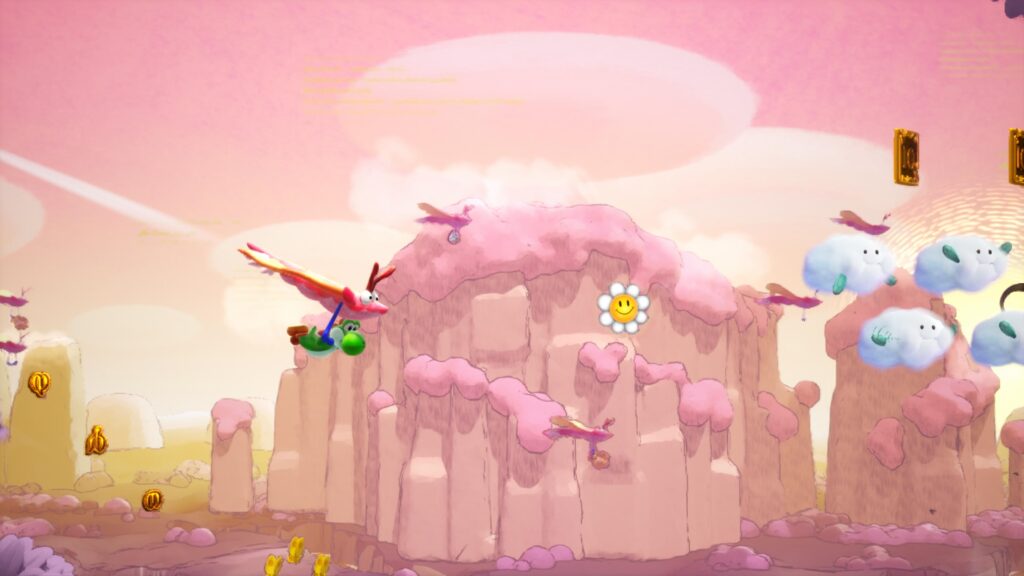
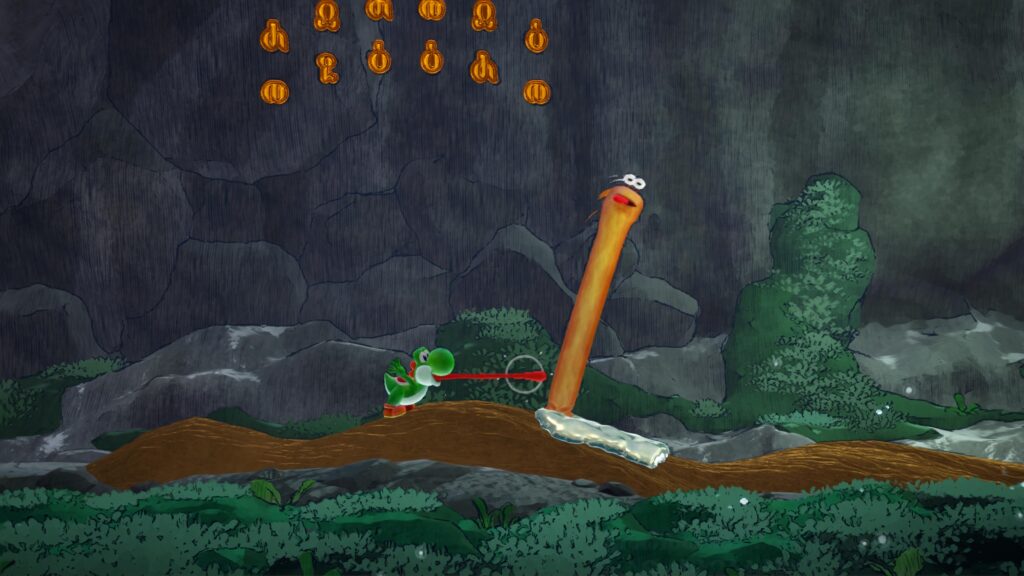
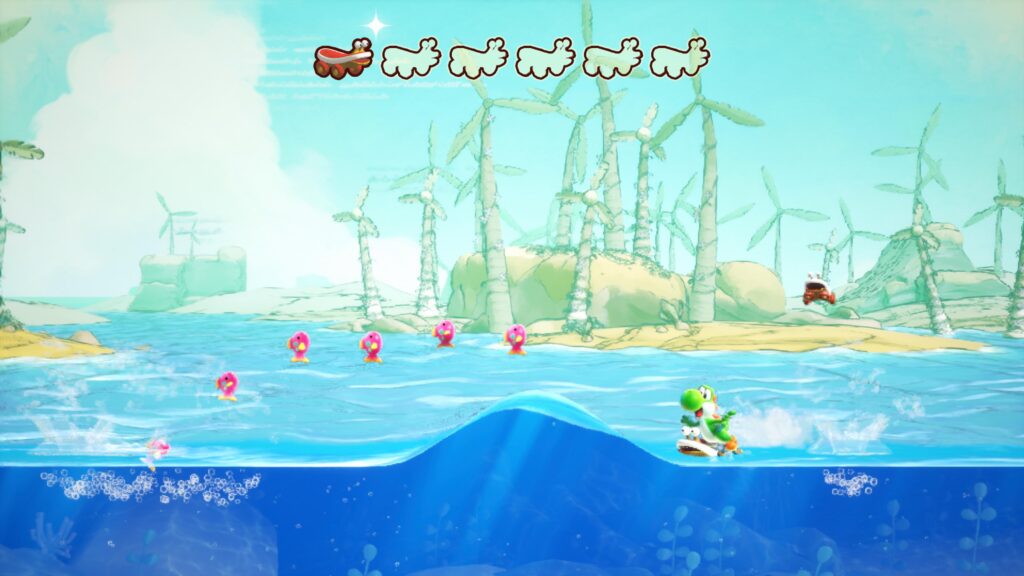
The load times between one level and another are minimized and only occur when entering a specific area, teleporting to another stage, or returning to the main hub (Enzo). The variety of maps is not only about their verticality, but also the environments themselves, all of which are heterogeneous (ranging from the coast to the forest, then to the mountains or desert). One of the unavoidable aspects of Yoshi and the Mysterious Book It lies in its exploratory structure and the management of interactive creatures. The game areas adopt a structure with their own beginning and end. Each world is conceived as a separate ecosystem, allowing for atmospheres that range from forests full of hollow trees to beaches with pirate ships. However, what makes this chapter even more atypical in terms of gameplay is the complete absence of a health bar, and therefore, the green dinosaur's inability to be knocked out, and consequently, you never get a game over. The simplicity of the gameplay, gradually offering Yoshi's historical moveset over time, such as egg throwing or stomping from above, presents a level of challenge that is not focused on difficulty against enemies, but rather on discovering all the secrets to complete Enzo's pages, offering gameplay that we dare to call based solely on studying the game environment. However, the tendency towards linearity in the levels is obvious; each stage is therefore rich in details that can be discovered to expand the understanding of them. For example, the game introduces a “menagerie” of interactive creatures that modify the behavior of certain objects and elements on the map, creating a level design full of possibilities.
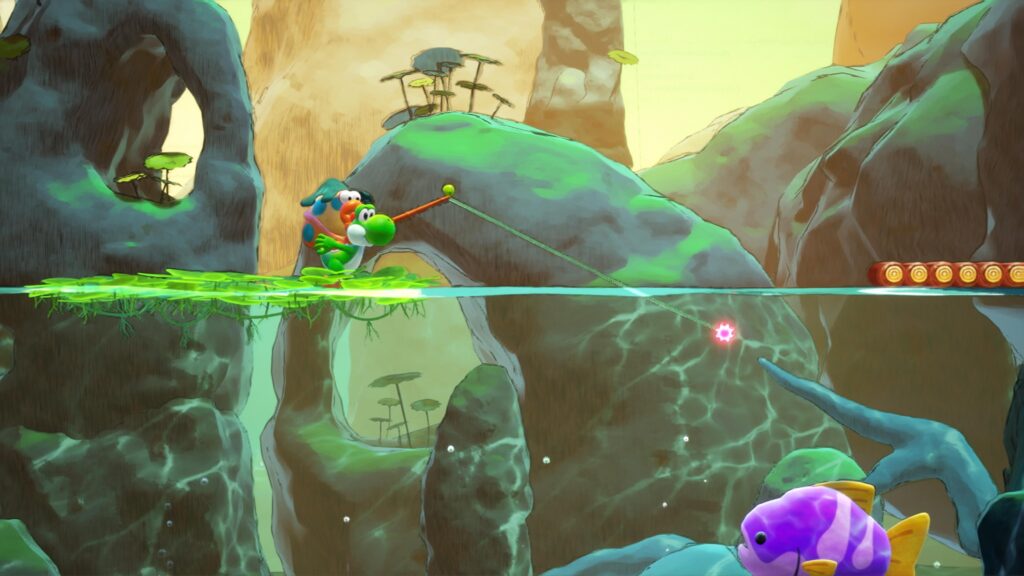
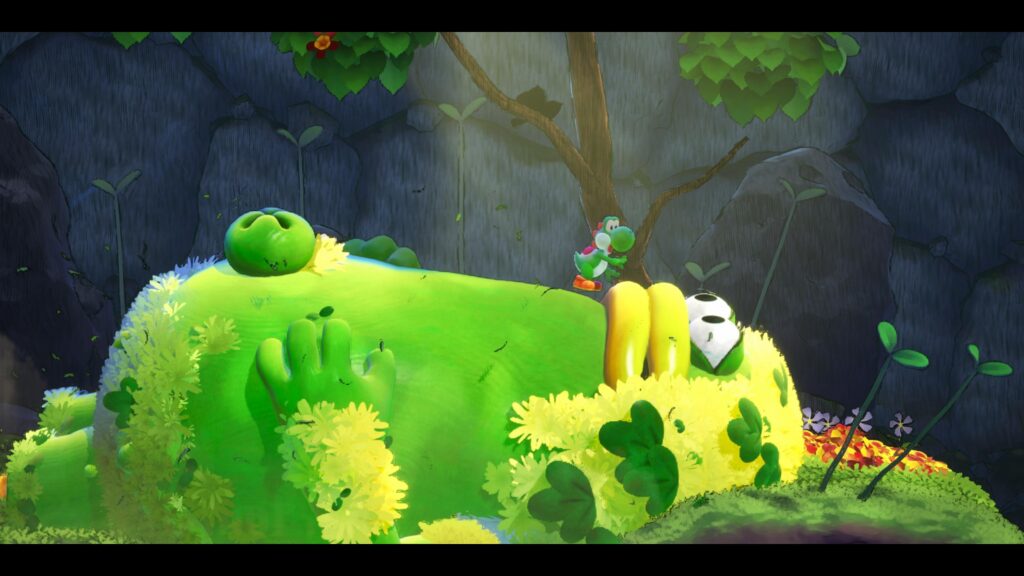
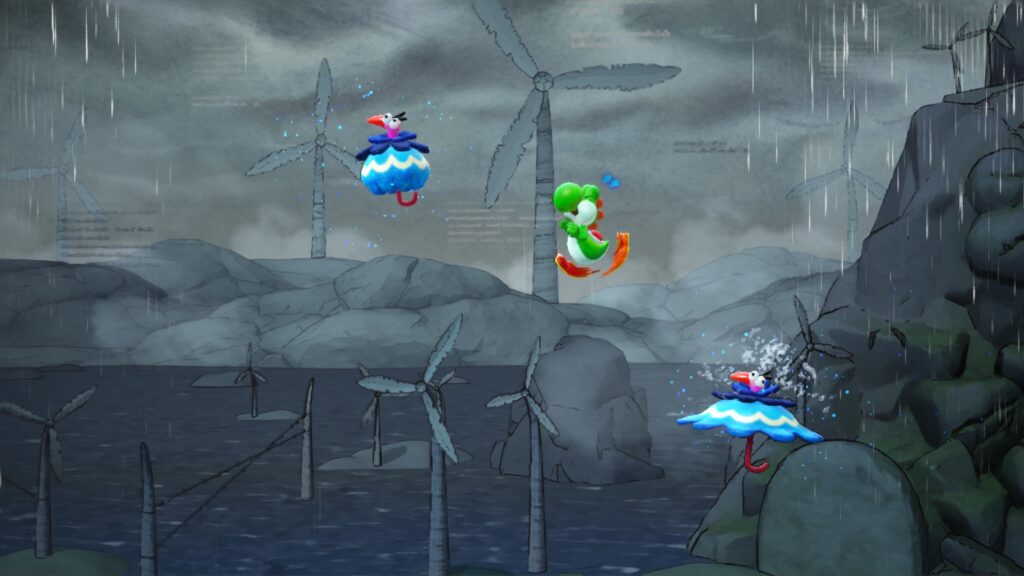
Regarding the narrative aspect, it is indeed completely absent: Kamek and Baby Bowser certainly appear in some stages, but their appearance is almost an end in itself, so the narration is carried mainly by Enzo. This title is indeed clearly aimed at a younger audience, while offering a surprising amount of content to unlock and discover, also appealing to that segment of gamers who fall into the completionist category. The puzzles, as described above, are not always obvious to find, and Nintendo's expertise in hiding them in an almost ingenious way results in striking environmental phenomena capable of altering the creatures themselves or the level design. In summary, the plot translates into a treasure hunt exploration in which Yoshi enters the pages of Enzo so that he can interact with various creatures. Each chapter features different creatures, each with unique attributes.
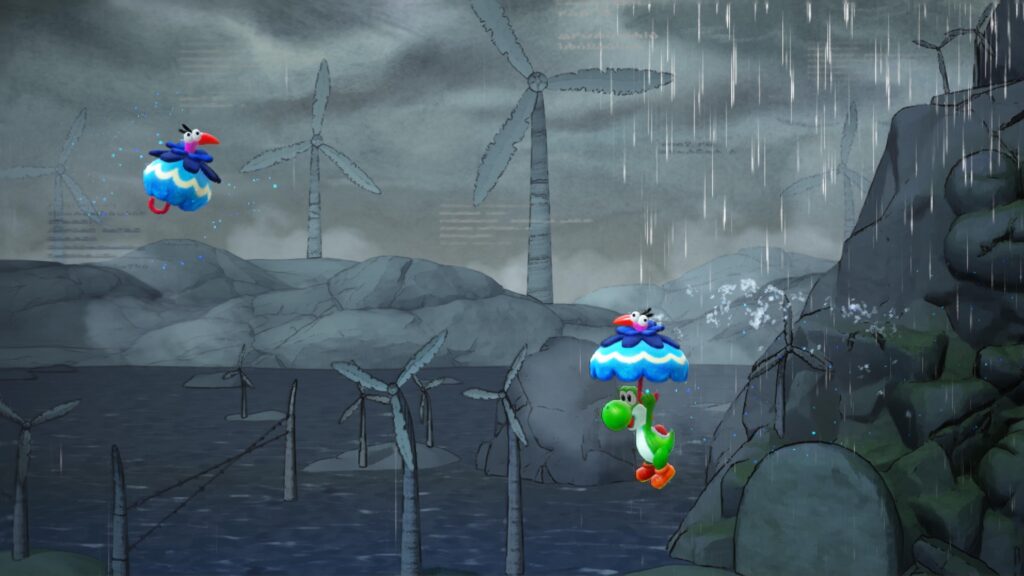
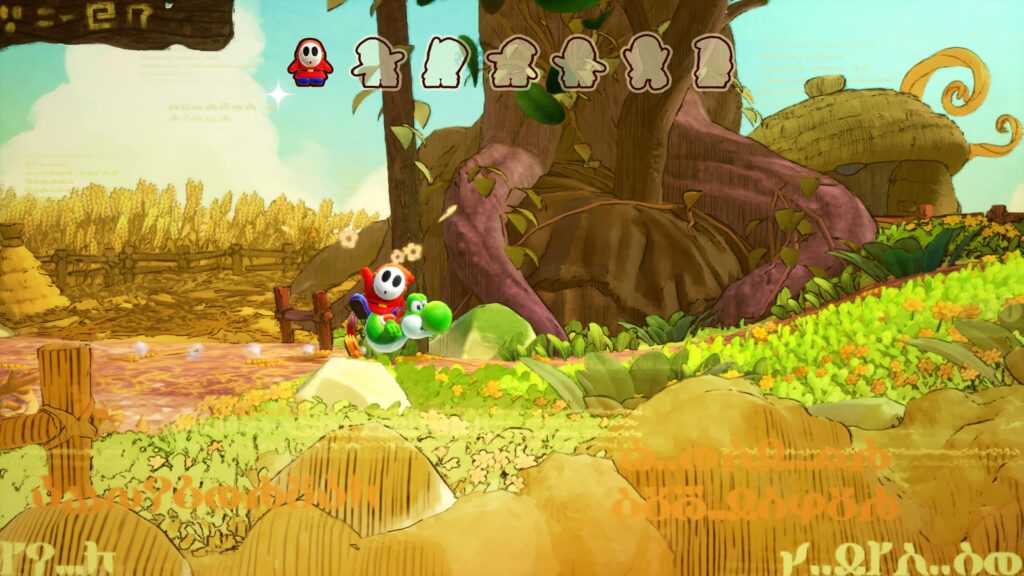
The main campaign's duration is around 30-35 hours for a complete playthrough, which we found to be well-balanced in terms of challenge. The difficulty level is calibrated to never make the player feel truly lost, an approach that promotes fluidity. Exploring the map requires patience, as it's a sort of hard mode integrated into every game level with very well-thought-out secrets.
A kind of interactive documentary dedicated to the world of Yoshi
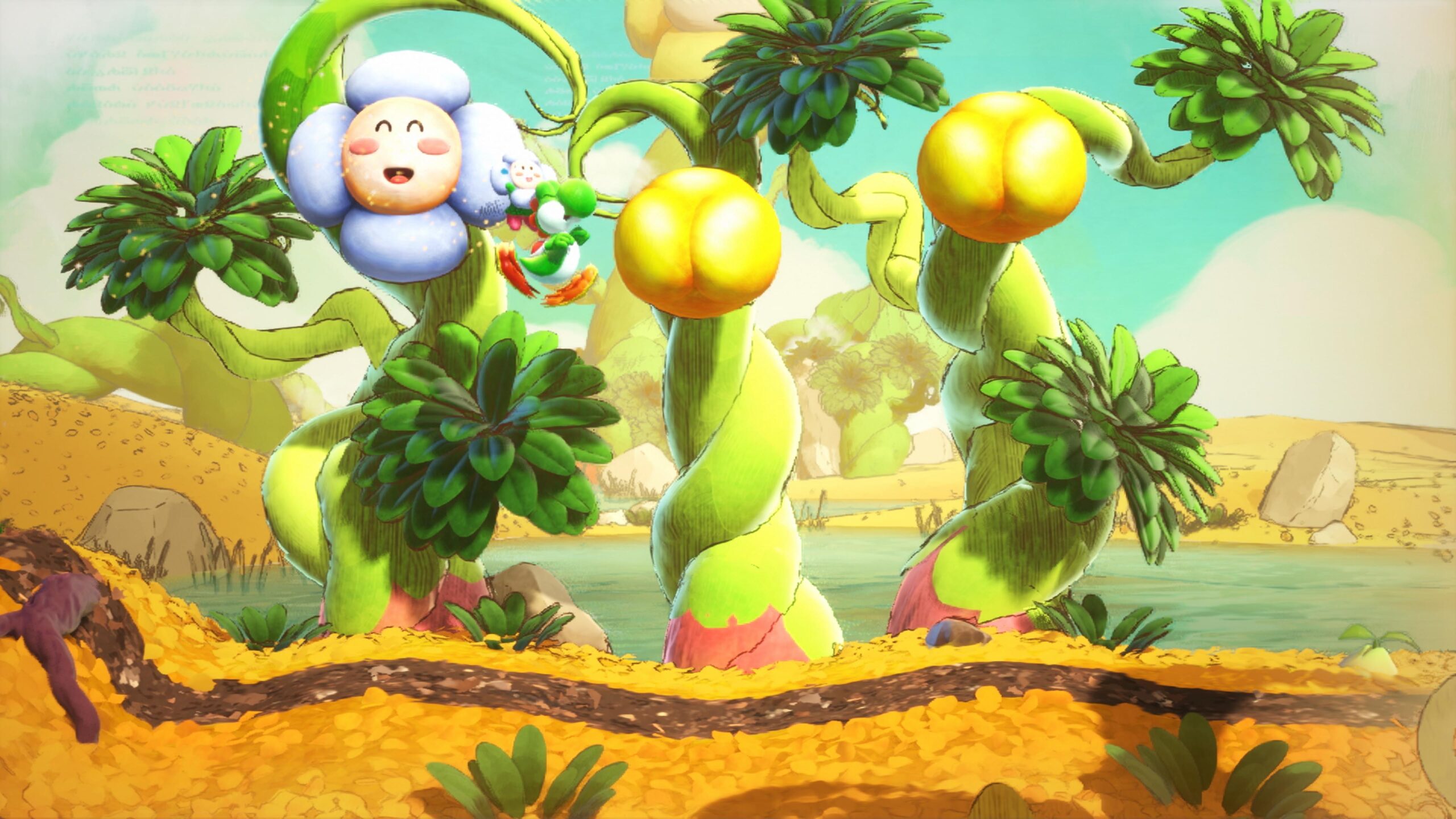
Yoshi and the Mysterious Book achieves a good level of technical performance that merits thorough evaluation. The game maintains a stable frame rate at 60 fps in standard mode, with an option that prioritizes maximum fluidity up to 120 fps, achieved, as is typical, by reducing the resolution. This technical excellence is combined with a highly impactful artistic direction that represents one of the title's main strengths.
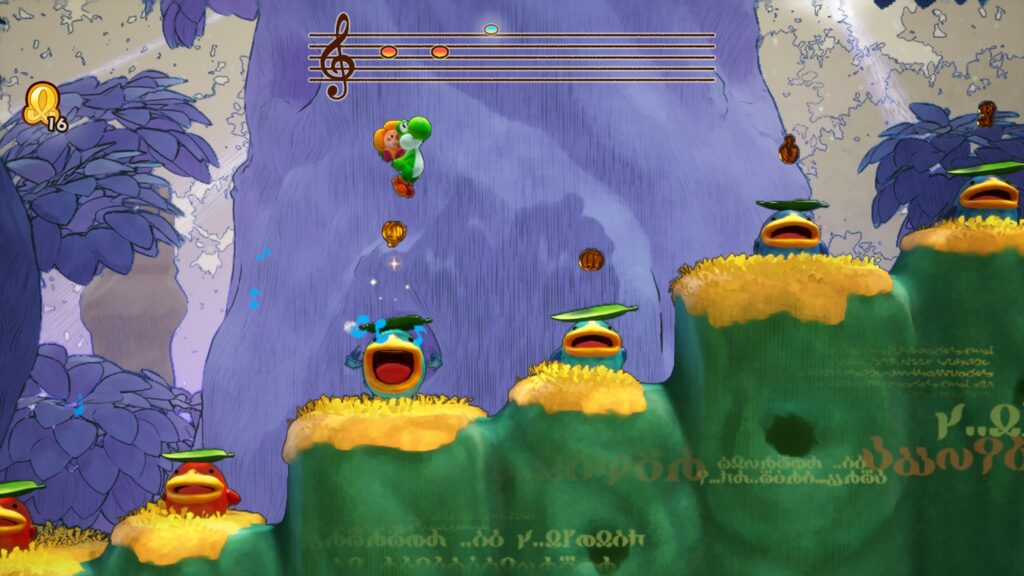
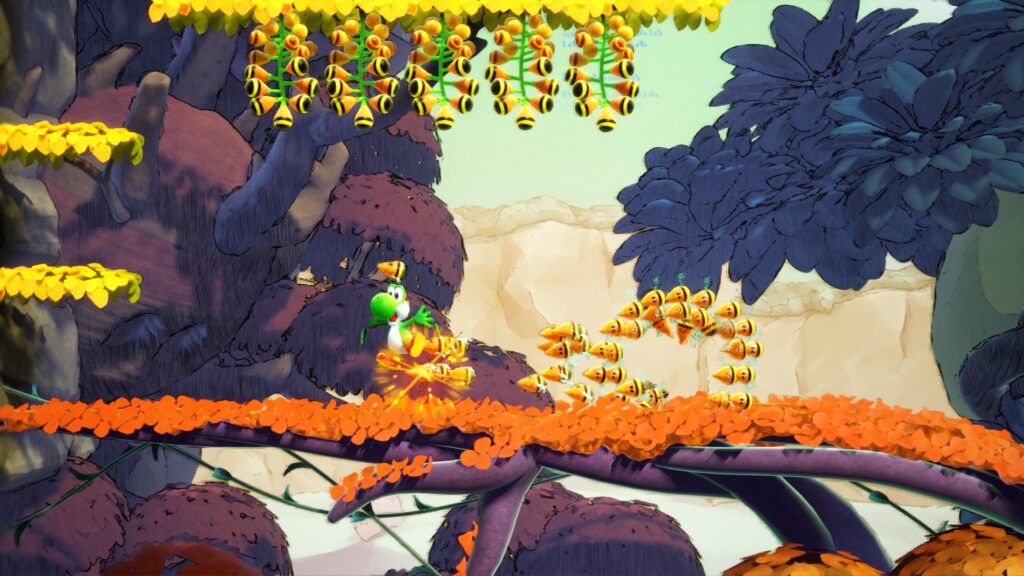
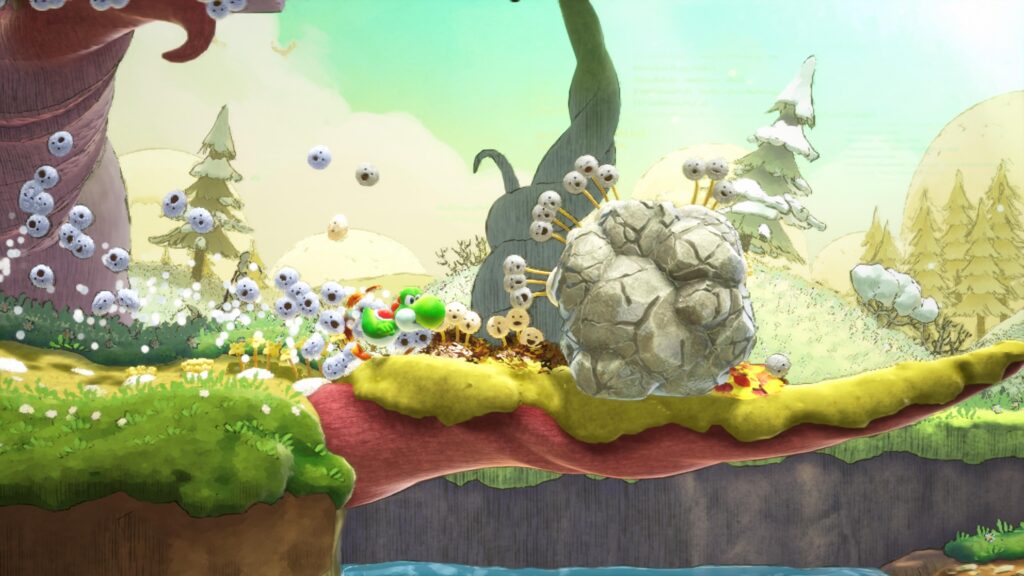
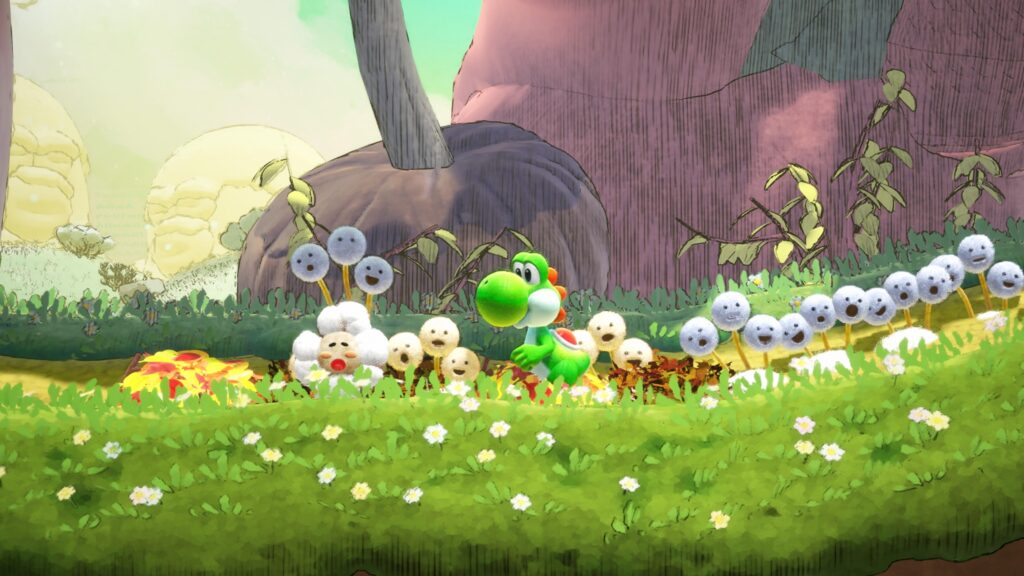
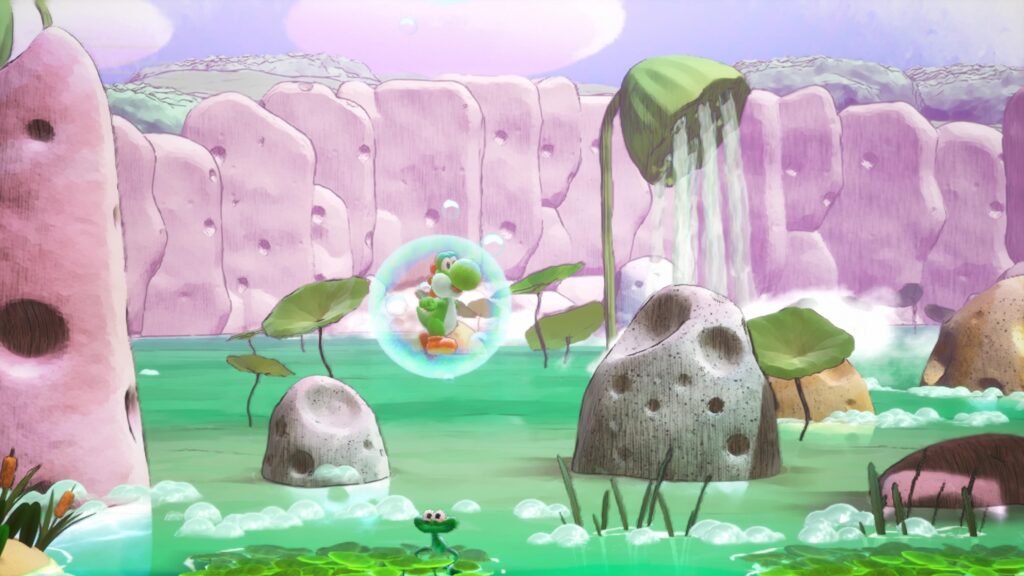
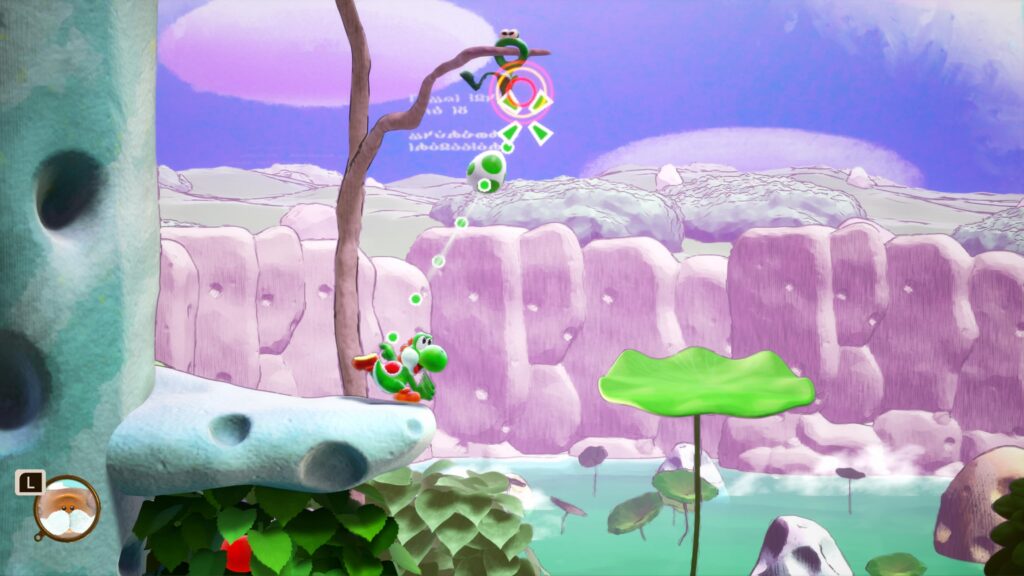
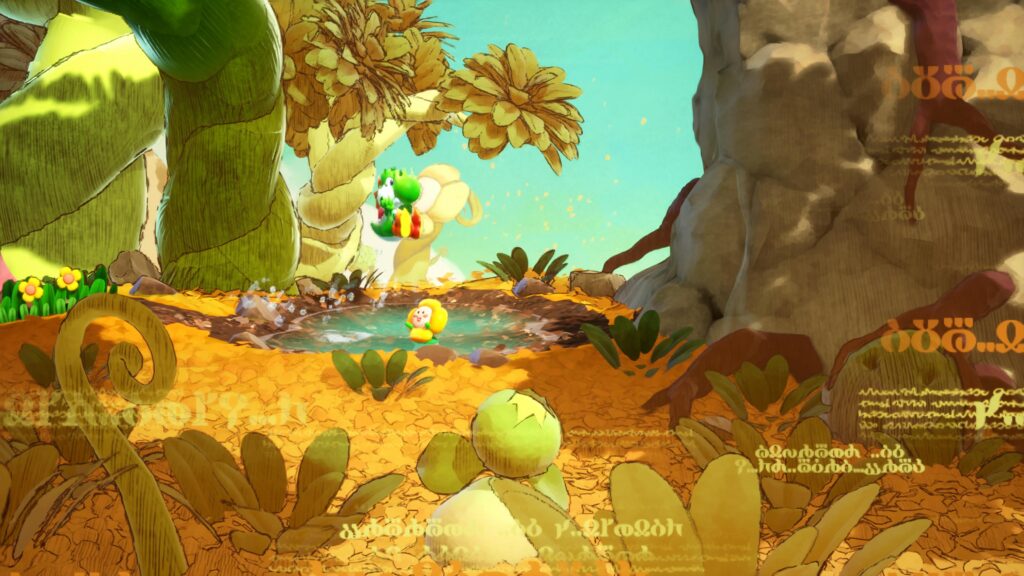
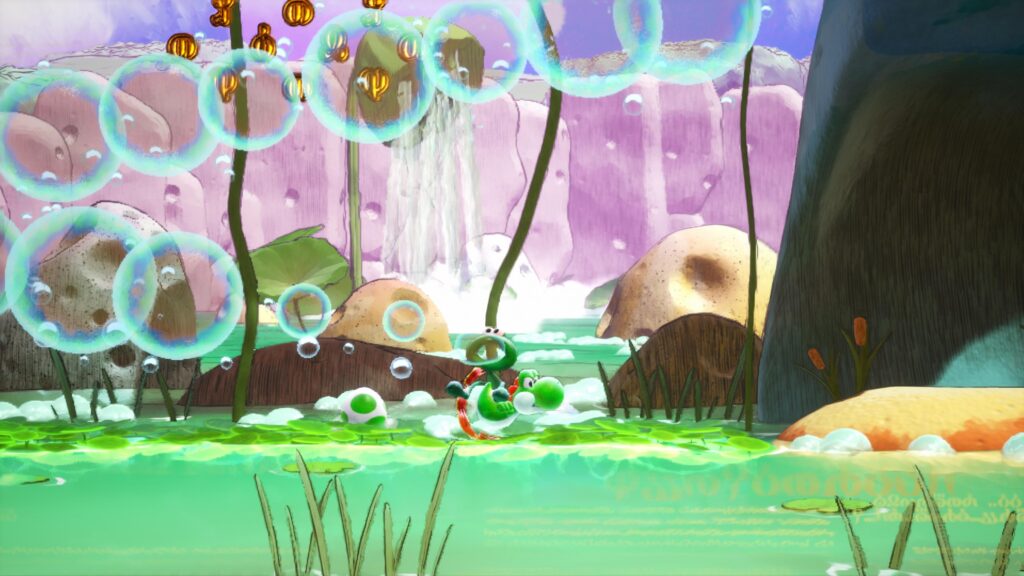
Graphically, the title embraces a picture book aesthetic that represents a return to the series' stylistic origins, evolving from the worlds of wool from Woolly World from the cardboard environments of Crafted World. The use of shaders is remarkable: environments and characters are rendered with an effect that simulates colored pencil drawings and watercolors, creating the impression of a physical page rather than a purely digital rendering. The effects, shadows, and textures are high-resolution, although a certain drop-in of elements at a reduced distance, typical of many open-world titles. Particularly appreciable is the treatment of the level edges: when reaching the edges of an area, the color gradually fades, as if approaching the edge of a real page beyond which the ink has not yet arrived. It is a subtle but effective trick that reinforces the tactile and handcrafted feel of the whole and explicitly recalls the legacy of pencil outlines Yoshi's Island. Yoshi's animation is characterized by a “frame-dropped” effect (intentional skipping of frames), which at times resembles the output of a flipbook, preserving the sense of manual, hand-drawn movement. The soundtrack elevates the experience of exploration and gameplay. The melodies blend delicate orchestral elements with lighter sounds, perfectly adapting to the playful atmosphere and reinforcing the sense of discovery in each area. It reprises melodies from the series while adding new compositions for exploration phases, skillfully using recurring themes to create continuity with previous installments.
Yoshi and the Mysterious Book it doesn't fully achieve the ambitious goal of merging the series' excellent formula with a grand central hub and a character-focused plot. However, this flaw doesn't undermine the work done for this installment: Yoshi excels when it focuses on its strengths, namely exploration and a playful atmosphere within large maps. The game itself is very reminiscent of Yoshi's Island For its artistic style, while also proposing an interesting, almost educational, constructive way to explore stages and unlock all levels. The result is a return to the origins that manages to bring together all the experience accumulated from past titles, offering a natural and innovative evolution of the formula. While it can't be called an absolute masterpiece at the level of the company's flagship titles, the balance between nostalgia and mechanical innovation makes this title a valuable addition to the Switch 2 library. It's a small gift not only for the youngest but also for those who have always appreciated games starring the green dinosaur.
