
The gaming & tech site for Ticino and Italian-speaking Switzerland
The gaming & tech site for Ticino and Italian-speaking Switzerland
Stonemachia

5
✓ What we like
- 🟢 Art direction inspired by and rich with references to Italian art
- 🟢 Fast, quick, and fun immediate hack ’n’ slash gameplay
- Good retro vibes, especially for those who love simpler, more direct experiences
- Collectibles, side quests, and rewards that reward exploration
What we don't like
- 🔴 Balancing is not always perfect between the armor
- 🔴 Camera issue in tight spaces
- 🔴 Attack animations are not always easy to read
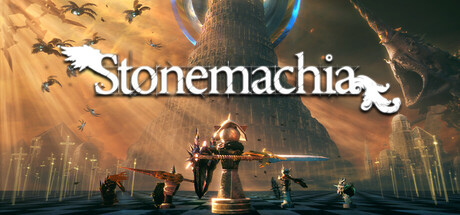
Chess comes to life, leading us into a dark, fascinating world deeply inspired by Italian art. After four years of development, Crossfall Games is preparing to launch STONEMACHIA, a dark fantasy hack ’n’ slash action-adventure born from the team's passion and influences ranging from Dark Souls to NieR to Super Mario. A project that transforms one of the most recognizable icons of strategic gaming into a Dante-esque fantasy journey, where fast-paced, intense combat, atmosphere, and a sense of adventure intertwine. We've received a review code and are ready to tell you about this peculiar adventure, amidst angelic statues, fierce battles, and the path of a simple pawn destined to become much more.
Fallen Angels
The story of STONEMACHIA follows the events of Zephyrus, a pawn fallen in battle and now driven by a deep desire for revenge against Zeraphin. His journey stems from the pain of losing the queen and falling from paradise, the emotional engine of the entire adventure. Serving as the backdrop to Zephyrus's path is a world made of stone, dark and fascinating, where fallen angels live a new existence, taking the form of statues, sculpted creatures, and seemingly immobile figures. Each of them seems to carry the desire to return to Paradise, but the endeavor is far from simple: this new life becomes a sort of condemnation, a spiritual prison where beauty, decay, and suffering coexist. What makes Zephyrus different from a mere disposable piece is a mysterious angelic armor, capable of granting him new powers and allowing him to change his appearance to face the enemies that stand in his way.
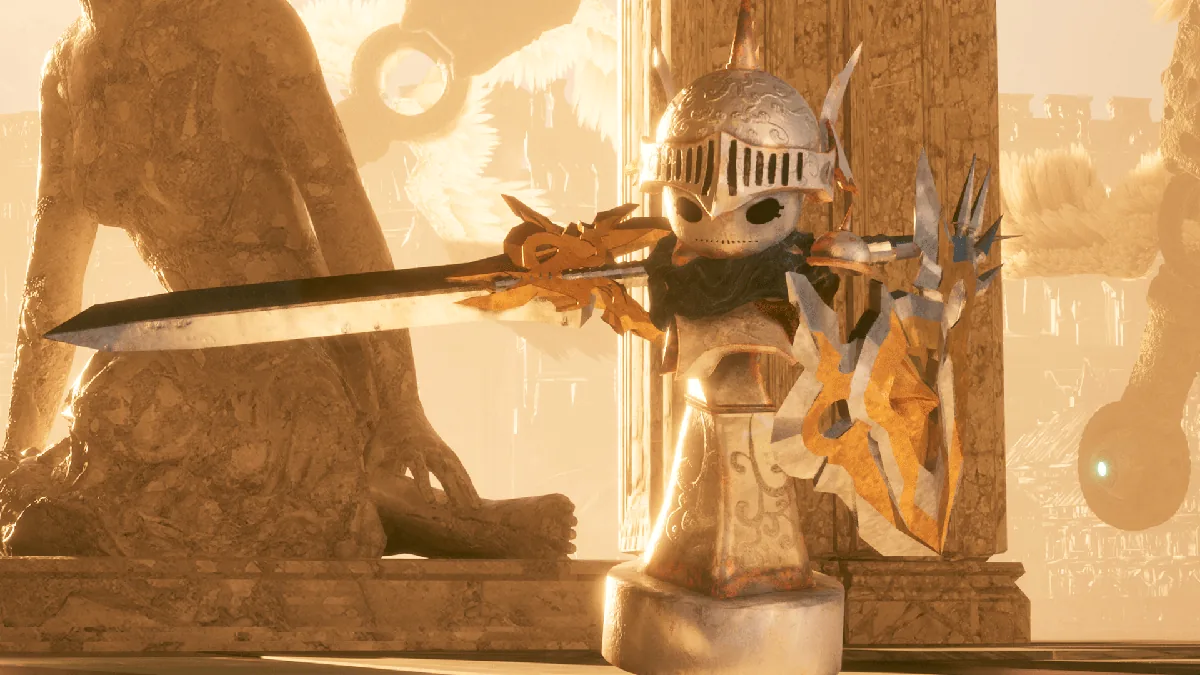
This transformation represents not only a game mechanic but also the protagonist's growth, from a pawn destined to fall on the battlefield to a warrior determined to claim his revenge. The game world accompanies this story with dark and evocative atmospheres, where the imagery of chess blends with references to Italian art, fantasy elements, and Dantesque hues. Zefiro's revenge thus becomes the starting point for a dark journey, made of battles, loss, and determination, but also of fallen souls, living statues, and creatures desperately seeking a way back to the light. Each clash seems to bring him closer to confronting Zeraphin, but also to discovering a world more tragic and melancholic than it may seem at first glance.
Chess ‘n Slash
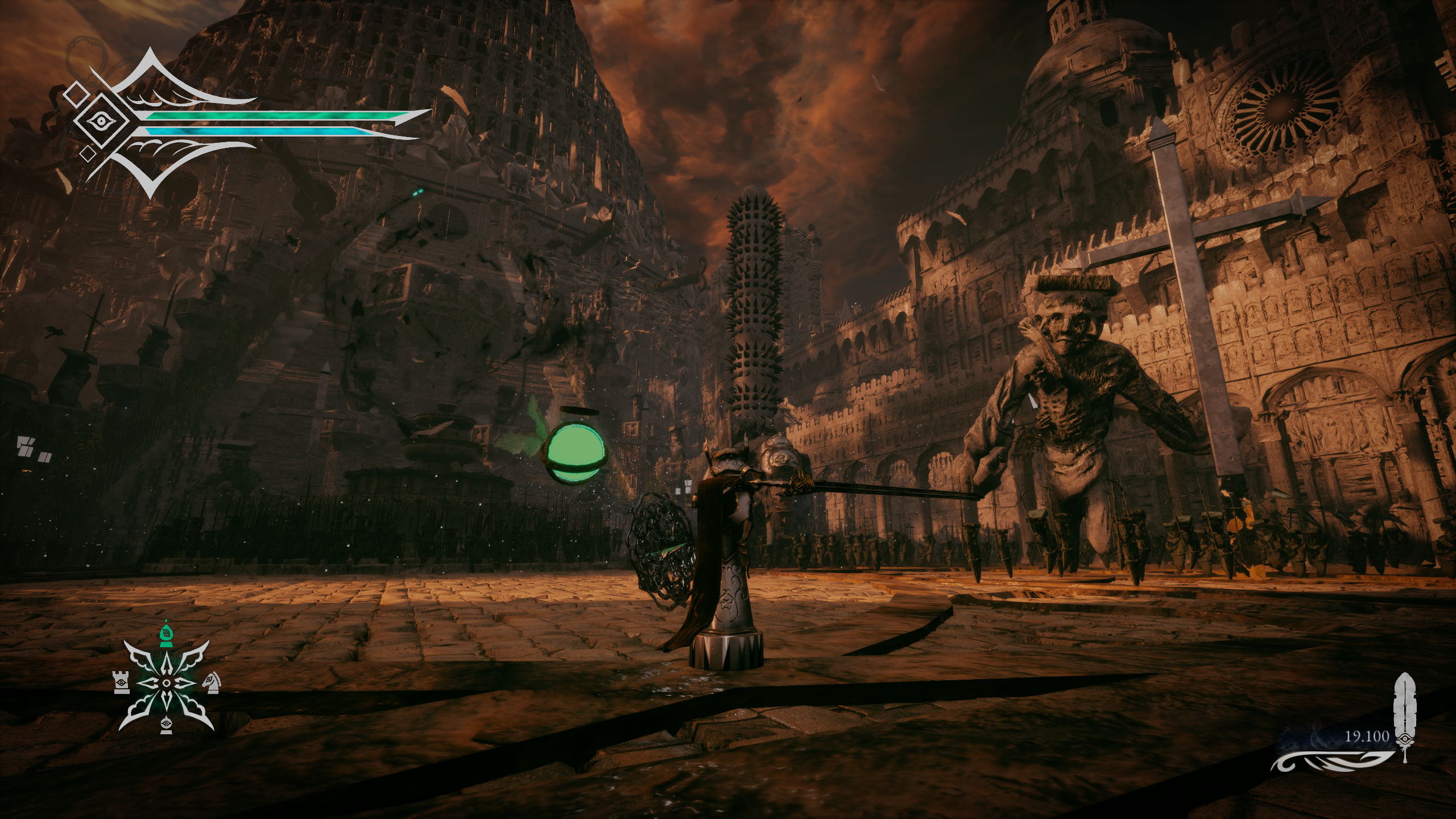
The formula behind STONEMACHIA is as simple to describe as it is intriguing in its blend of influences: take that gem of a game, *Super Mario 64* for the Nintendo 64, add a dash of *Crash Bandicoot*, fast-paced, intense combat reminiscent of NieR, set it all within a dark fantasy setting akin to the atmosphere of the first Dark Souls, and season the journey with a touch of Dante’s influence. The result, ladies and gentlemen, is STONEMACHIA. The title from Crossfall Games, however, never tries to overdo it. On the contrary, it makes its limitations an important part of its identity. The “zero budget” becomes almost a virtue: instead of chasing out-of-scale ambitions, STONEMACHIA focuses on the simplicity of its mechanics, an immediate pace, and design choices that are clearly the result of development constraints—yet precisely for this reason, consistent with the nature of the project. With the controller in hand, the experience is direct and accessible. Zefiro moves, jumps, fights, and uses his angelic armor to change form and tackle different situations. We’re not dealing with an overly complex or layered system, but with gameplay that aims to get straight to the point, alternating between exploration, platforming, and quick battles without weighing down the progression too much. The combat system is heavily parry-centric and revolves around the player’s ability to read enemy attacks and react with the right timing. Perfect parries aren’t just for defense; they become essential for recovering the healing vial, turning every encounter into a constant balancing act between risk and reward. Alongside these are perfect dodges, which open the door to quick counterattacks and keep the pace of the action high. Adding variety to the battles are the different variations of the angelic armor, linked to the pieces on a chessboard: Pawn, Bishop, Rook, and Knight. Each of these forms possesses special abilities, charged attacks, and different ways of parrying, capable of inflicting status effects on enemies or granting bonuses to Zefiro during combat.
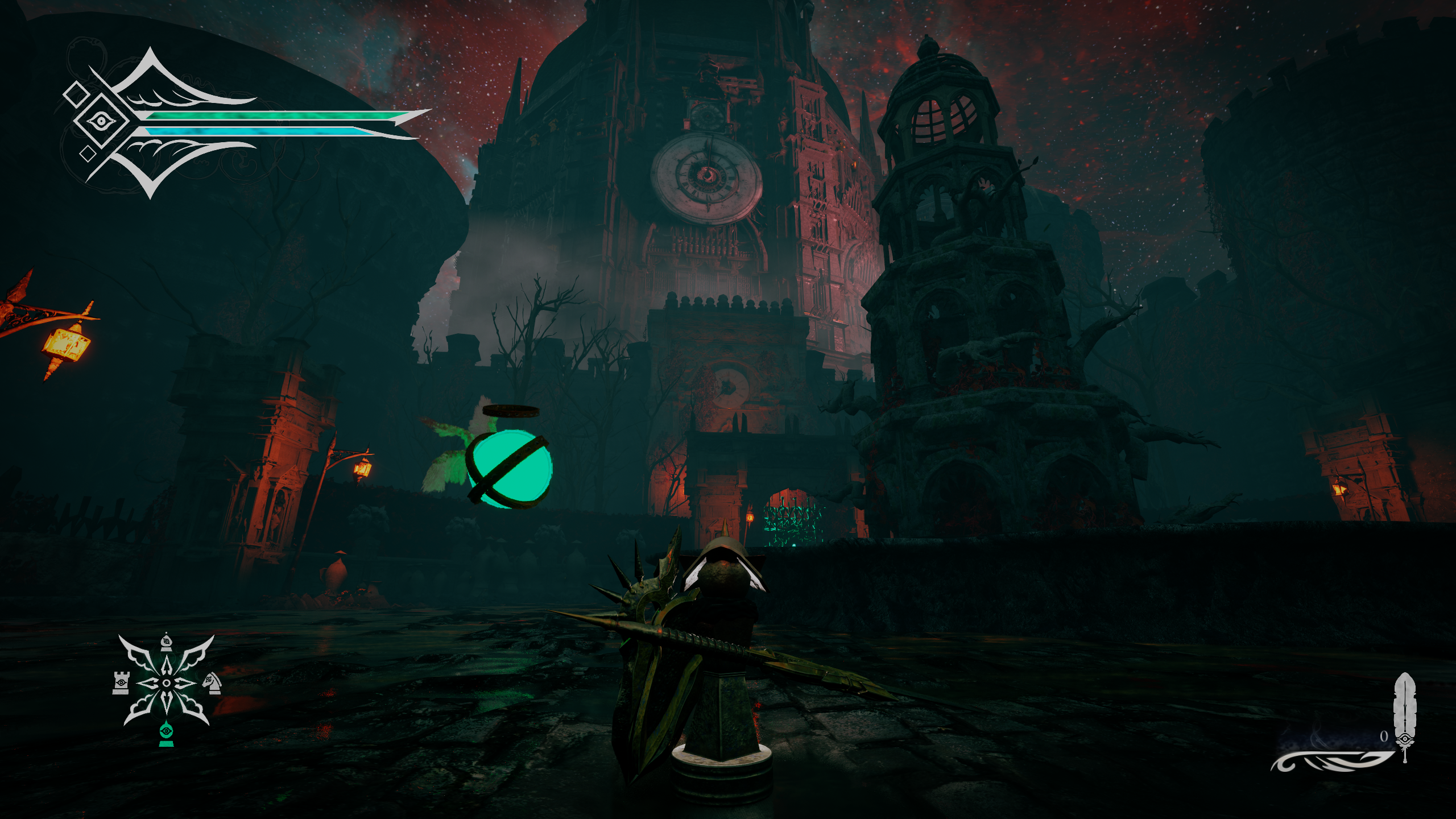
This system encourages players to experiment and adapt their approach based on the situation, while always remaining within a simple and intuitive framework. Progression also follows a clear and functional logic. Enemies drop feathers, which are used to boost fixed stats associated with each piece on the board. It is therefore not a free-form or particularly complex progression system, but rather a straightforward, easy-to-understand system consistent with the game’s overall philosophy: a few, easily understandable rules designed to support advancement without weighing down the experience. Added to this progression, however, are special abilities tied to switching between angelic armors. Using special feathers, you can enhance the various forms and unlock bonuses that activate when, after certain actions, you switch from one armor to another. It’s a very interesting mechanic, because it rewards players who don’t just stick to the same form and encourages them to chain together movements, parries, dodges, and armor changes in a more dynamic way. Some of these abilities are truly powerful and significantly alter your approach to combat, making STONEMACHIA’s hack-and-slash core even more evident. Boss fights represent the most spectacular moments of the adventure. In most cases, we face enormous creatures capable of filling the screen and demanding just the right amount of precision and aggression from the player. While they require attention, timing, and good resource management, they never become excessively challenging, staying true to the game’s accessible and straightforward nature. In this sense, STONEMACHIA seems to know its place well. Its mechanics don’t aim to reinvent the genre, but rather to build a compact, accessible, and sincere adventure, where every choice stems from an attempt to transform production limitations into a specific creative direction. And it is precisely here that the game finds part of its charm: in its ability to take familiar ideas, strip them down to the essentials, and place them within a dark fantasy world inspired by Italian art and the metaphor of chess.
Venture onto the Chessboard
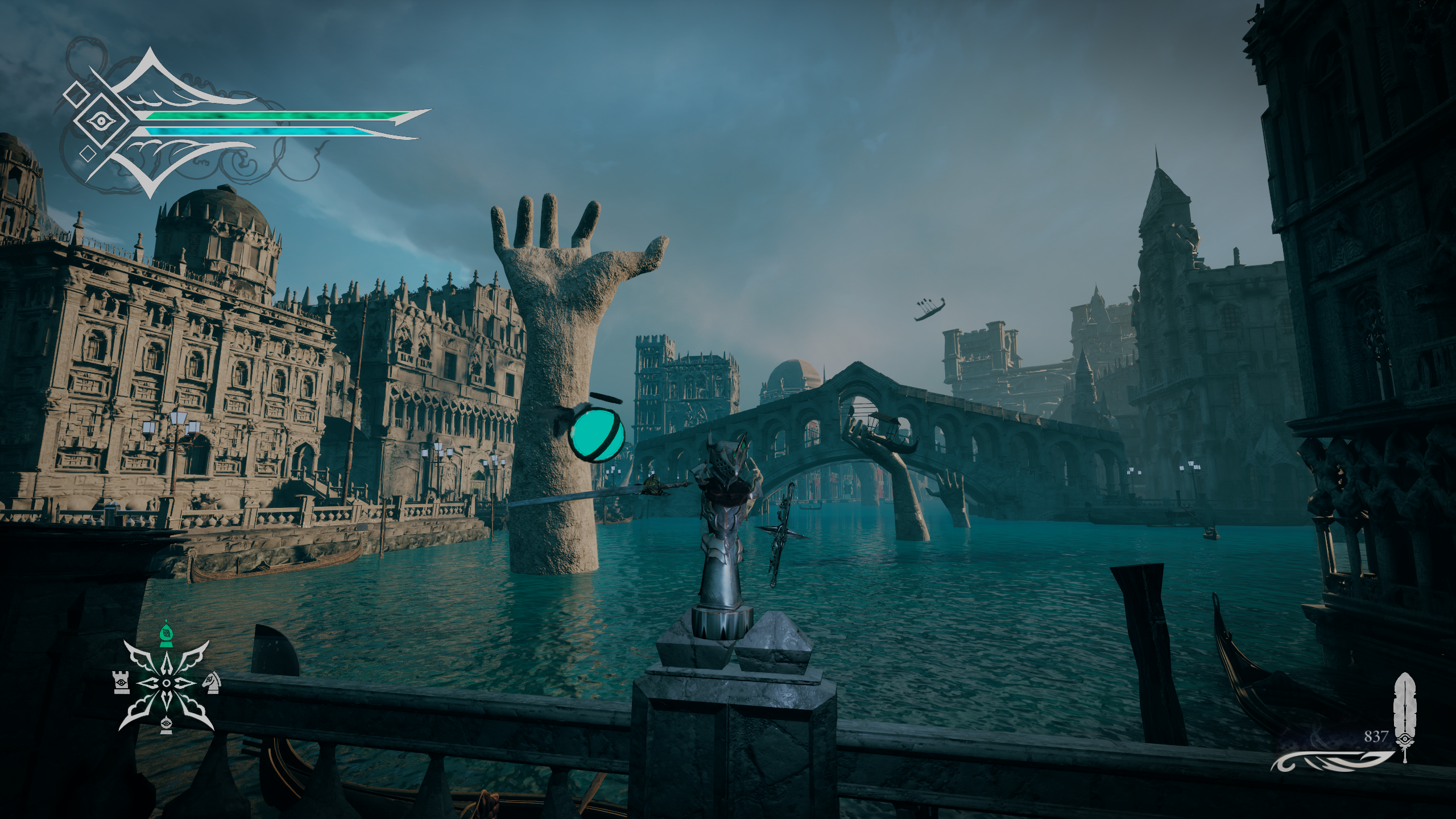
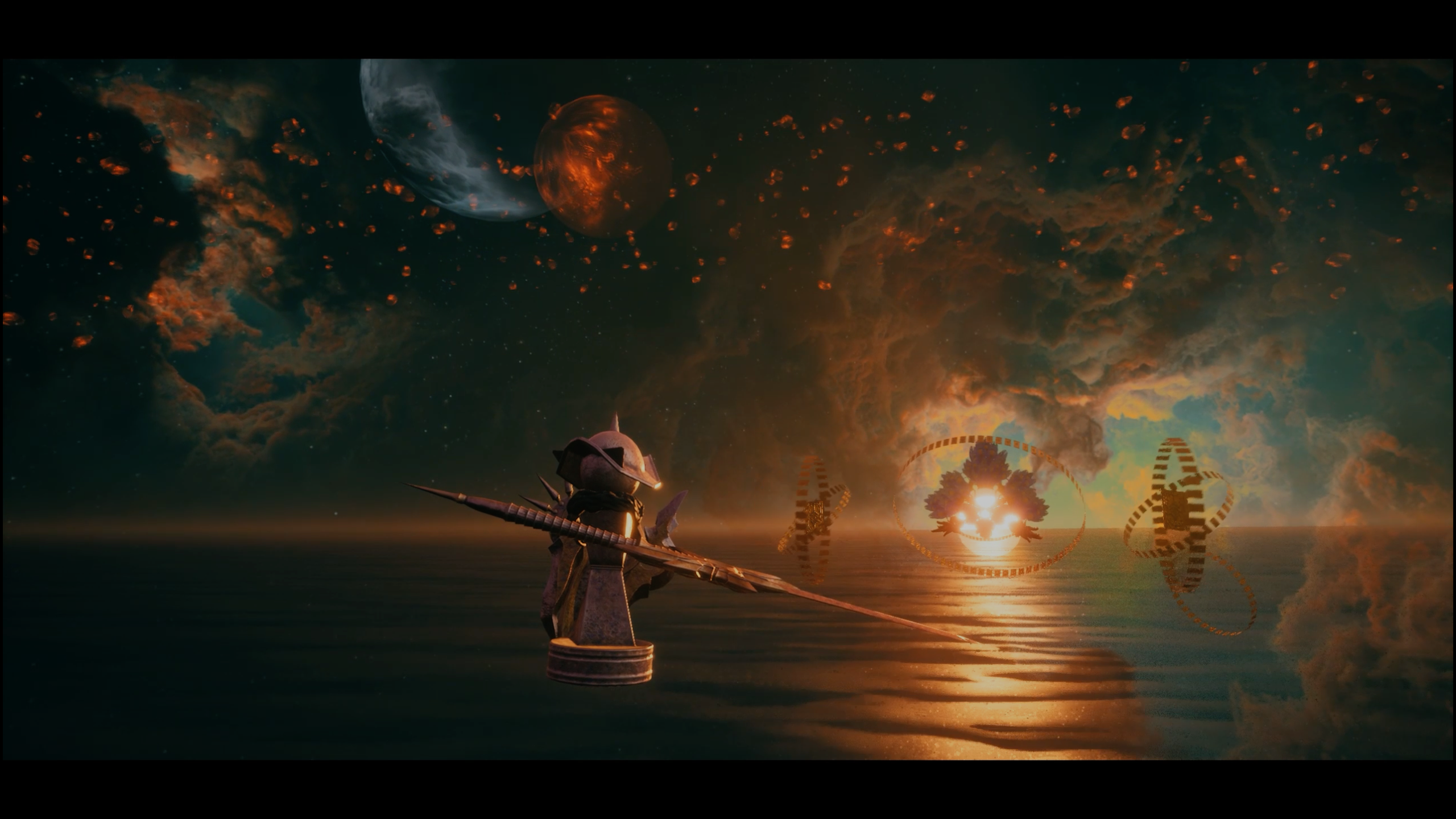
The level design of STONEMACHIA follows a predominantly linear structure, but it doesn't shy away from offering the player some broader openings, shortcuts, and secondary zones to explore. This isn't a completely open world, nor a seamlessly interconnected map, but rather a more guided progression that alternates between corridors, arenas, larger areas, and small optional spaces where you'll face hordes of enemies or discover some diversions. The game world can be described as semi-interconnected: the various zones communicate with each other in terms of lore and progression, but the transition from one area to another often occurs through loading screens, teleports, or more cinematic transition moments. Among these, particular and decidedly inspired solutions stand out, such as journeys aboard a gigantic crab-island, capable of giving personality to Zefiro's journey and reinforcing the surreal and fantasy tone of the adventure. Exploration is enriched by the presence of side quests and small optional events, often tied to deviations from the main path. Some areas can be reached by solving environmental puzzles, while in other cases, certain events are only triggered on specific occasions, rewarding the more curious and attentive player. These diversions can also lead to encounters with secondary bosses, useful not only for breaking up the main progression but also for obtaining special rewards. Added to this are various collectibles, designed to reward those who decide to look around and not limit themselves to the main path. Among these, we find cards linked to enemies, which form a sort of compendium or bestiary, useful for giving greater identity to the creatures encountered during the journey.
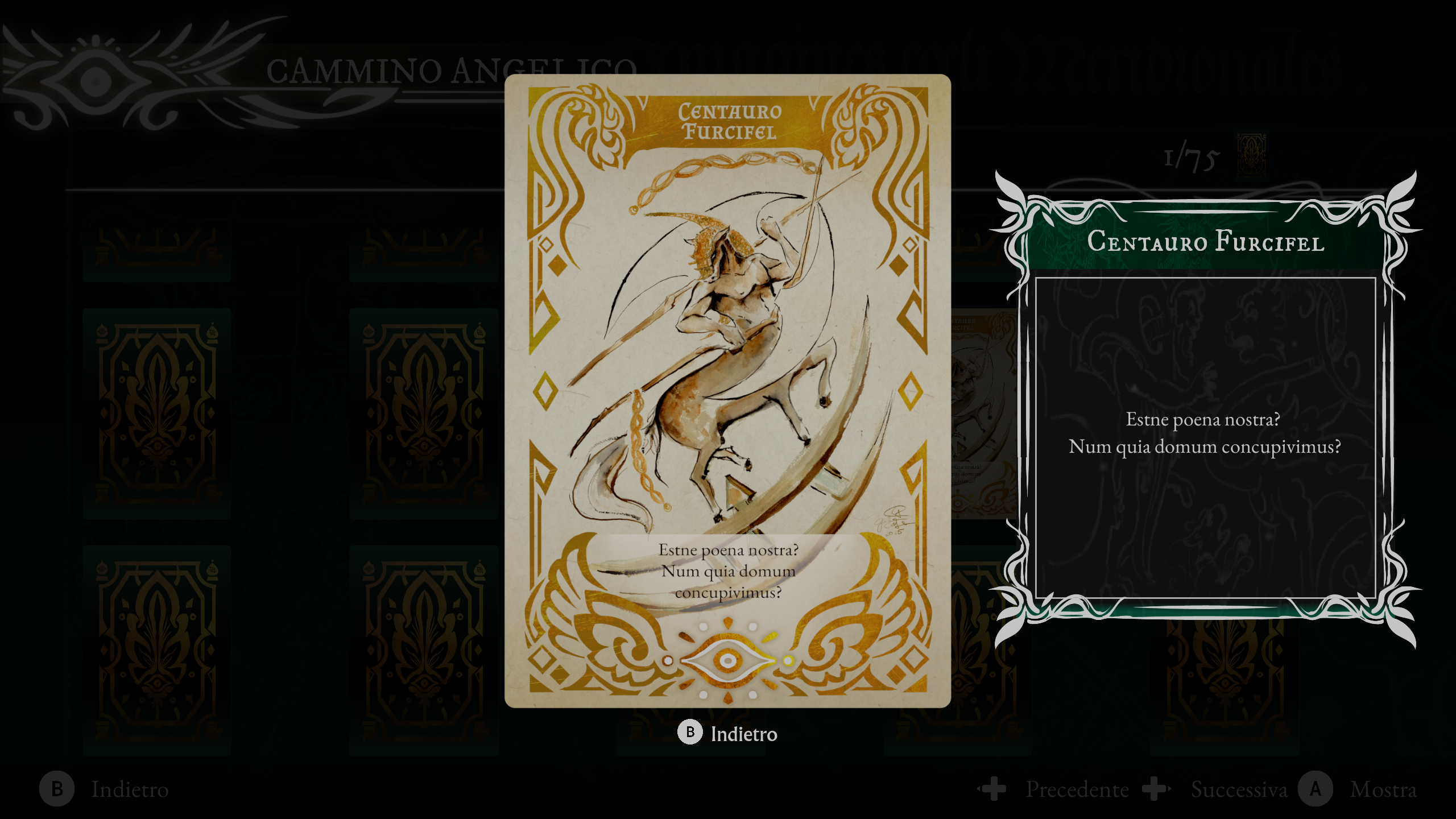
Card collection has more than just encyclopedic value: by collecting them, you can unlock new skins for angelic armor in the Armarium, a game hub accessible from the chessboard, which serves as a checkpoint and a reference point for progression.
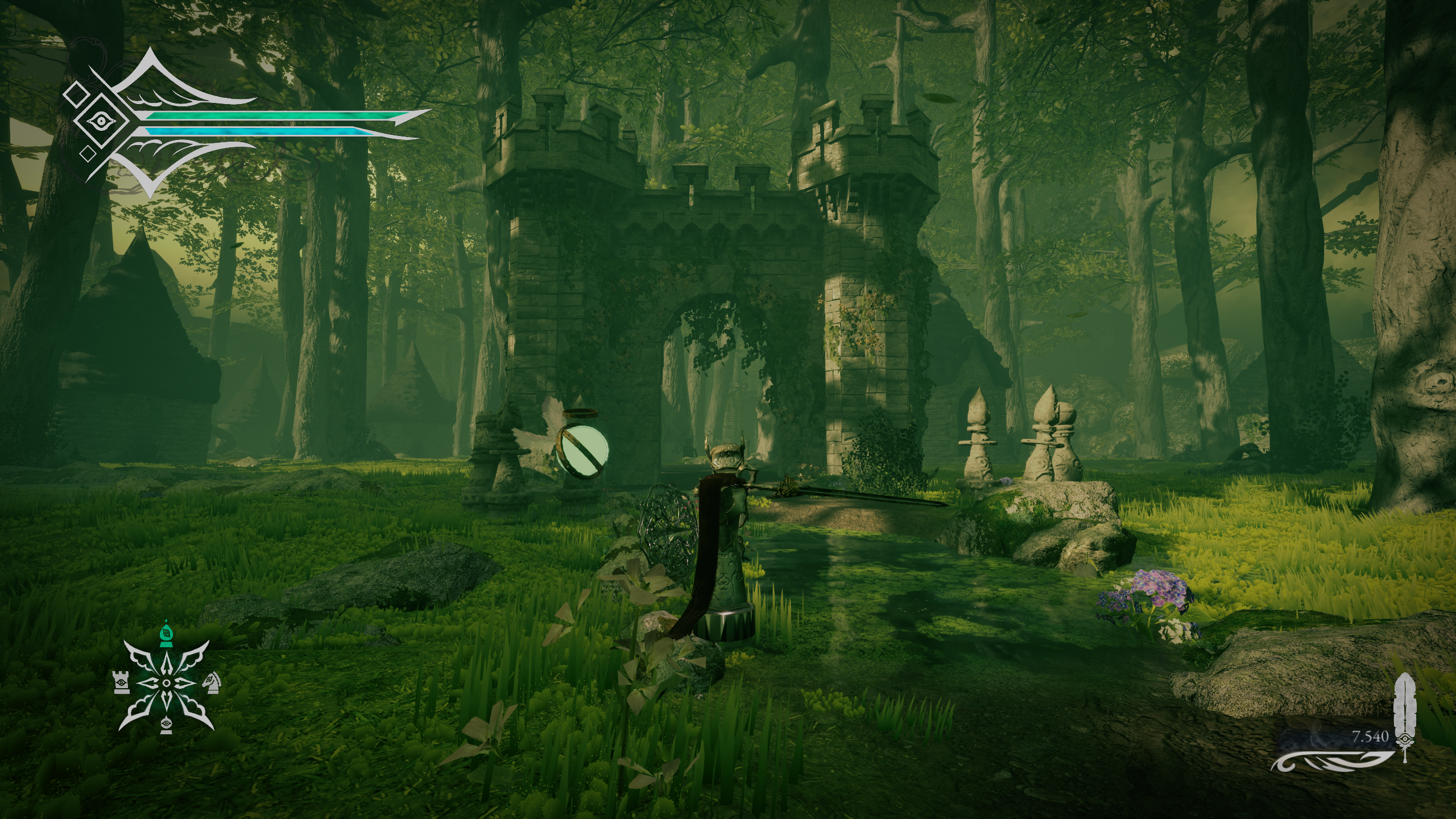
Among the collectibles, we also find music discs, which once collected are inserted into the game menu and can be listened to freely, almost like a small internal playlist. It's a simple but pleasant choice that further enhances the work done on the soundtrack and offers another reason to explore the various areas. The variety of scenarios helps to keep the progression pace alive. STONEMACHIA moves from larger, brighter areas to dark, narrow villages full of traps, creating an interesting visual contrast between openness and oppression. Some areas invite you to look around, while others push you towards a more tense advance, where every corner can hide an enemy, a secondary event, or a new encounter. In its rawness as a product, STONEMACHIA still manages to convey the right artistic charm. For new generations, accustomed to modern production standards, it might be a very retro experience, almost distant from what is expected from an action-adventure today. Yet, this very simplicity becomes part of its identity: for those like me, a gamer now on the verge of forty, it represents a small dive into the past, to when clear mechanics, recognizable worlds, and inspired artistic direction were enough to leave something with the player. STONEMACHIA does not aim for absolute complexity, but for a clear, readable progression that serves its dark fantasy imagery. Shortcuts, areas to discover, side quests, collectibles, and dedicated combat arenas help to break linearity, while the artistic direction transforms each change of scenery into a tone variation capable of leaving a mark.
Italy is made of stone.
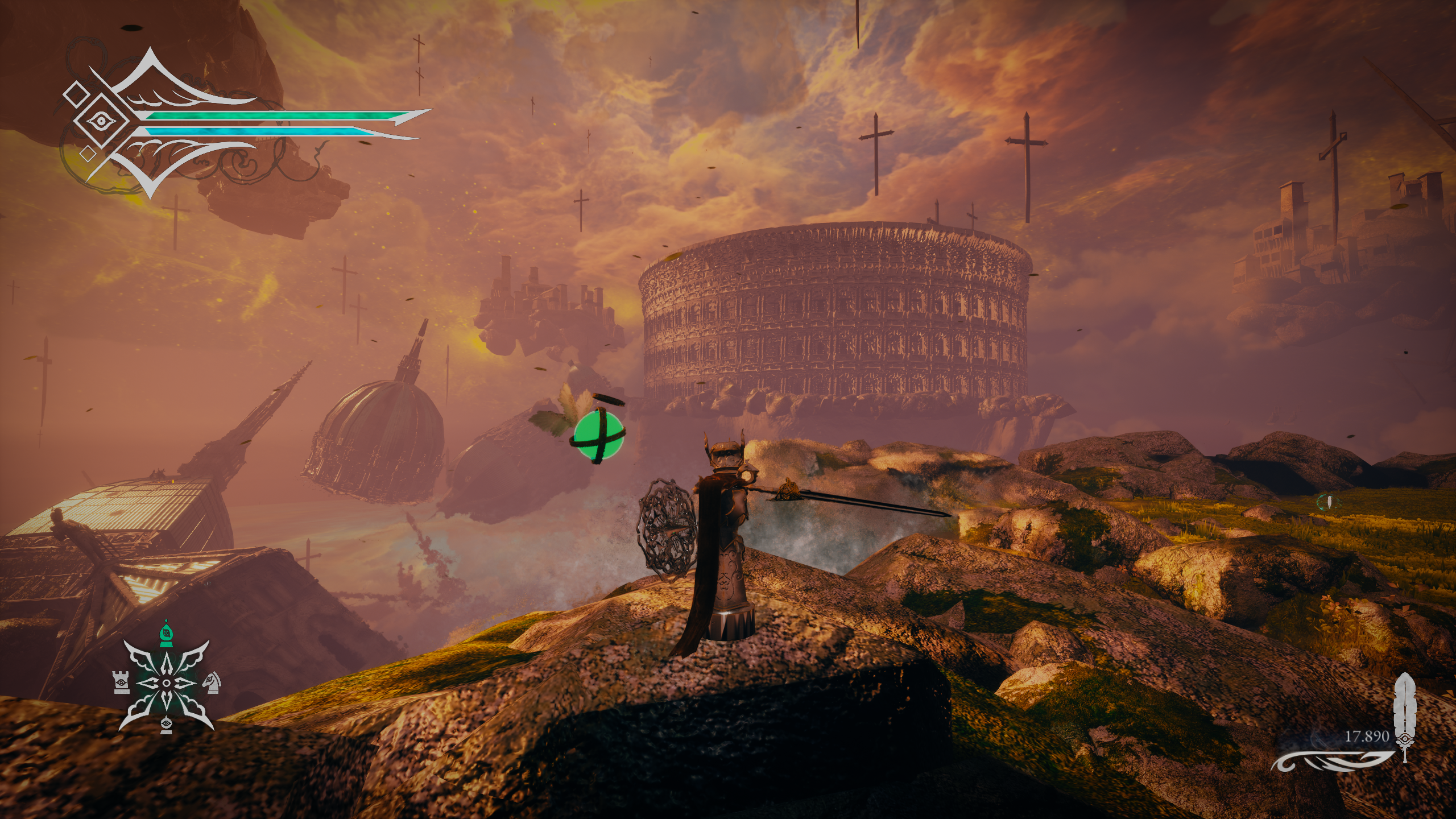
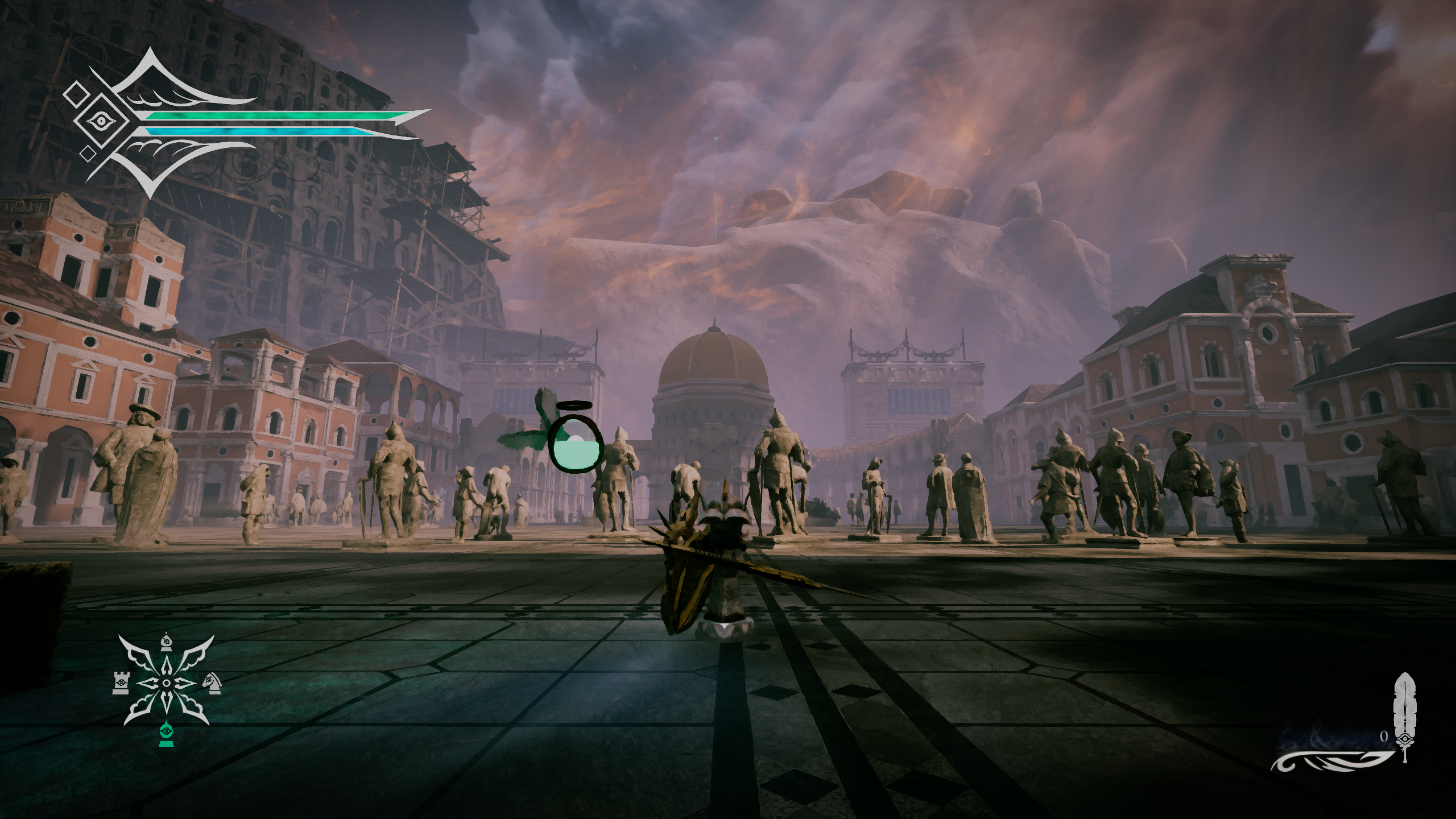
One of the most recognizable elements of STONEMACHIA is undoubtedly its art direction. The game builds its visual world around distorted representations of Italian art, reinterpreted through a dark fantasy lens and set in a world where stone becomes a living substance, a threat, and a visual identity.The game’s very name seems to evoke this idea of a “clash with stones,” not only because most of the enemies take on forms resembling gargoyles, statues, or carved creatures, but also because the pieces on the board themselves—including Zefiro—seem to belong to that same mineral universe. Everything in STONEMACHIA conveys hardness, weight, and antiquity, as if the world were a vast sacred ruin ready to move against the player. Gargoyles are among the most frequent enemies and help reinforce this sense of corrupted art and hostile architecture. They are not mere creatures to be defeated, but an integral part of the game’s aesthetic: figures that seem to have broken away from churches, palaces, and monuments to become obstacles along Zefiro’s path. What makes the visual design even more interesting is the way many of the structures in the game seem inspired by real architectural works and the symbolism of our country. In some scenes, you can spot references to monuments and buildings reminiscent of, for example, Milan’s Duomo or Venetian bridges, while elsewhere, references more closely tied to regional identity emerge. This is the case, for example, with enemies reminiscent of the symbol of Sicilian Trinacria, or fountains adorned with dragon heads—details that help give the game world personality and make it more recognizable. The variety of settings allows the art direction to breathe. The game shifts from gloomy, treacherous medieval villages to sunny beaches, all the way to structures and settings that openly evoke Italian architecture. This contrast between light and darkness, between artistic beauty and fantasy distortion, is one of the most fascinating aspects of the experience.
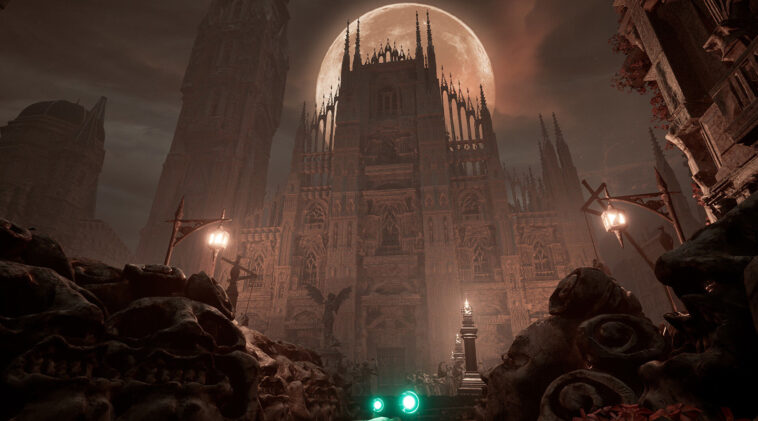
Even with all the production limitations of an independent and deliberately raw project, STONEMACHIA manages to build a clear visual identity. It doesn't aim for realism or spectacle for its own sake, but for a recognizable imagery, made of stone, ruins, statues, gargoyles, and views with an Italian flavor. An imperfect world, but capable of leaving an impression of having traversed a worn, distorted work of art ready to fight. The soundtrack also helps build STONEMACHIA's identity. It consists of self-produced music, perfectly consistent with the independent nature of the project and capable of accompanying Zefiro's journey without being intrusive. The tracks move from darker, more atmospheric backgrounds, designed to enhance the sense of mystery and decadence of the game world, to more driving rhythms during battles and moments of higher tension. This alternation helps make the adventure more fascinating, supporting both the exploration phases and the more action-oriented ones. Without seeking excessive orchestral spectacle, the music manages to do its job with personality, reinforcing the dark fantasy tone of the experience and effectively accompanying the game's different facets: the melancholy of the journey, the aggressiveness of the combat, and the surreal charm of a world sculpted in stone.
Stalemate
Among the less successful aspects of STONEMACHIA are some uncertainties related to overall balance, especially concerning the four angelic armors tied to the chessboard pieces. Although Pawn, Bishop, Rook, and Knight are designed to offer different abilities, attacks, and styles, during the first part of the adventure, the switch between one armor and another seems to gradually lose some of its effectiveness. On paper, each form should encourage the player to vary their approach based on the situation, but in practice, some solutions initially appear more advantageous than others. The most obvious example concerns the Bishop: despite having lower damage per hit, its great speed allows it to generate very high DPS, to the point of often being more effective than the other armors even against bosses. This leads to a fairly clear consequence: instead of frequently alternating between the different forms, the player might be driven to stick with the most performing one, reducing, at least in part, the strategic value of the transformation system. It should be said, however, that the situation improves in the second half of the game. As the adventure progresses, access to new abilities, upgrades, and more varied combat situations helps to better utilize the other angelic armors, making the system more dynamic and less unbalanced compared to the early hours.
Despite this, the Bishop remains the most preferable choice among the four forms, especially for those who want to maintain an aggressive and constant pace in combat. Added to this is a camera management that is not always perfect, especially in tighter spaces. In some situations, the view tends to become uncooperative, ending up hiding part of the action or preventing clear reading of incoming attacks. The problem is particularly noticeable during some boss fights, where the precision in reading attacks is crucial and a muddled view can turn a game error into damage taken by the player. STONEMACHIA has an interesting idea at the core of its transformation system, and in the latter half of the adventure, it manages to exploit it better, expanding the possibilities offered to the player. However, the feeling remains that the balance between the armors is not always perfect and that the Bishop, due to its speed and overall effectiveness, often remains the most efficient solution. As for the overall balance of the adventure, the challenge level maintains a very manageable pace for about 3/4 of the game. In the final stages, there's a bit of chaos in the boss fights, which are difficult to read but intense; a single mistake can lead to you being PETRIFIED.
Checkmate
STONEMACHIA is an indie game that is inspired and aware of its limitations, a project that never tries to hide its raw nature but instead attempts to make it part of its identity. Crossfall Games plays its cards well, focusing on a fascinating artistic direction, a strong narrative, and simple, immediate, and fun hack ’n’ slash gameplay that delivers the retro vibes we see less and less of today. It is a product that, while showing inevitable uncertainties related to complex development and limited resources, often manages to reduce the weight of its flaws through clear choices: accessible mechanics, fast-paced combat, linear exploration enriched by secrets, collectibles, and side paths. Not everything works perfectly, especially on the balance and camera fronts, but STONEMACHIA has personality, heart, and a well-recognizable artistic vision. For those seeking a modern, polished experience perfectly aligned with current standards, some rough edges might be apparent. For those who love sincere, imperfect but idea-filled indies, Zefiro's journey can be a pleasant surprise. Crossfall Games starts with a pawn, accepts the limits of its chessboard, and still manages to win the game.
STONEMACHIA is ready to checkmate on May 26, 2026, on Steam.

Mmm... Rough, but with its own identity.
Thanks for the info... 😉