
The gaming & tech site for Ticino and Italian-speaking Switzerland
The gaming & tech site for Ticino and Italian-speaking Switzerland
Sony Bravia 7 II XR7 M2

✓ What we like
- 🟢 "Window on the world" effect"
- 🟢 Double remote control in the package
- Extreme peak brightness
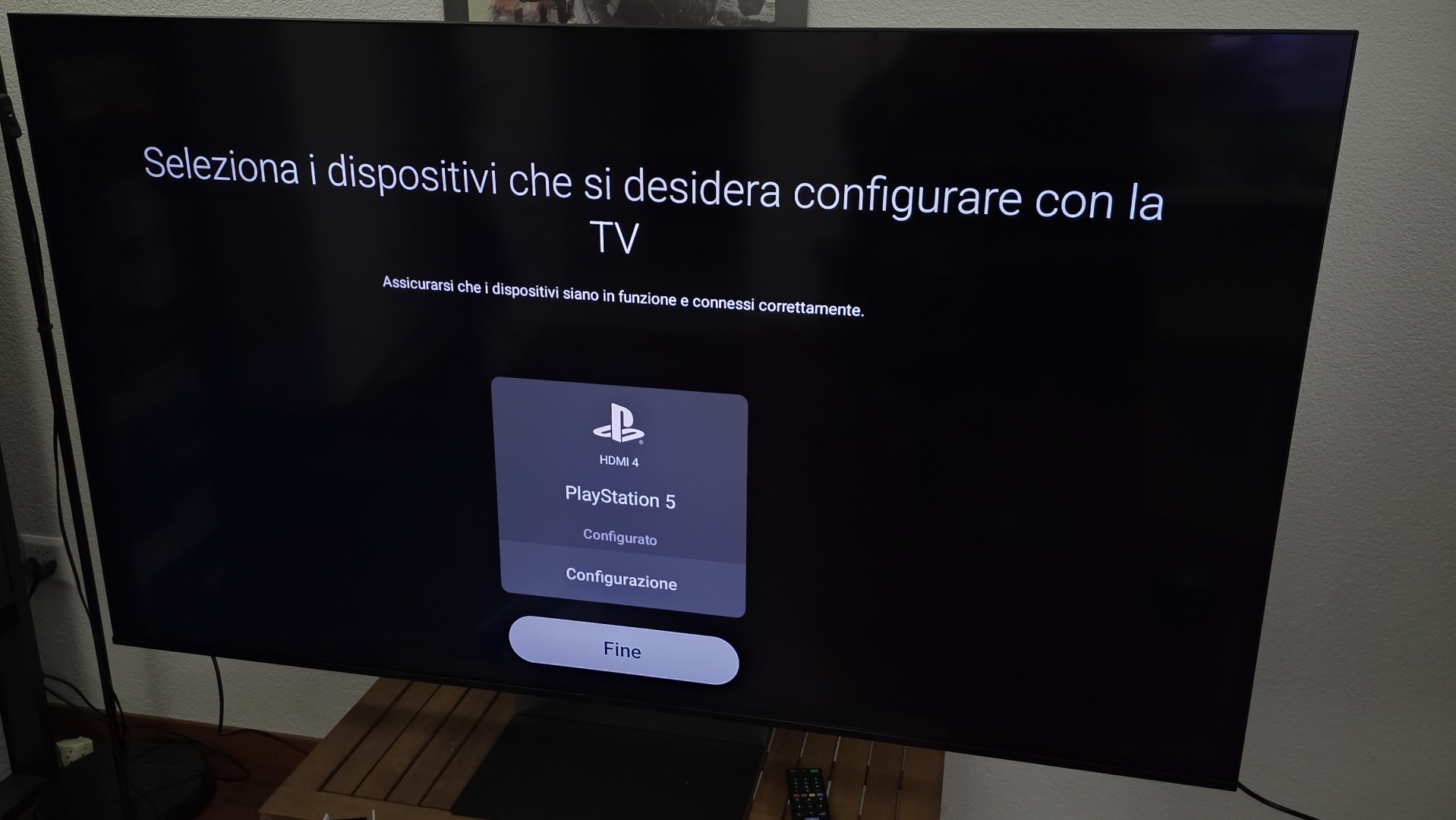
- Great integration with PS5
What we don't like
- Only two HDMI 2.1 ports??
- 🔴 Advanced options too hidden
- High launch price
- Slight blur in gaming
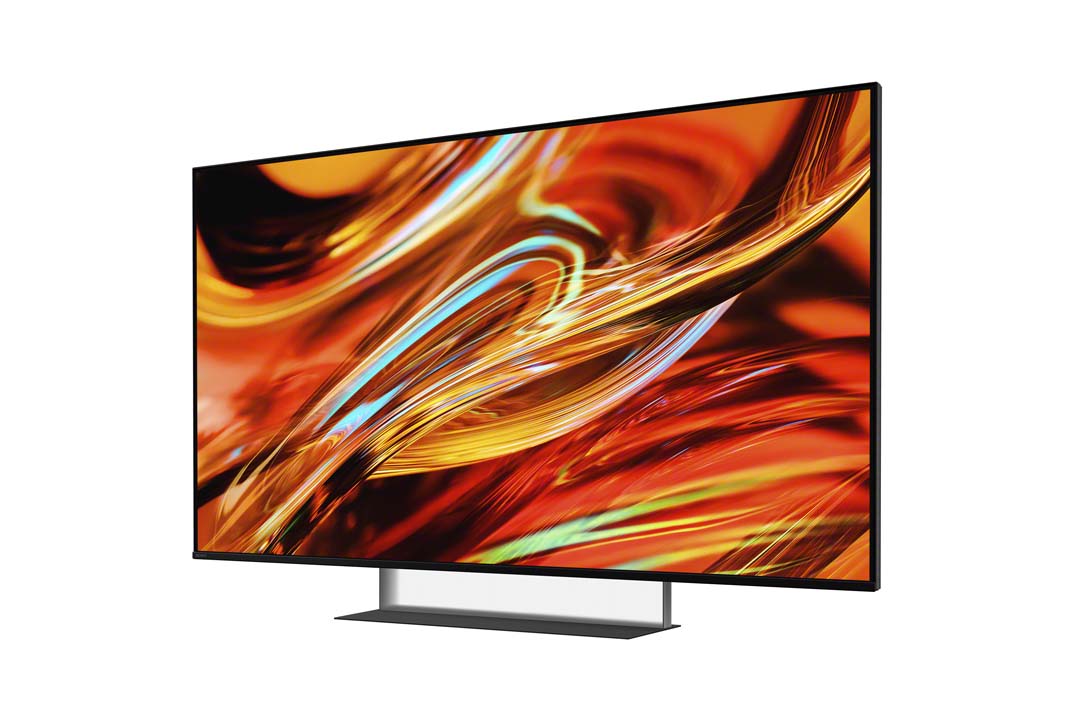
The TV market is a ruthless jungle where this year's buzzword is undoubtedly RGB Mini LED. Sony certainly hasn't stood by idly, churning out its own interpretation of the technology under the name True RGB and launching two flagship models to dominate the living room. Today, we put them under our scrutinizing eye Sony Bravia 7 II, more precisely the model XR7 M2, a panel that promises to make us forget old LCDs without having to mortgage a kidney for the bigger brother Bravia 9 II.

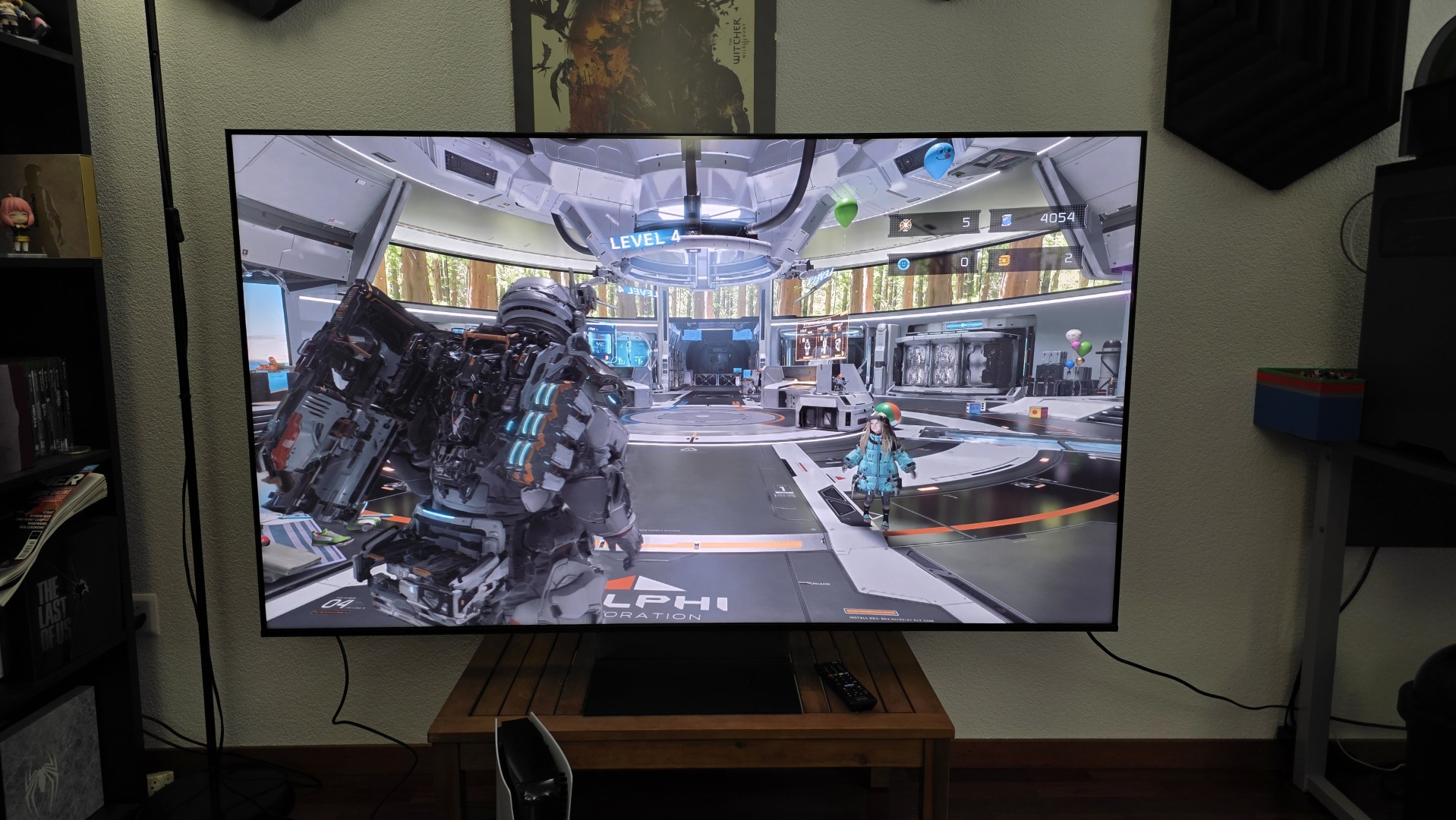
The Japanese giant's stated goal is clear: to offer blinding brightness and color volume beyond parameters to counter the advance of OLED TVs. Even though Sony sent us a “small 65-inch version” for our tests, we were stunned from the very first power-on. In YouTube video tests, those presented with a bitrate and quality that we will fundamentally never see in a true commercial production, the impact is sensational. It's the very first TV that gave me the genuine effect of looking through an open window rather than staring at a panel of glass and plastic.
Under the panel
Under the plastic and metal casing of this TV lies a VA-type LCD panel powered by the innovative RGB Backlight Master Drive Pro system. Instead of using the classic blue or white LEDs filtered by Quantum Dots, here each individual backlight zone consists of completely independent clusters of red, green, and blue LEDs. The brain of the operation is the XR Processor, responsible for managing tone mapping and sharpness with Sony’s usual surgical precision. The most technical tests reveal truly impressive data, with a peak HDR brightness nearing 2000 nits on 10% windows in Professional mode, dropping only slightly in sustained highlights. The color gamut coverage is massive, reaching a sumptuous 98.51% for DCI-P3 and settling at a very solid 87.21% for the much more challenging BT.2020: practically a stadium floodlight capable of blasting color nuances into your retinas that you didn’t even think could exist.
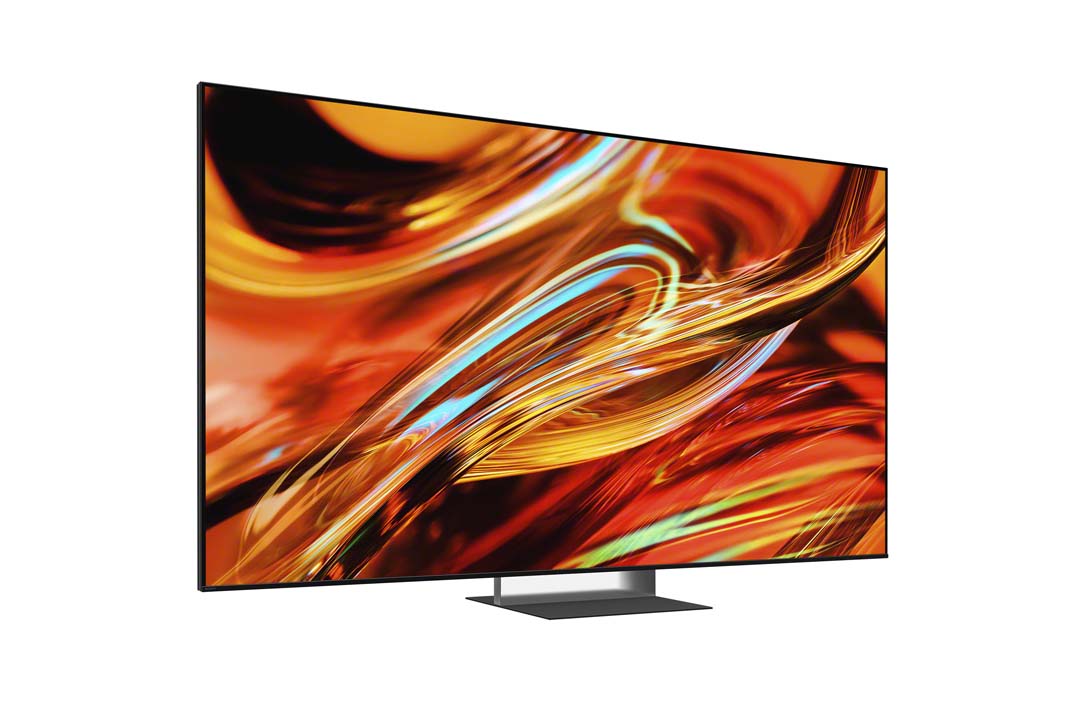
It's worth noting that the panel uses a BGR subpixel layout, a detail that doesn't affect cinematic viewing but could cause some microscopic text blurring if you're crazy enough to use it as a PC monitor. Support for HDR10+ is glaringly absent, a classic example of the brand's stubbornness, but we're amply compensated by Dolby Vision, HLG decoding, and IMAX Enhanced certification.
Design Sony
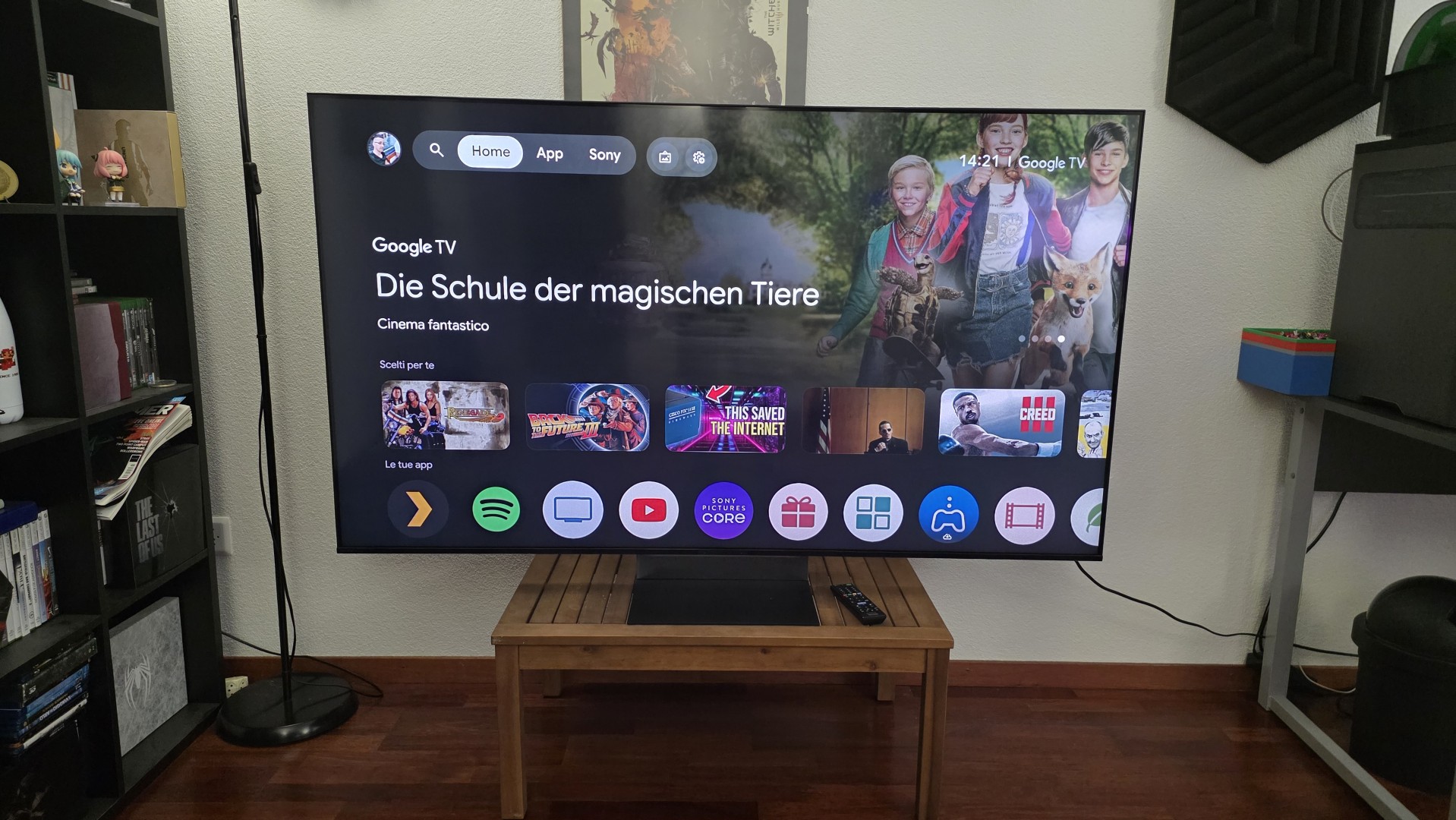
The aesthetic of the Bravia 7 II is clean, massive, and absolutely devoid of unnecessary frills, dominated at the base by the new and ingenious Mirage Stand. This is a central steel pedestal that integrates a semi-transparent panel, capable of creating a very pleasant floating effect and masterfully hiding cables from view. (A touch of class that you will greatly appreciate if, like me, you hate visual clutter behind the TV). Speaking of accessories, we always really like that Sony decided to include two remote controls in the box, a choice that shows great attention to the end-user.
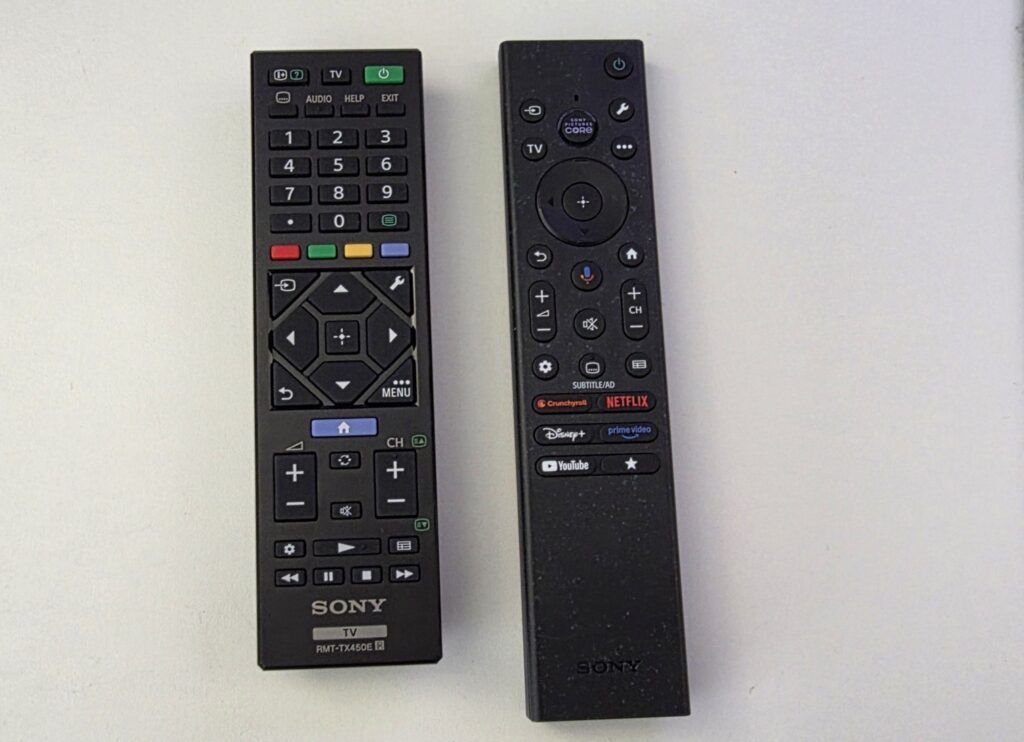
In addition to the traditional remote, we have a simplified, backlit remote control with convenient quick buttons for major apps like Crunchyroll, Netflix, Disney+, Prime Video, and YouTube, as well as a special button that we can program freely to our liking. The initial setup glides by easily thanks to tight integration with the Google TV ecosystem, which now even boasts the Gemini assistant for more complex voice searches. However, it must be admitted that the TV's deeper options are almost hidden in the labyrinth of the interface, requiring some healthy and frustrating tinkering at first to calibrate them properly. The audio section relies on the Acoustic Multi-Audio+ system, with dedicated woofers and side tweeters that pump out crystal-clear dialogue thanks to the Voice Zoom 3 AI algorithms.
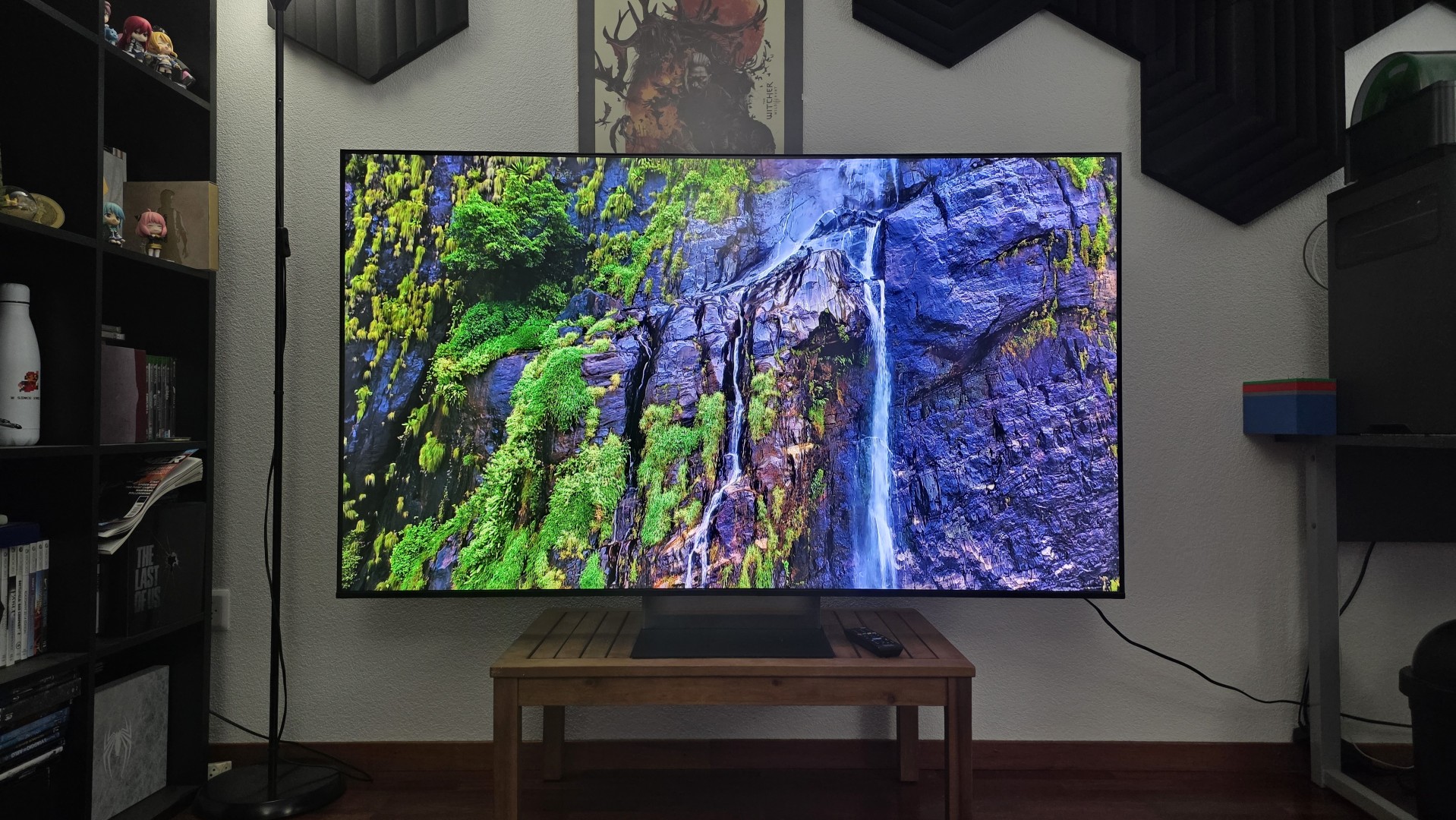
We've watched it again and again!
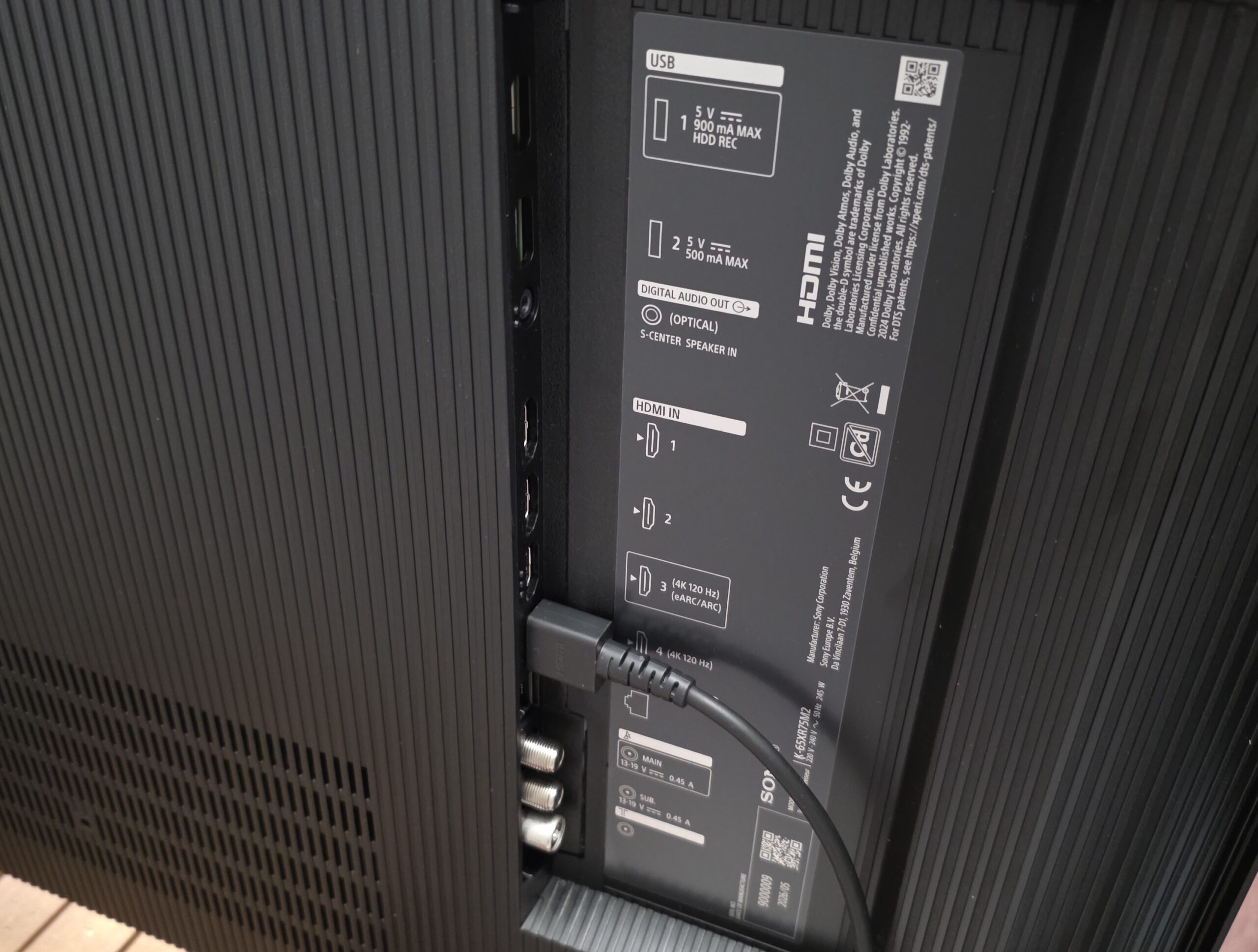
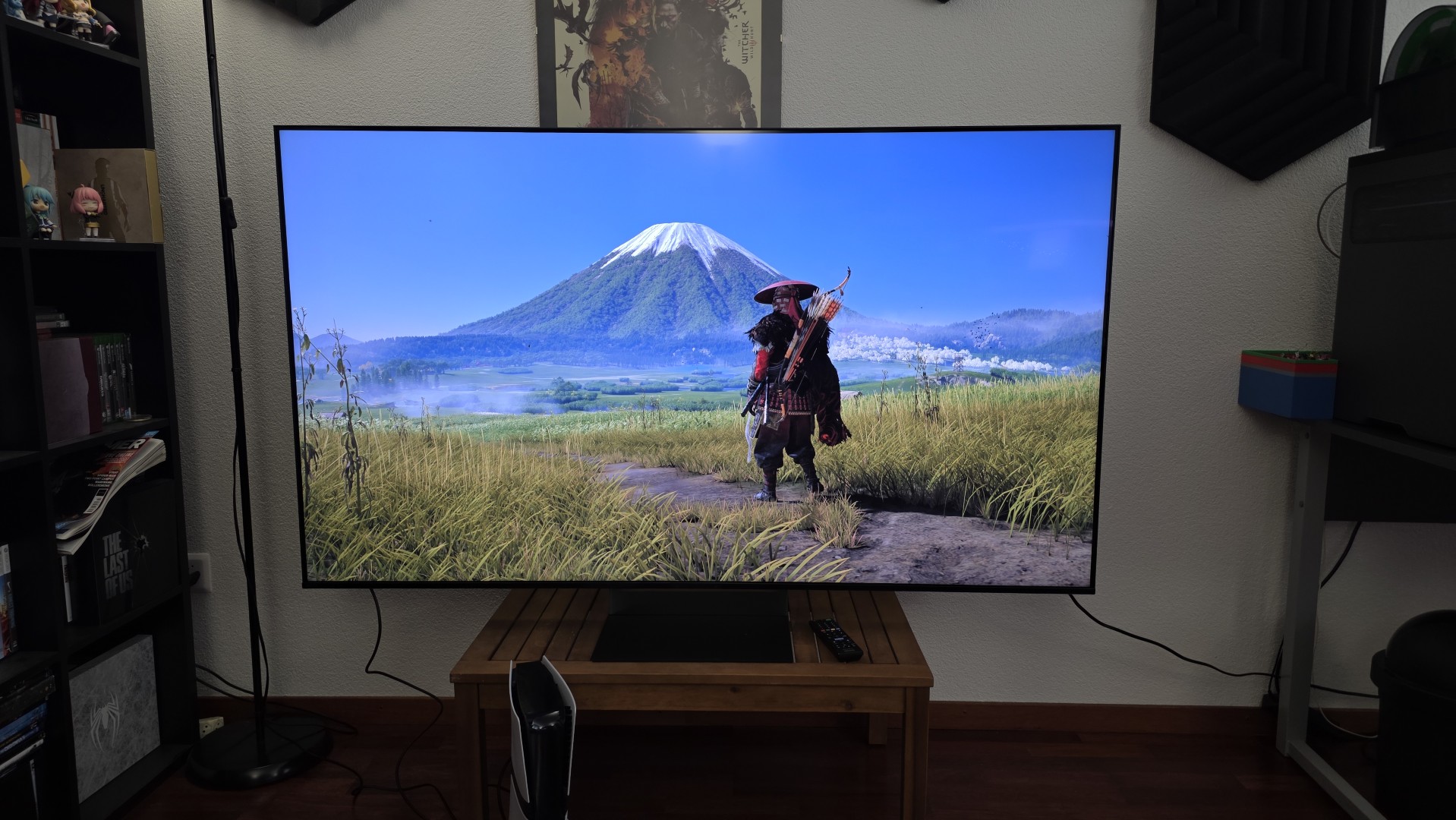
Put to the test in the field with the controller in hand, the TV flexes its muscles and shows what it's made of. The integration with PS5 is obviously masterful, with the console immediately activating Auto HDR Tone Mapping and fully utilizing Auto Low Latency Mode. The measured input lag stands at 10 milliseconds, an excellent value for competitive gamers. Unfortunately, there's a giant elephant in the room, as there are four HDMI ports, but only two support the full 2.1 bandwidth for the fateful 4K at 120Hz, and one of these is also shared with the eARC channel. A hardware stinginess that we really struggle to justify in 2026!
During gameplay, the backlight dynamically handles blacks with a native contrast ratio of up to 50,000:1, delivering an image depth that closely rivals organic panels. Of course, splitting hairs, you might notice a very slight halo effect around brighter objects when the screen is completely black, especially on the edges of Dolby Vision subtitles, and the pixel response times aren't lightning-fast, leaving a tiny motion blur trail in extreme 120fps pans. However, gradients are fabulous, and the Smoothness function eliminates much of the macro-blocking in heavily compressed content, delivering a consistently solid and compact picture.
Bottom line
In summary, this new Sony product represents a colossal leap forward for active matrix technology, pushing the concept of Mini LED into previously unexplored territory. The use of pure RGB emitters delivers a first-class visual experience, combined with a very responsive smart interface and peak brightness capable of annihilating direct sunlight. The launch price, which hovers around 2100 CHF for the 65-inch model, clearly places it in direct competition with the premium segment of the market.
On the other hand, Sony isn't exactly known for offering affordable prices on its flagship products! The limitations regarding fast HDMI ports are quite a sticking point, but if you're looking for a display capable of giving you a real window into the world and seamlessly integrating with your PlayStation ecosystem, you've just found your new, incredibly expensive toy.

HI
Thanks for the review. Regarding the "tiny trail of motion blur during extreme panning," can I ask how tiny? I bought a Bravia 5 and am VERY DISAPPOINTED. Some games like e-football are almost unplayable in my opinion because my eye is constantly straining to focus on a player who keeps losing focus. I'm considering purchasing a Bravia 7 II, but I don't want to find myself in the same situation. Do you have any advice on this?
Honestly it wasn't very visible, I'd say more on dark backgrounds