The gaming & tech site for Ticino and Italian-speaking Switzerland
The gaming & tech site for Ticino and Italian-speaking Switzerland
Google Home Speaker

✓ What we like
- 🟢 Super easy initial setup
- 🟢 Sober and elegant design
- 🟢 Native Matter integration
- 🟢 Selling price
What we don't like
- 🔴 Touch sensitivity too high
- 🔴 Night light too bright
- 🔴 Weak bass
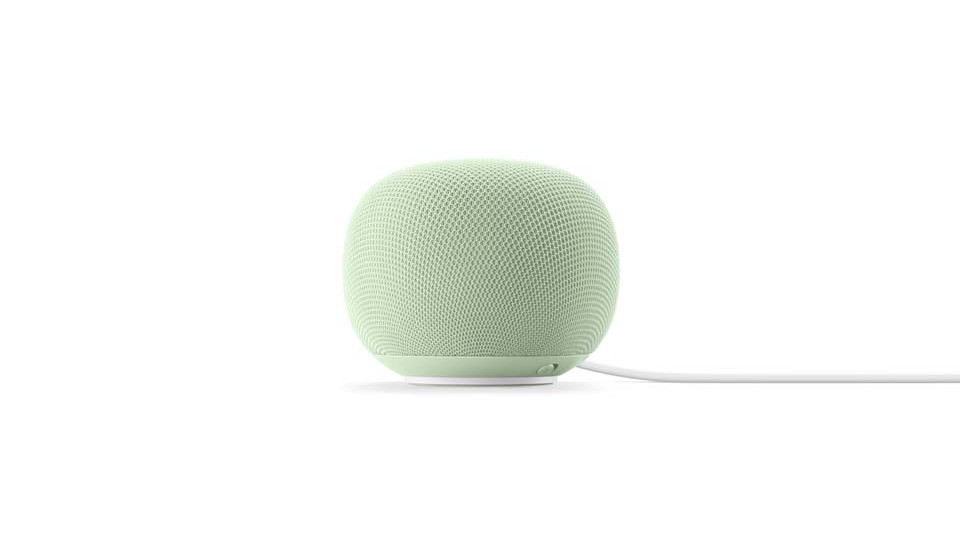
- 🔴 Google only sells boring colors in Switzerland
A new connected speaker from Google has arrived! With its new Google Home Speaker, the Mountain View company has decided to permanently retire the Nest brand for this product category—a move that admittedly left us a little confused at first, given that they continue to use it for security cameras—and to dust off the name that started it all way back in 2016.

The goal here is crystal clear: to create a compact and affordable home hub that isn't simply a speaker that executes predetermined commands, but a true physical showcase for Gemini's conversational capabilities. This is an important debut because, while inheriting much of the aesthetic DNA of older models, this device has been engineered with a completely new philosophy that shifts the focus from simple music listening to pure conversational interaction.
A border router soul
Beneath its fabric shell, the Google Home Speaker hides a technical package that immediately reveals Google's investment. The acoustics are handled by a single 58 mm full-range driver that promises 360-degree sound diffusion, a hardware choice that on paper should ensure uniform sound pressure no matter where you place it in the room. As for wireless connectivity, it supports Wi-Fi 6 and Bluetooth 5.4, but the real geek-friendly feature is the integration of a native Thread border router with full Matter support. This is a key feature for anyone looking to build a serious smart home without having to deal with third-party proprietary hubs, allowing the speaker to act as a direct bridge to the cloud for the latest-generation sensors, light bulbs, and smart locks.
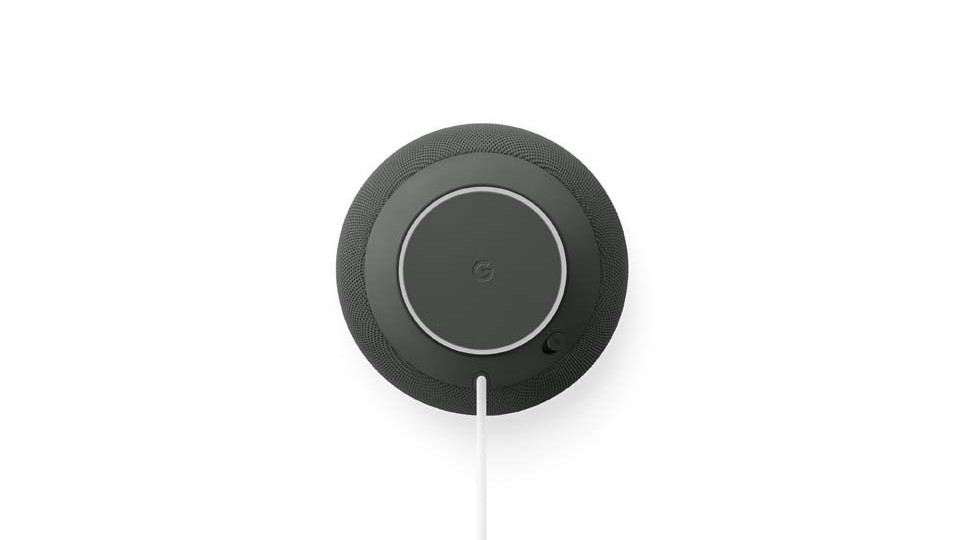
Powering everything is a dedicated local machine learning chip, designed to process the most frequent commands directly on the device without constantly having to send data packets to remote servers, which drastically reduces response times compared to the past. An example is turning the lights on or off, which, while not instantaneous, is damn fast. Power is handled by a USB-C port located on the base, but with a slightly annoying quirk: the cable is integrated directly into the speaker's body and not into the power supply, meaning that if you need a longer cable, you'll have to resign yourself to using an extension cord.
Ball-like aesthetics and invisible controls
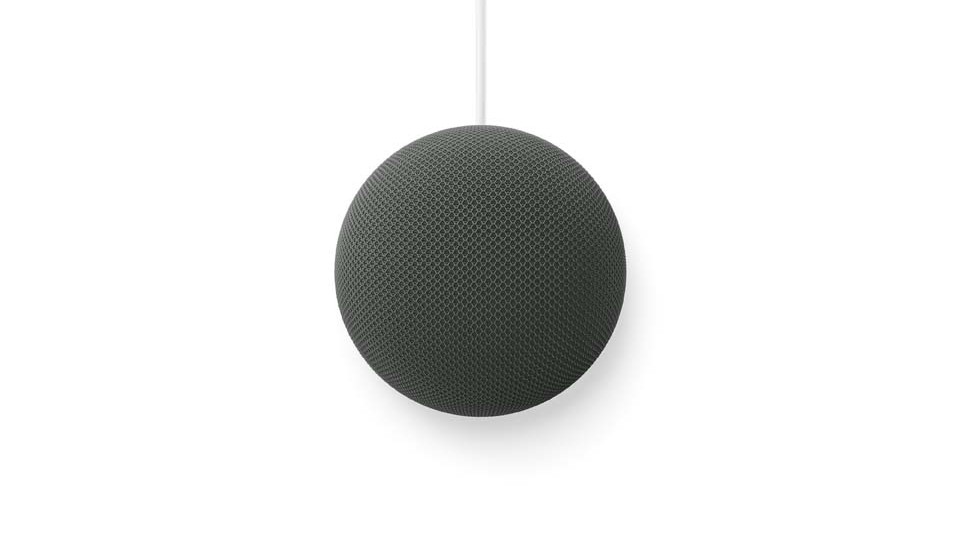
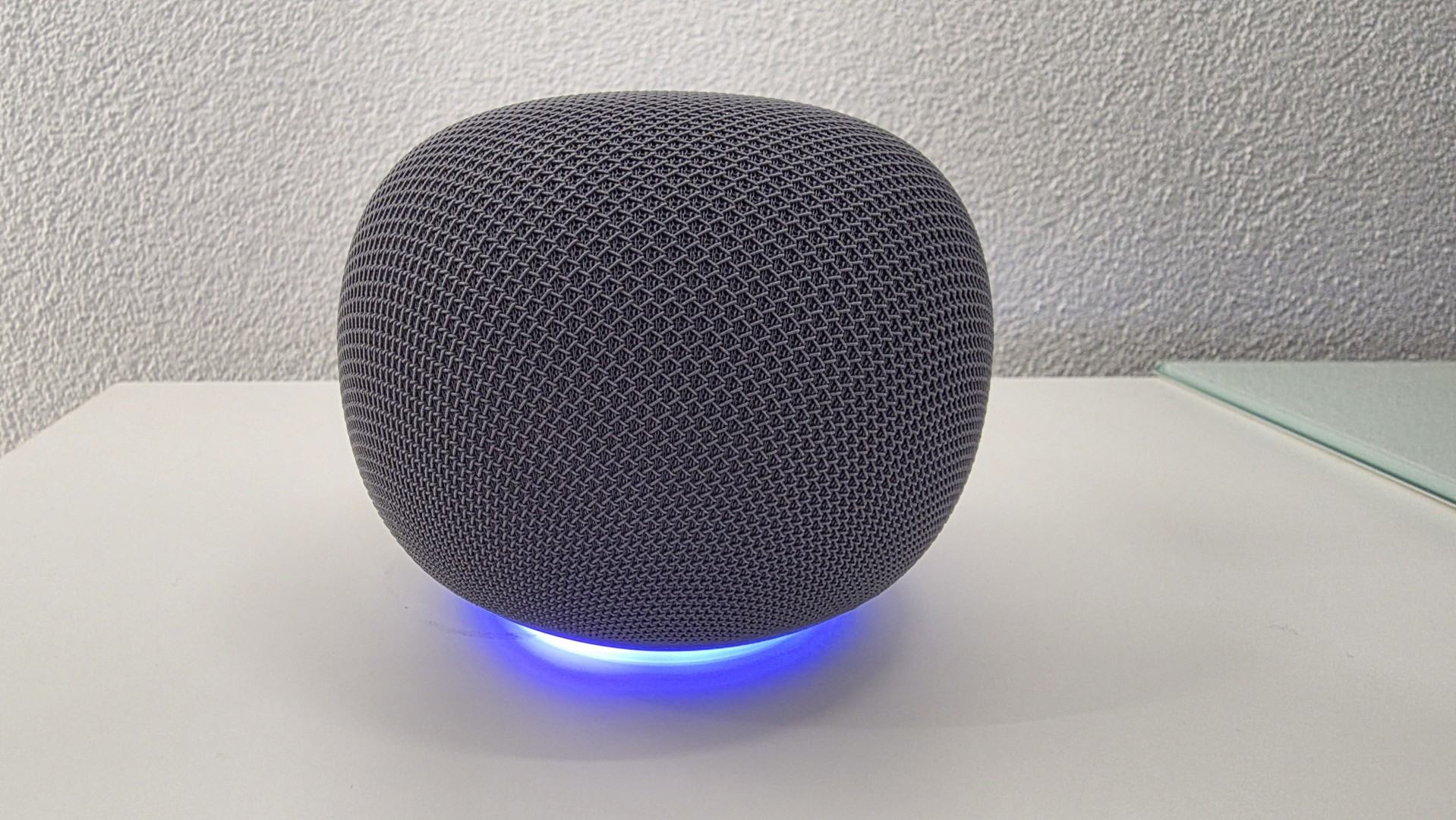
From a purely aesthetic standpoint, the Google Home Speaker looks like a cross between a Nest Mini on steroids and a ball covered in woven fabric, over a third of which is made from recycled materials through a three-dimensional knitting process. Its dimensions are extremely compact, about ten centimeters in diameter and eight centimeters high, making it perfect for placing on a shelf or kitchen counter without being invasive. The clean design is almost absolute at the top, where the capacitive controls for volume and music playback are completely invisible and are revealed only by small white LEDs that filter through the fabric when you touch the surface.
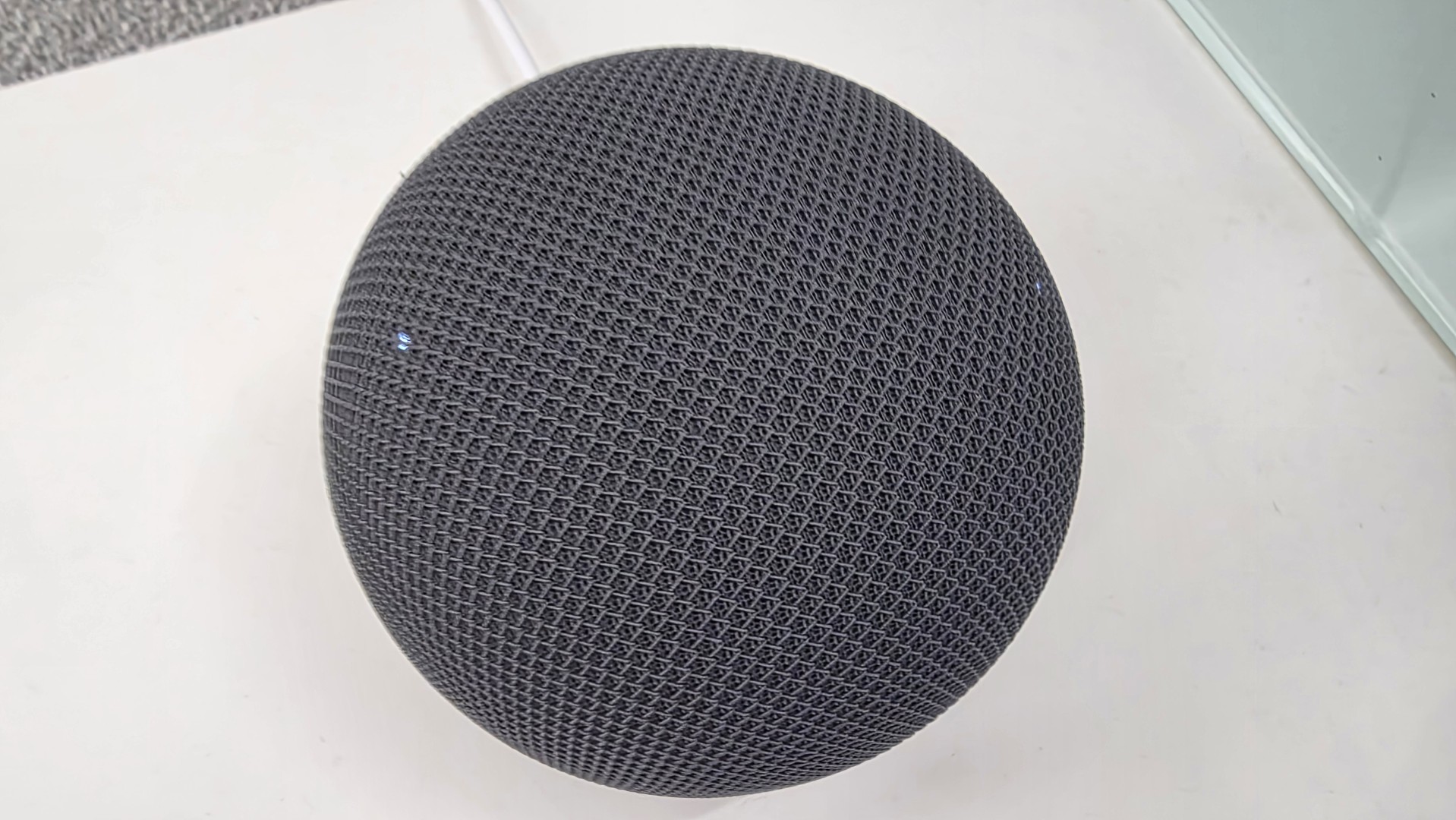
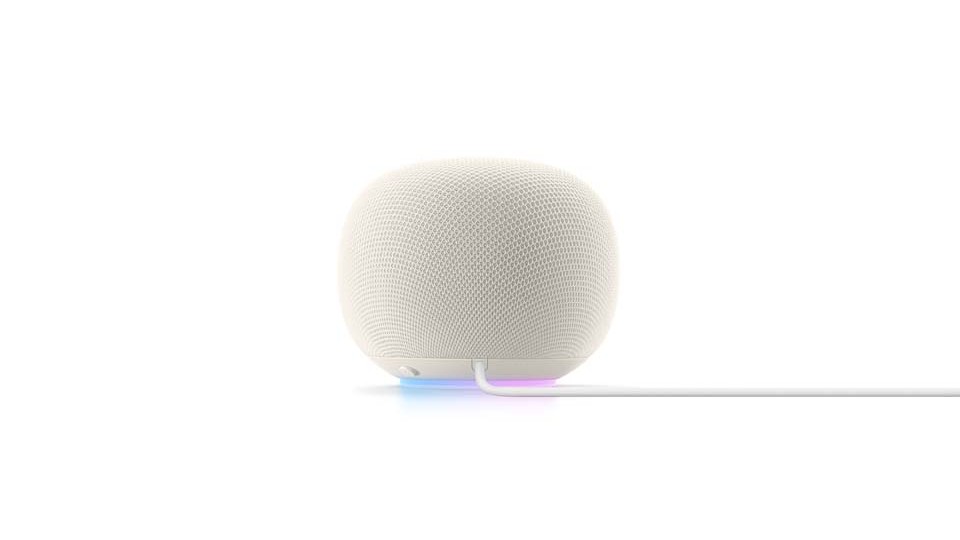
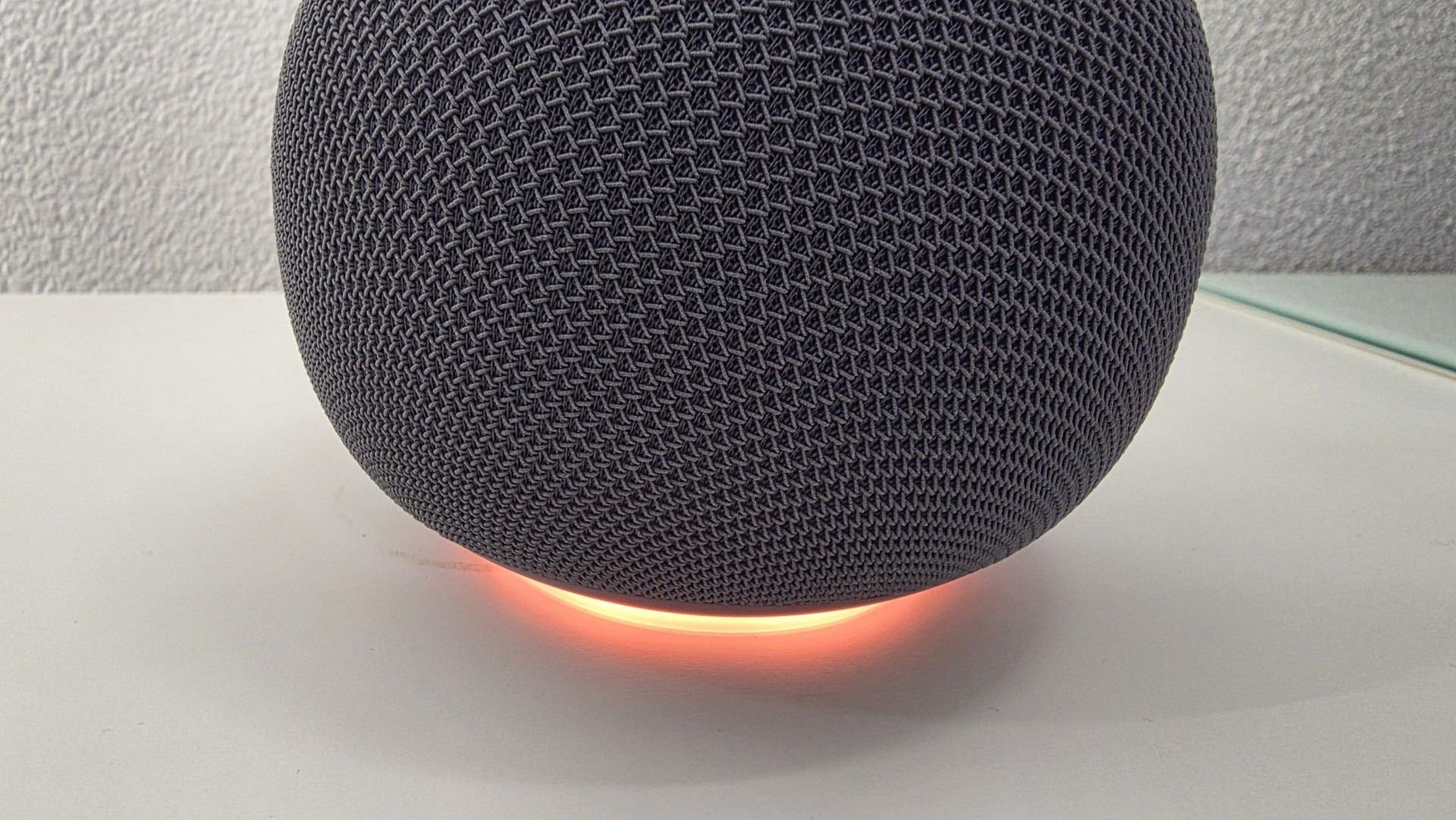
We have to say that this minimalist approach is very elegant, but the sensitivity is so high that we found ourselves cranking up the volume to maximum more than once just by picking up the speaker to move it. On the plastic base, we find a dynamic LED ring that replaces the old front dots and changes color depending on the assistant's status, displaying a white light when it's listening, shades of purple and blue while it's processing your thoughts, and a solid orange when you decide to use the physical switch on the back to mute the three far-field microphones.
Gemini in the living room
Once plugged in, setup was incredibly easy and straightforward, as is typical for the Mountain View ecosystem. It took less than five minutes to complete, simply scanning a QR code using the Google Home app to sync your network and music streaming services without having to enter half a password. The real star of the hands-on test was, of course, Gemini for Home, which replaces the old Assistant and immediately demonstrates significantly greater conversational flexibility, understanding commands even when you get stuck mid-sentence or change your mind about the name of the light bulb you want to turn on. You can easily ask it to add three different ingredients to your shopping list in one go or ask it complex questions about video game strategies, getting detailed and precise responses that take into account the context of previous messages.
If you decide to pay the monthly fee for the Premium subscription, you also unlock Gemini Live mode, which is great for brainstorming out loud or chatting about this and that, though the more advanced features related to video description from security cameras require the more expensive subscription. However, there are some historic AI lapses, such as when the hub firmly denied access to Home Assistant, a claim it refuted a second later when I reminded it that access is via API. On the purely acoustic front, the speaker does its job for casual listening while cleaning or cooking, displaying good clarity in the midrange and vocals, but miracles aren't achieved here: the bass, while audible when you tap the chassis, lacks that deep, room-filling body, and the tendency to emphasize the midrange creates a slight cardboard tube effect that makes the cymbals crackle slightly when the volume is turned up too high. It's no Google Nest Audio, in short.
Do you like us?
The Google Home Speaker is a solid product that achieves its goal of bringing generative artificial intelligence into the home at a price of CHF 99, which we find justified by the build quality and integrated networking technologies. This is clearly not a speaker designed for hardcore audiophiles, but rather a smart hub that's lightning-fast in processing local commands and makes Gemini's flexibility its true strength. Sure, it's a bit surprising to see Google decide to lock some of its most interesting software features into a monthly subscription, but even without shelling out a single franc extra, the daily user experience is a clear step forward. This new direction gives us hope for the future, and we admit we're incredibly curious to see what Mountain View will come up with when they decide to apply this same conversational philosophy to devices with displays.