The gaming & tech site for Ticino and Italian-speaking Switzerland
The gaming & tech site for Ticino and Italian-speaking Switzerland
Sony INZONE M10S II

✓ What we like
- 🟢 Footprint tiny stand
- 🟢 Clear OSD menu
- 🟢 Very low reflections
- 🟢 750Hz... absurd!
What we don't like
- 🔴 Washed out 720p resolution
- 🔴 Built-in speakers are missing
- 🔴 No USB-C port
High-end gaming displays have accustomed us to numbers that until a few years ago would have been considered completely insane, especially considering the rapid rise of OLED technology in this specific sector. While the obvious choice for those seeking pure speed was once a TN panel with washed-out colors and horrendous viewing angles, today the situation has completely reversed.

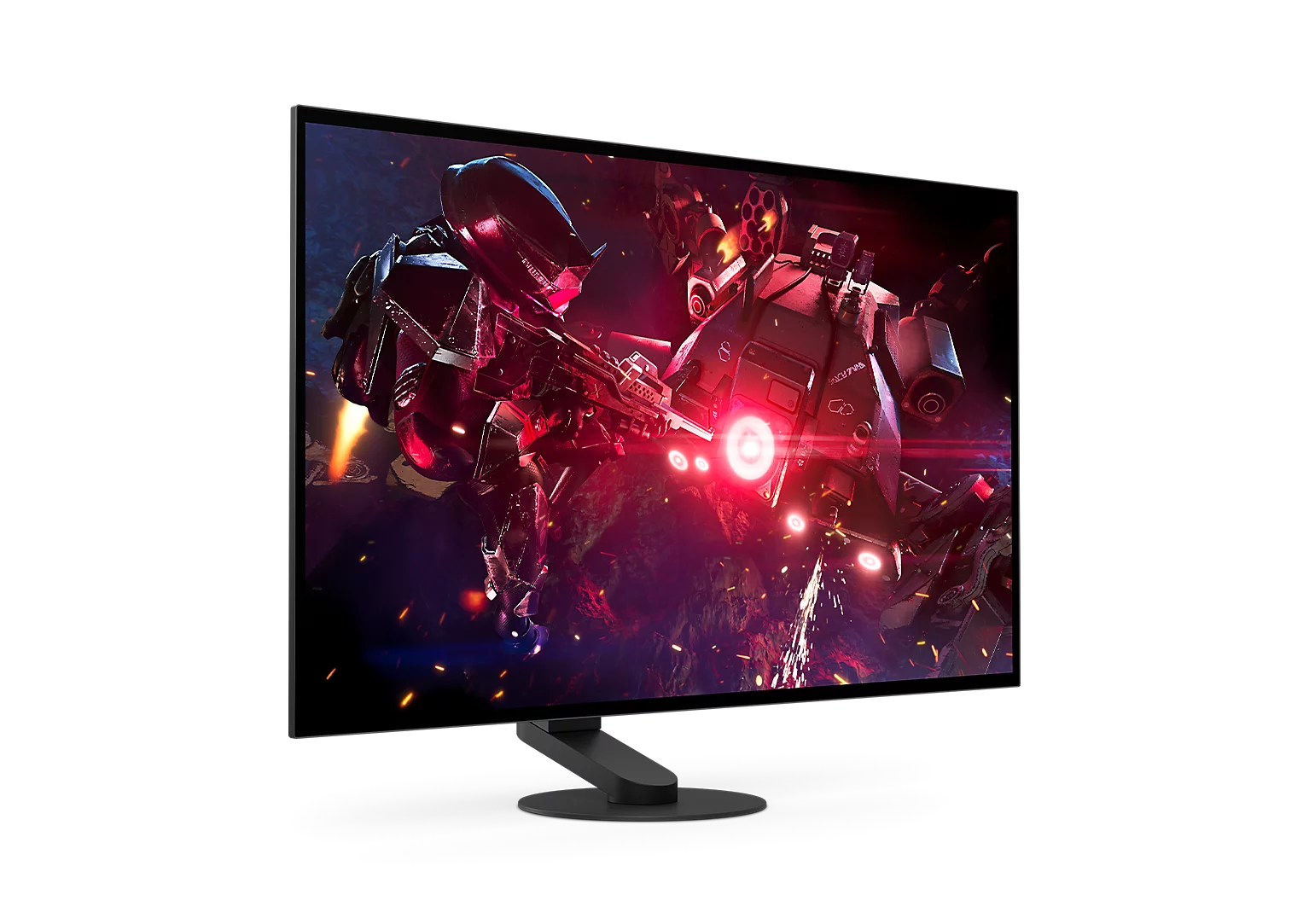
And it's precisely in this context that Sony has decided to play its trump card with the INZONE M10S II, a 27-inch flat monitor that isn't intended to be a one-size-fits-all solution, much less just another display for enjoying your console in the living room. This is a product born with a unique and almost obsessive focus on the world of esports and lightning-fast reflexes.
Under the hood
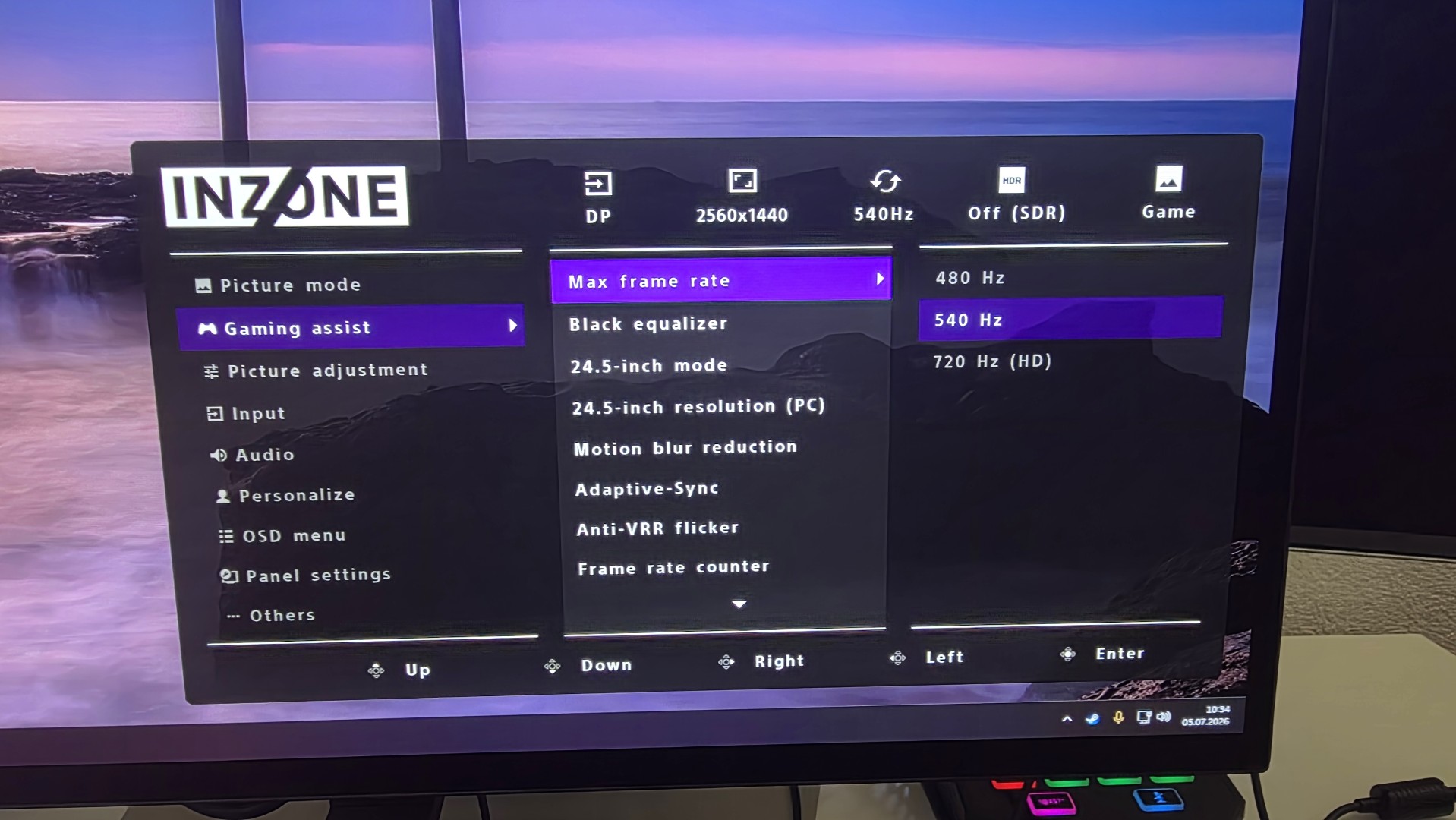
At the heart of this monitor is a 26.5-inch 16:9 OLED panel with a native QHD resolution of 2560 x 1440 pixels, a choice we still consider the ideal balance for computer gaming. The real nerdy specs reveal themselves when we look at the refresh rates, given that via DisplayPort 2.1 the monitor supports a native frequency of 540Hz, while via HDMI 2.1 you have to settle for 480Hz, which is still a stratospheric value. But the real craziness is that this monitor implements DFR (Dynamic Frequency & Resolution) technology, a dual-mode mode that can be activated from the menu and allows you to halve the resolution to unlock the incredible ceiling of 720Hz in HD.
The most impressive figure, however, remains the response time of just 0.02 ms from gray to gray, a value that reduces input lag to practically imperceptible levels and clearly stands out from the old competition based on traditional 0.03 ms panels. In terms of brightness, Sony claims a typical value of 335 cd/m2, which can however shoot up to an impressive peak of 1500 cd/m2 in HDR mode on a window of the 3%, ensuring strong static contrasts of up to 1,500,000:1 thanks also to support for the HDR10 and HLG standards. The DCI-P3 color space coverage reaches 99.5%, ensuring remarkable color fidelity with over a billion colors, further supported by a factory calibration report included in the package with each individual unit. Of course, there is also compatibility with NVIDIA G-Sync and support for VRR via HDMI 2.1, essential for avoiding tearing when the framerate decides to dance noticeably and seasoned with an anti-flicker VRR technology that can be set on multiple levels.
Pleasant design
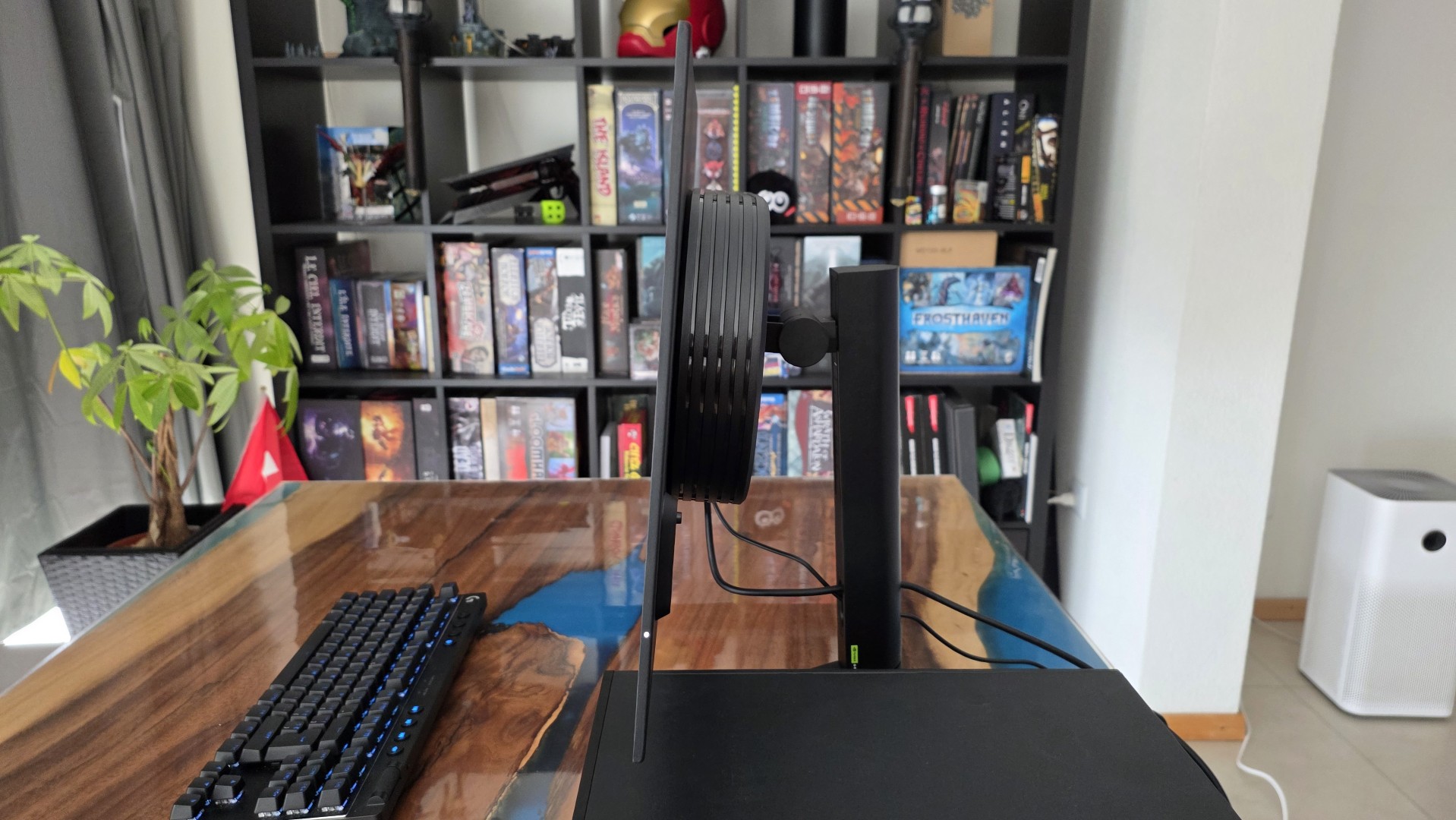
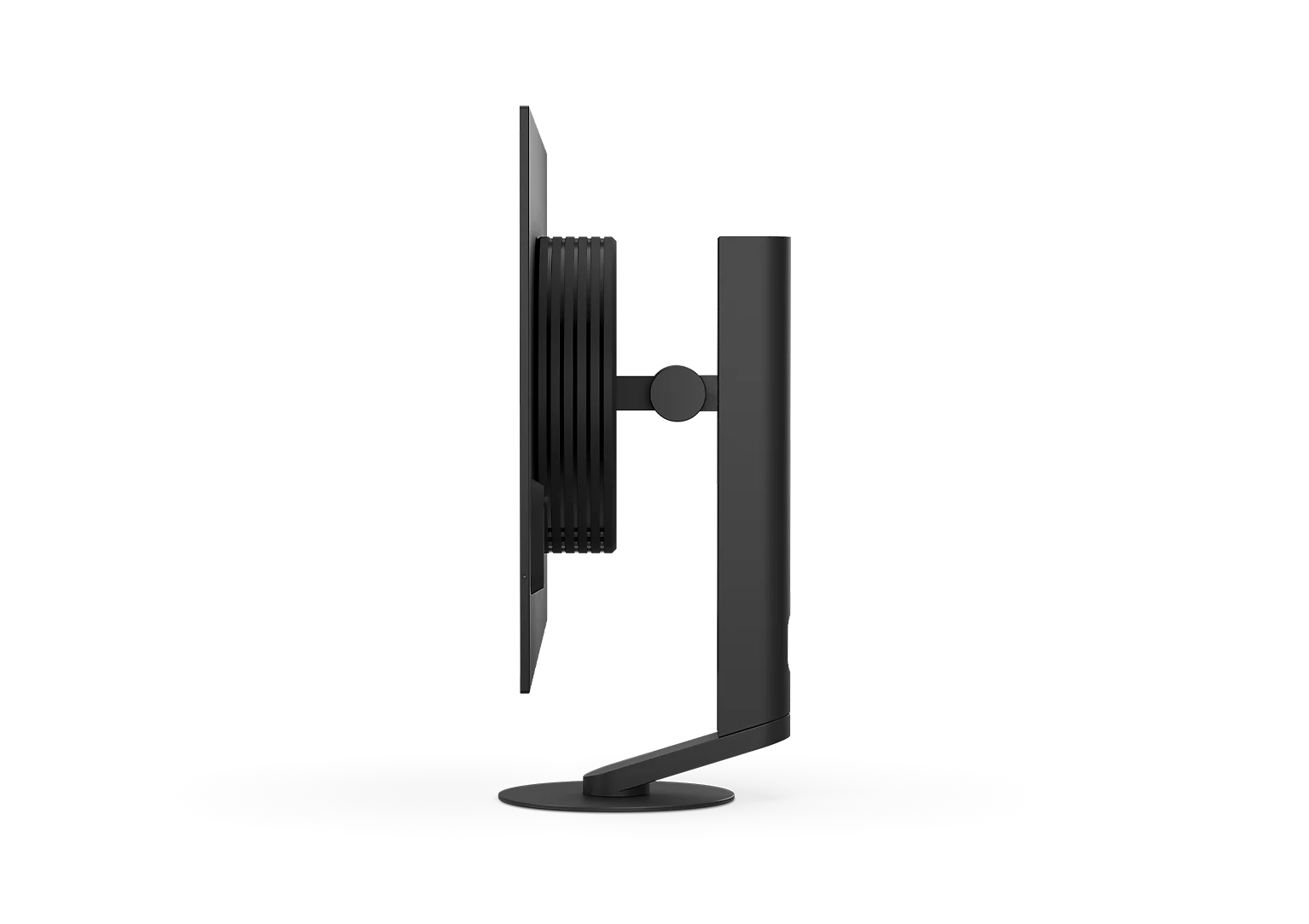
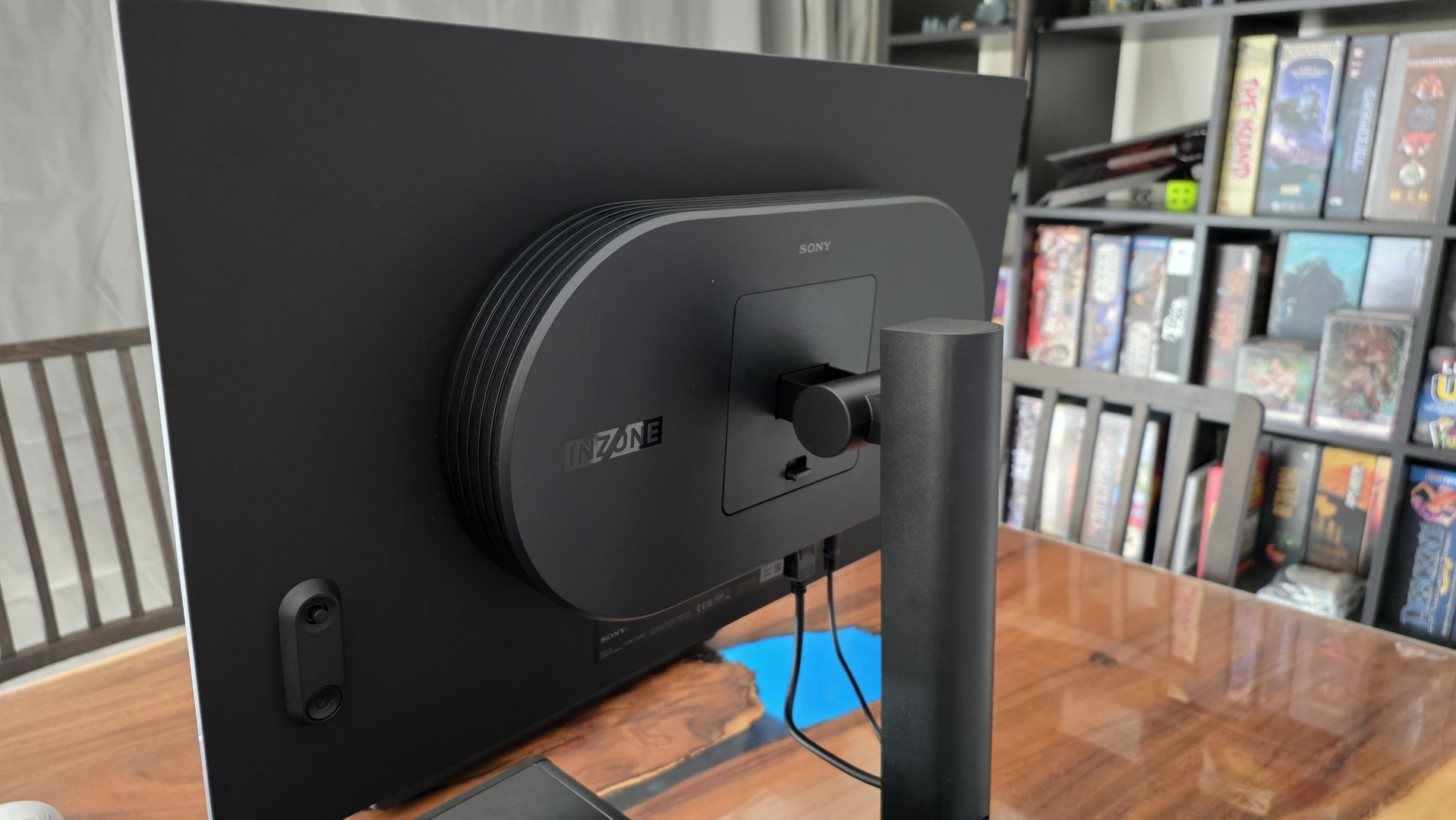
Aesthetically, we really like the overall design, as Sony has embraced a decidedly minimal and elegant look, with a panel thickness of just 5.8 cm (2.3 inches) when measured without the stand. The ergonomic highlight is undoubtedly the 4 mm thick circular base, which can easily slide under the edges of a keyboard thanks to the stand's tiny footprint; a significant detail considering the various solutions offered by other monitors in the past, which have not always been space-efficient.
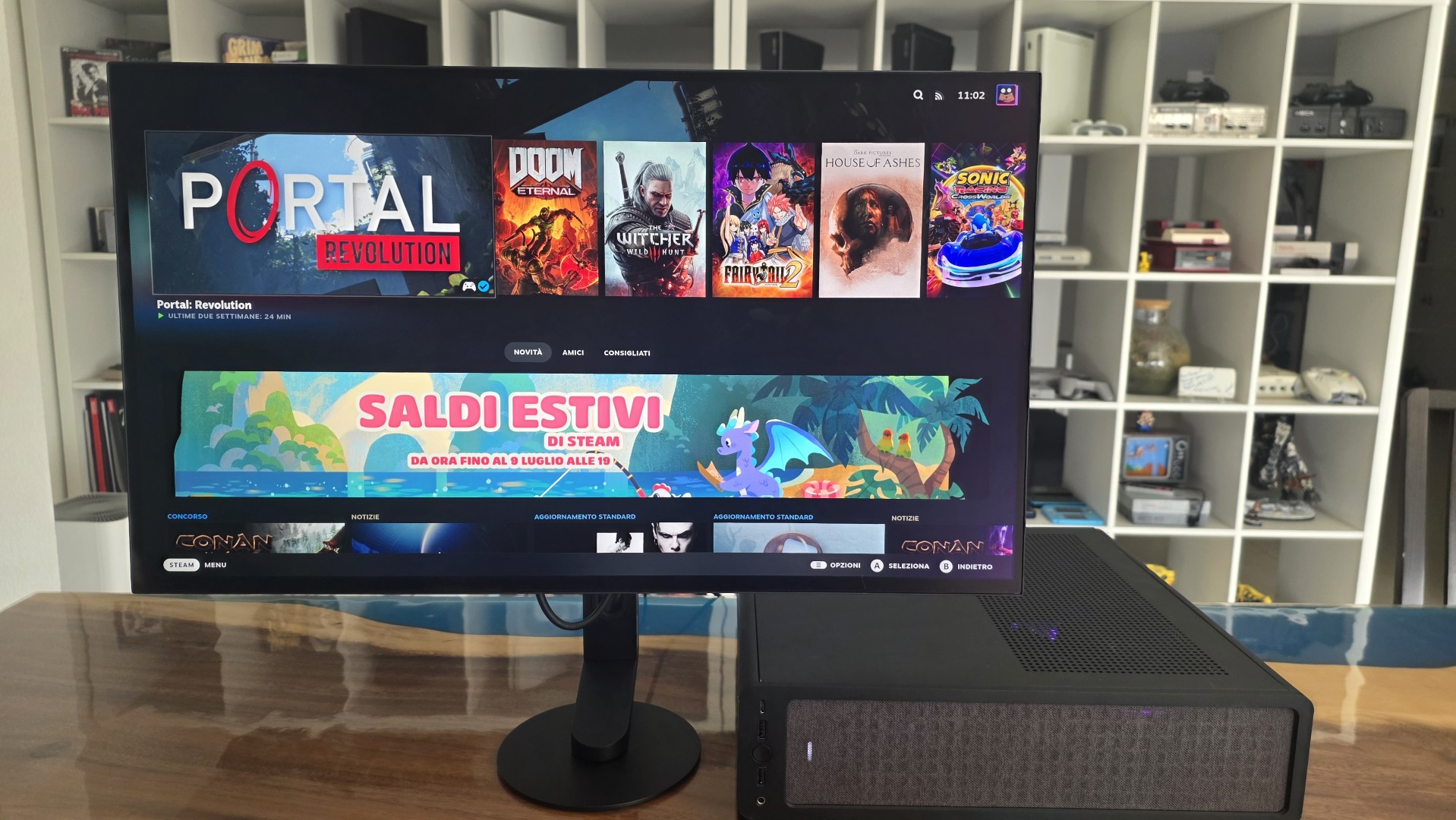
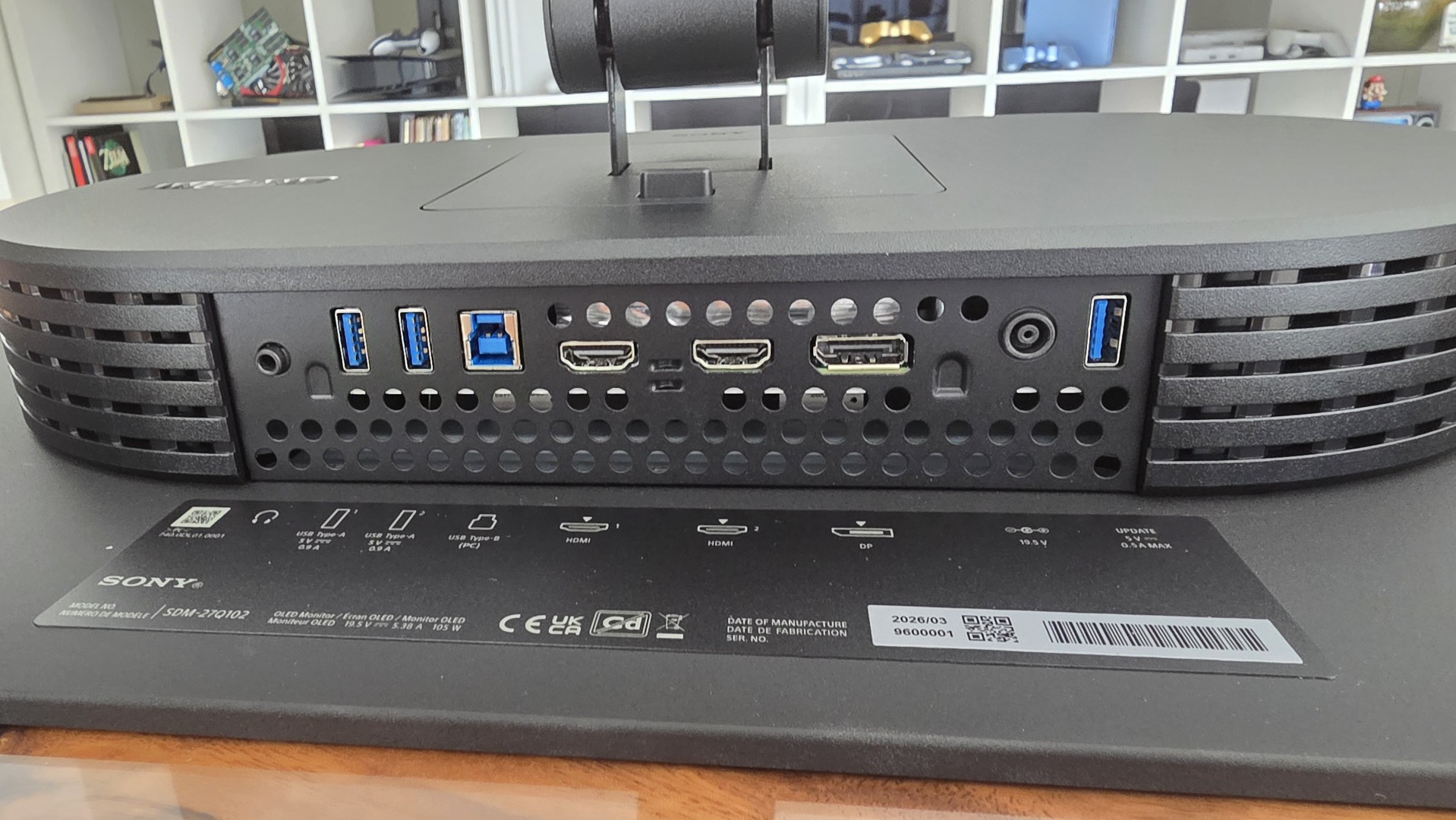
The adjustments are comprehensive and allow for 120 mm of height adjustment, a full 180 degrees of horizontal rotation in both directions, and a vertical tilt ranging from minus 5 to a full 35 degrees, making it much easier to find the ideal position. As for connections, we find a DisplayPort 2.1 compatible with the UHBR13.5 standard, two HDMI 2.1 ports, a USB hub with one Type-B upstream port and two Type-A downstream ports, as well as the classic 3.5 mm headphone jack. We immediately notice the complete absence of USB-C ports and, above all, the lack of built-in speakers, which means you'll have to rely on an external sound system or your trusty headphones.
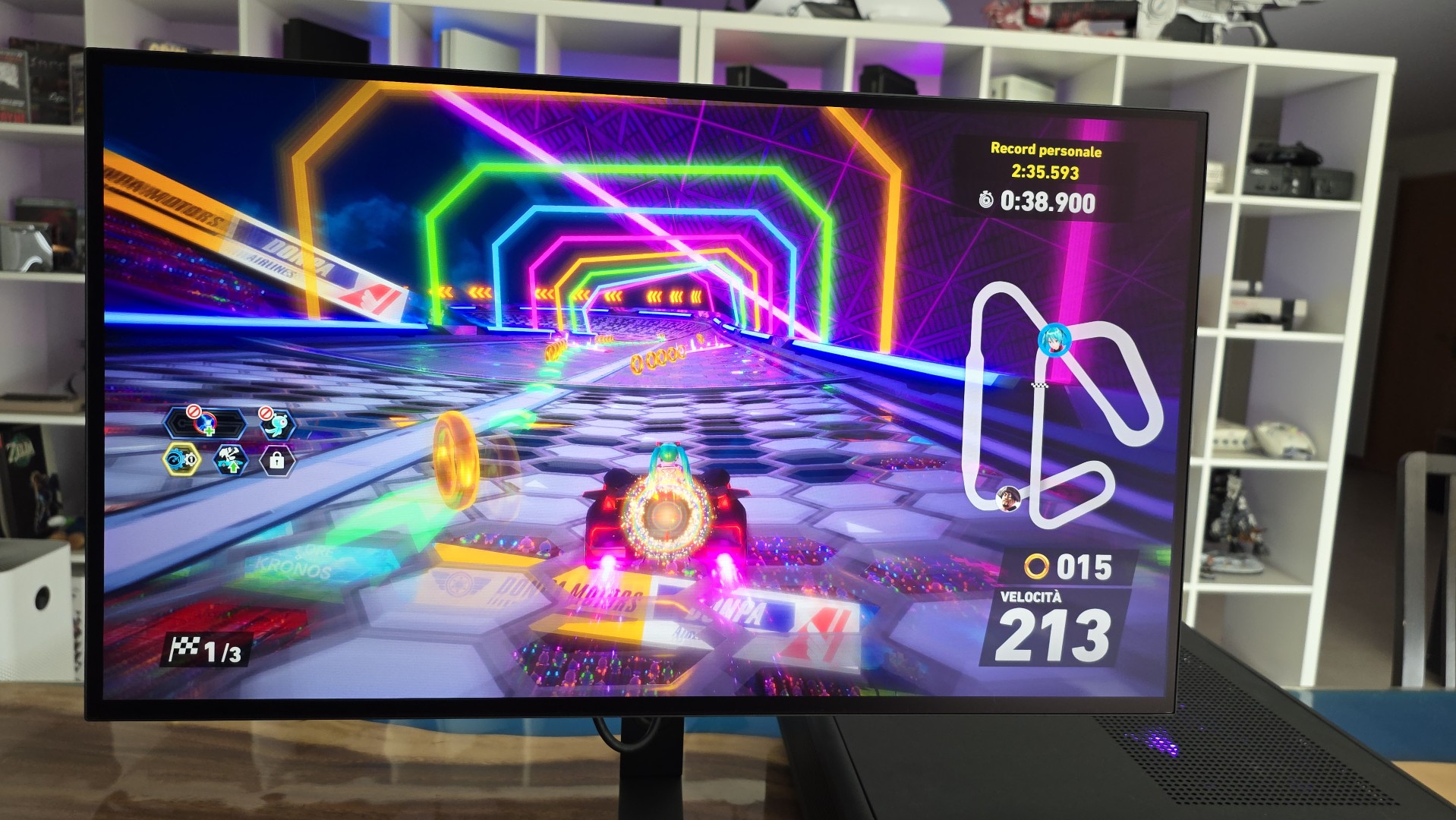
Honorable mention goes to the Super Anti-Glare protective film applied to the panel, an advanced matte coating that cuts reflections much more aggressively than standard treatments without ruining the typical OLED sharpness. The management software is also excellent, with the OSD menu clear and easily navigable via the convenient five-way joystick located on the back, allowing you to activate specific functions such as the on-screen viewfinder, the frame rate counter, or the mode that virtually shrinks the image to 24.5 inches to reduce the travel distance between the center of the screen and the interface indicators.
In play
Putting a monitor like this to the test inevitably requires top-notch hardware, since to saturate such a frequency you need modern graphics cards capable of spitting out hundreds of frames per second in light titles like Counter-Strike 2. As anticipated, the real hardware peculiarity of this model lies in the DFR technology, a dual-mode mode that can be activated from the menu and allows you to switch from QHD resolution at 540Hz to an HD configuration at 720Hz.
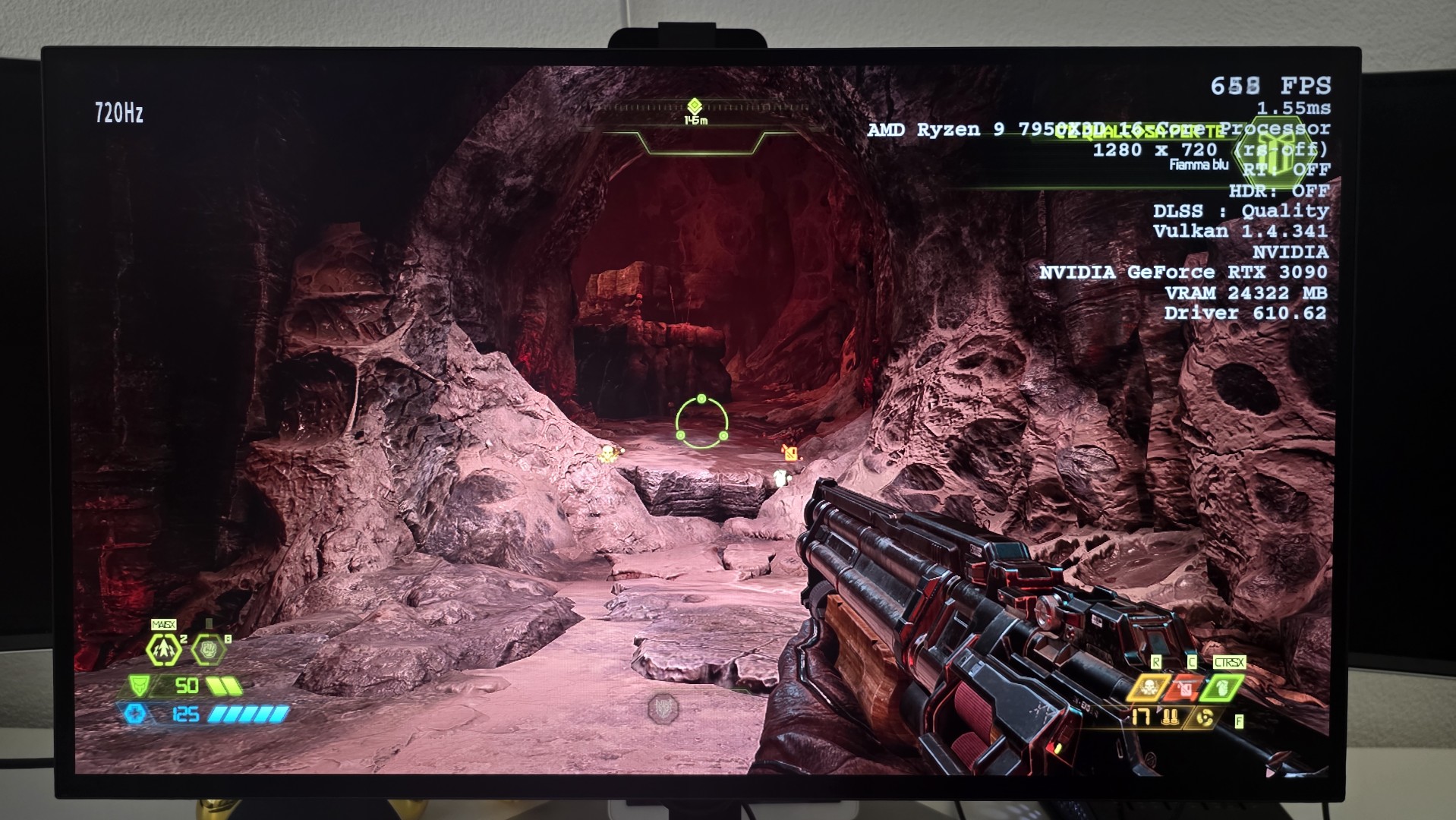
In our field tests with fast-paced competitive shooters and targeting applications, we were actually able to push the 720p mode all the way up to 700Hz, but unless you have a latest-generation PC equipped with a top-of-the-line graphics card capable of maintaining consistently stable fps, the visual compromise is significant. Playing in 720p is actually like taking a step back in terms of image clarity, as the jagged edges and overall loss of detail are noticeable even on a 27-inch diagonal. But hey, if someone is looking for a monitor with these specific features, they certainly have a very specific use for it, and from that perspective, the low resolution won't be a problem at all if it can give them a real competitive advantage in terms of fluidity and tracking of moving targets.
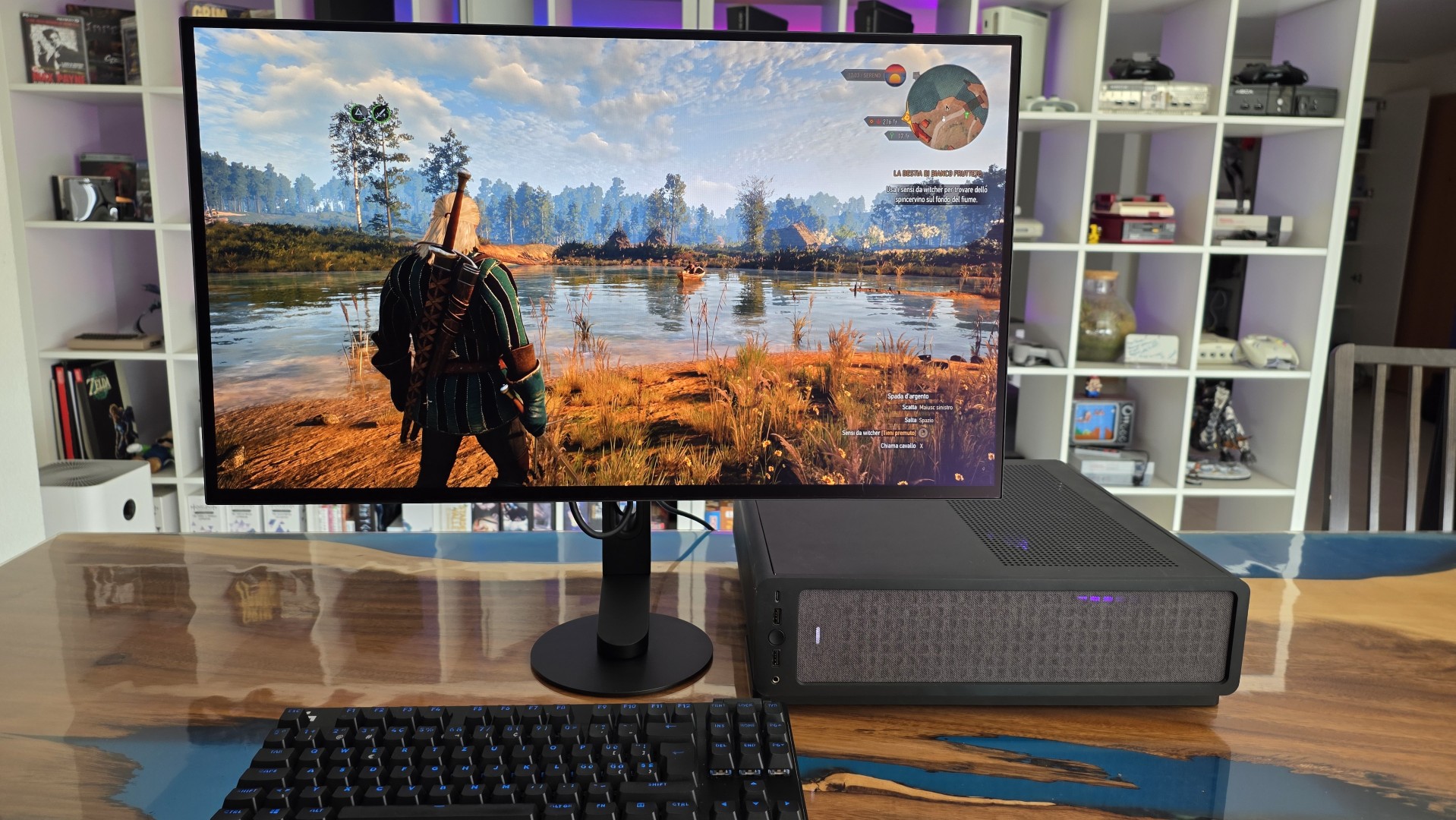
The clarity of moving images is simply insane and the motion blur effect is practically non-existent, although you have to be careful with the blur reduction function which, when activated, caps the refresh rate at a maximum of 270Hz, defeating the very nature of the panel.
Conclusion
The Sony INZONE M10S II proves to be an excellent product, but it's aimed at a very specific niche market, one willing to spend significant amounts to get the fastest speed available on the market today. The screen is beautiful to look at thanks to the color quality of the OLED panel, and the overall responsiveness redefines the standards for competitive PC gaming, provided you have the right hardware configuration. Of course, the visual compromises of the 720Hz mode and some lack of connectivity might put off those looking for a versatile monitor for everyday productivity or all-around multimedia use. However, if your sole goal is to climb the online leaderboards of first-person shooters and you're looking for a display with no compromises in terms of latency, Sony's offering is undoubtedly worth serious consideration.