The gaming & tech site for Ticino and Italian-speaking Switzerland
The gaming & tech site for Ticino and Italian-speaking Switzerland
FRITZ!Box 6825 4G

✓ What we like
- 🟢 Powered via USB-C
- 🟢 Compact and very cute
- 🟢 Powerful and simple FRITZ!OS
What we don't like
- 🔴 2.4GHz Wi-Fi only
- 🔴 No external antenna
- 🔴 No eSIM support
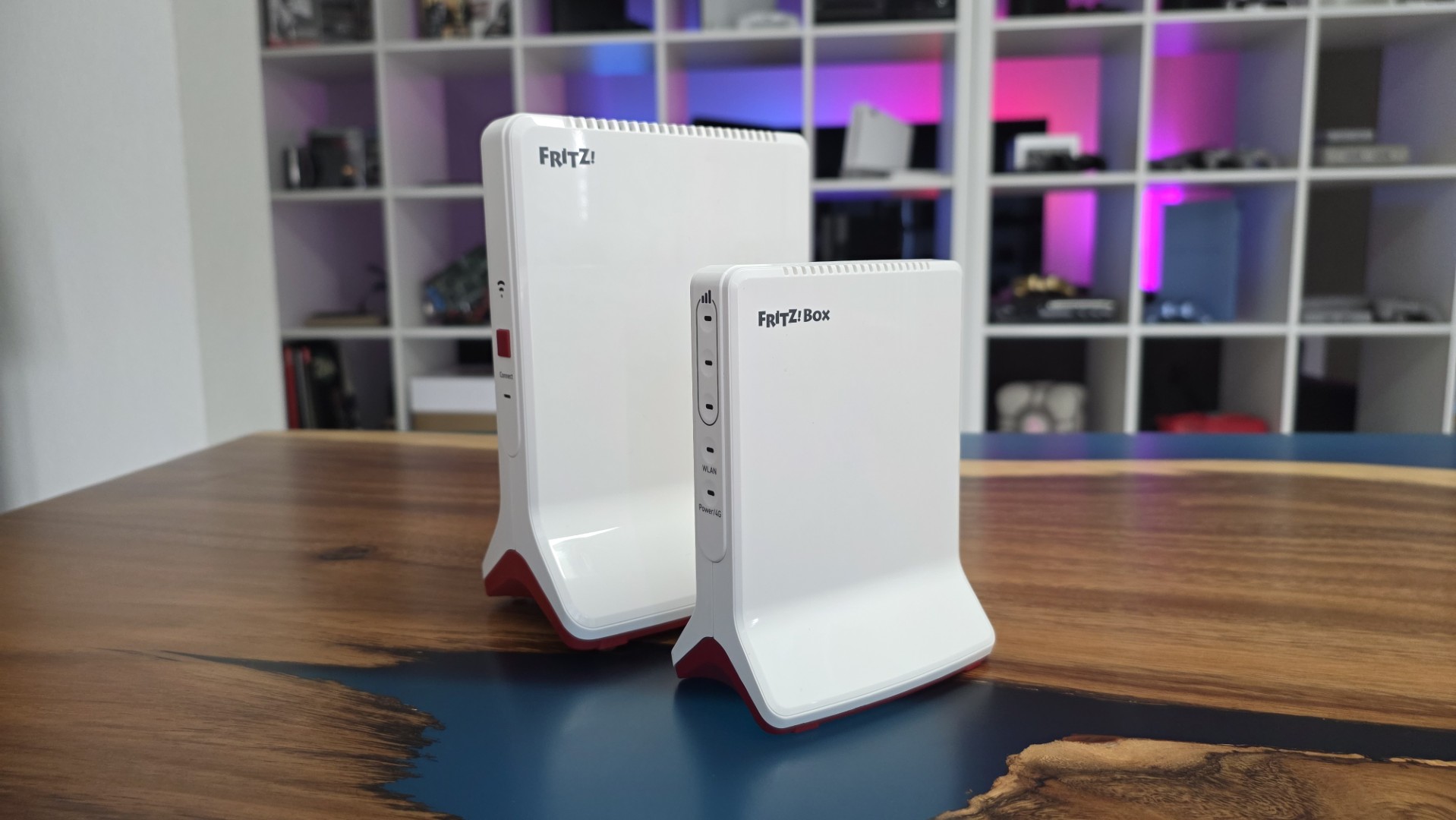
We're used to thinking of routers from Berlin's Fritz! as those red and white "spaceships" that proudly sit in our living rooms, packed with antennas and ports of all kinds. This time, however, Fritz! has decided to go in the opposite direction, launching the FRITZ!Box 6825 4G, a device that focuses entirely on compactness and extreme portability.

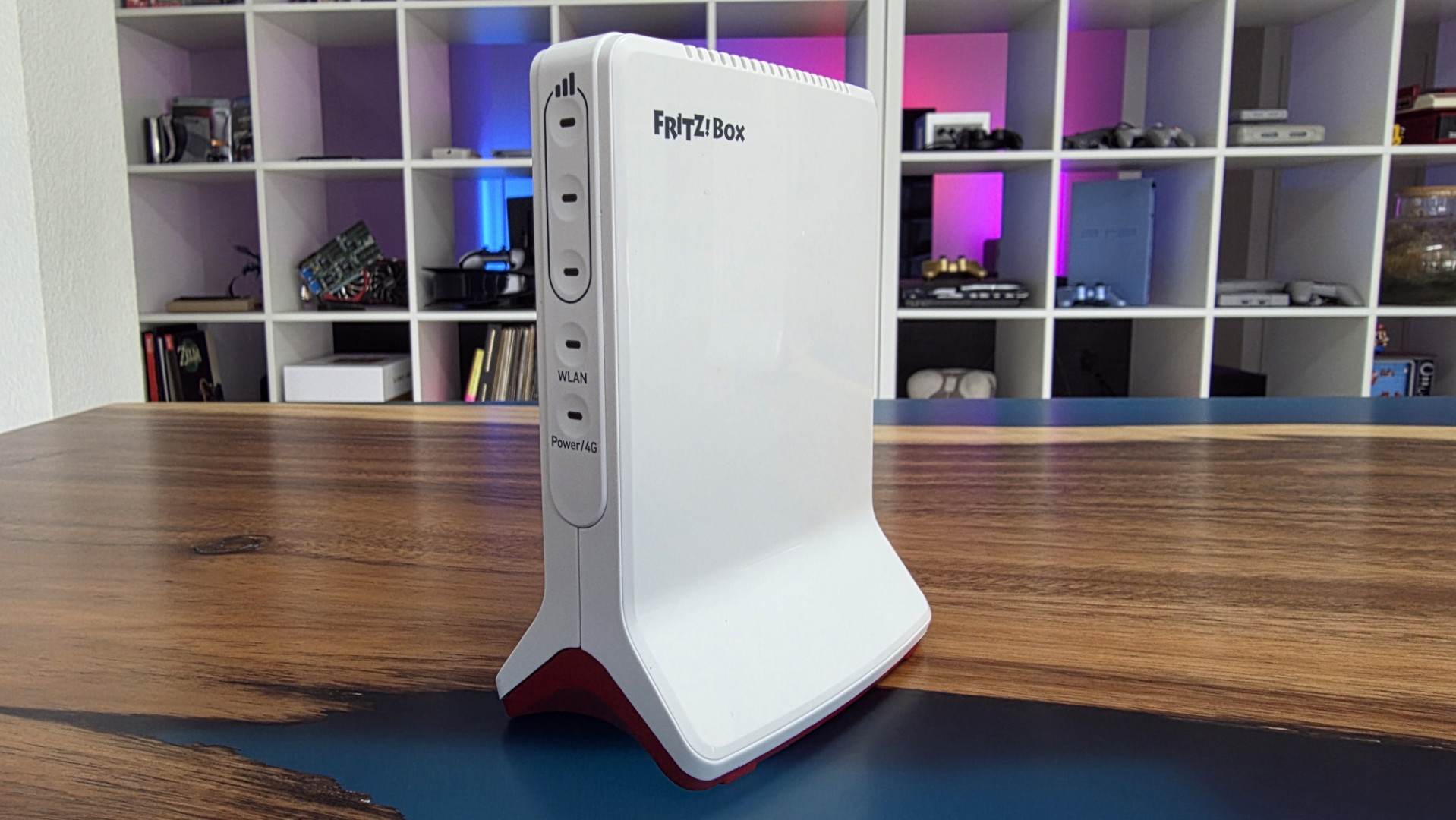
It's not the brand's first experiment in the mobile sector, but it's undoubtedly the most accessible, with a list price of CHF 119. It's designed for those who need internet in their camper, vacation home, or simply as a "lifeboat" when fiber optics decide to take a break for an afternoon. Aesthetically, it's undoubtedly cute, almost reminiscent of a miniature Fritz! Repeater, capable of disappearing into any backpack without much fuss.
Technical specifications
Under the white shell, which measures just 13.5 x 9.8 x 6.5 cm (it practically fits in one hand and weighs only 158 grams), beats a Cat 6 LTE modem capable of reaching 300 MBit/s download and 50 MBit/s upload. To manage data, the router uses Dual-Frequency Carrier Aggregation (2CC), optimizing our "fast lane" even where the signal isn't exactly record-breaking.
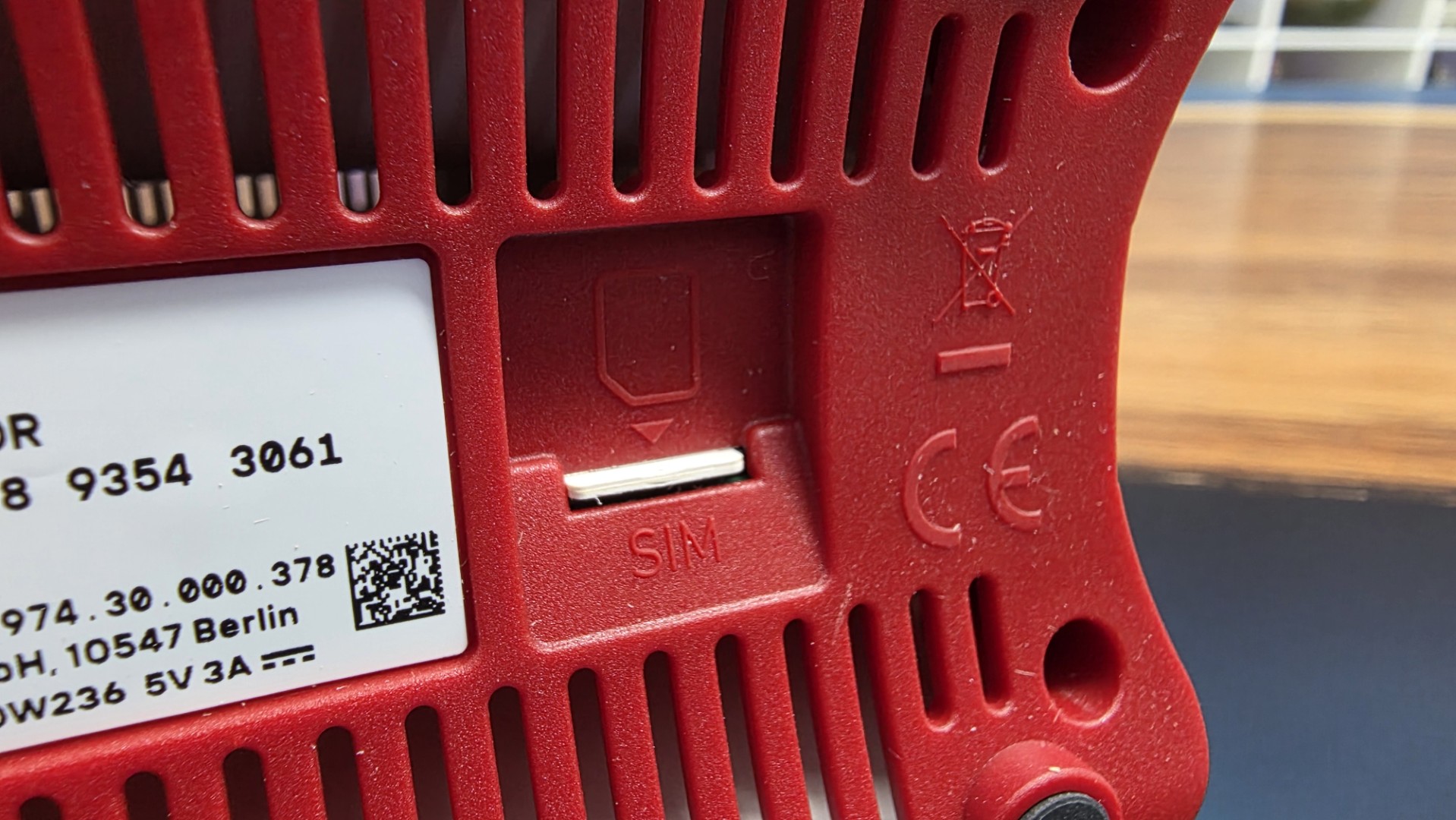
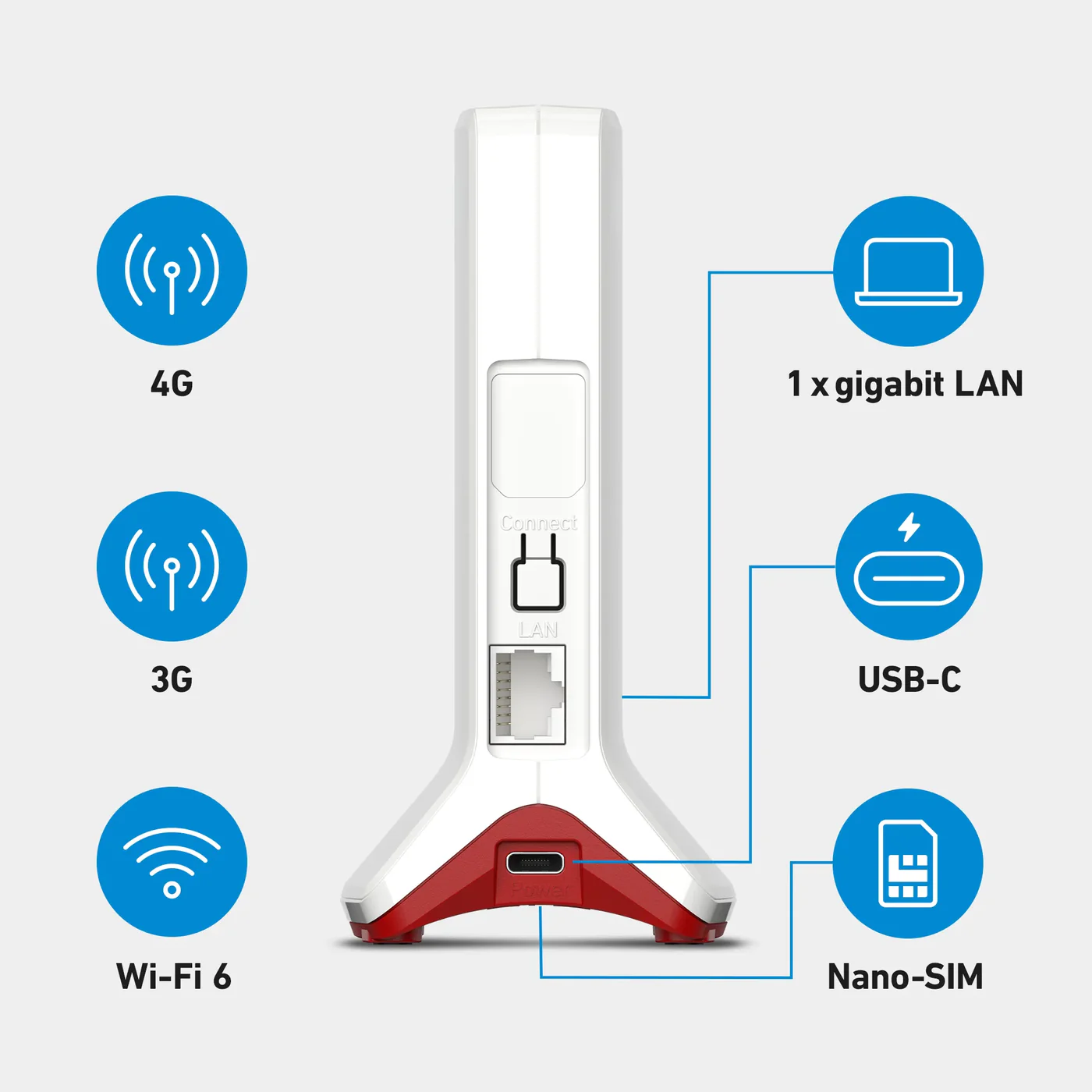
The wireless front is entrusted to Wi-Fi 6, a modern choice that, however, hides a huge original sin: it operates exclusively on the 2.4 GHz band, with a theoretical maximum speed of 600 Mbps. This decision stems from price positioning, but the absence of the 5 GHz network is felt, not so much in terms of pure internet speed (which is limited with 4G anyway), but in terms of managing local connections between our devices. A Gigabit LAN port and a single Nano-SIM slot complete the package.
Features
The real revolution of this model, however, is not the modem, but the hole in the back: the 6825 is the first FRITZ!Box powered via USB-C. And this is a significant advantage because it allows it to work not only with a simple smartphone charger, but also by connecting it directly to a power bank or a 12V car socket.
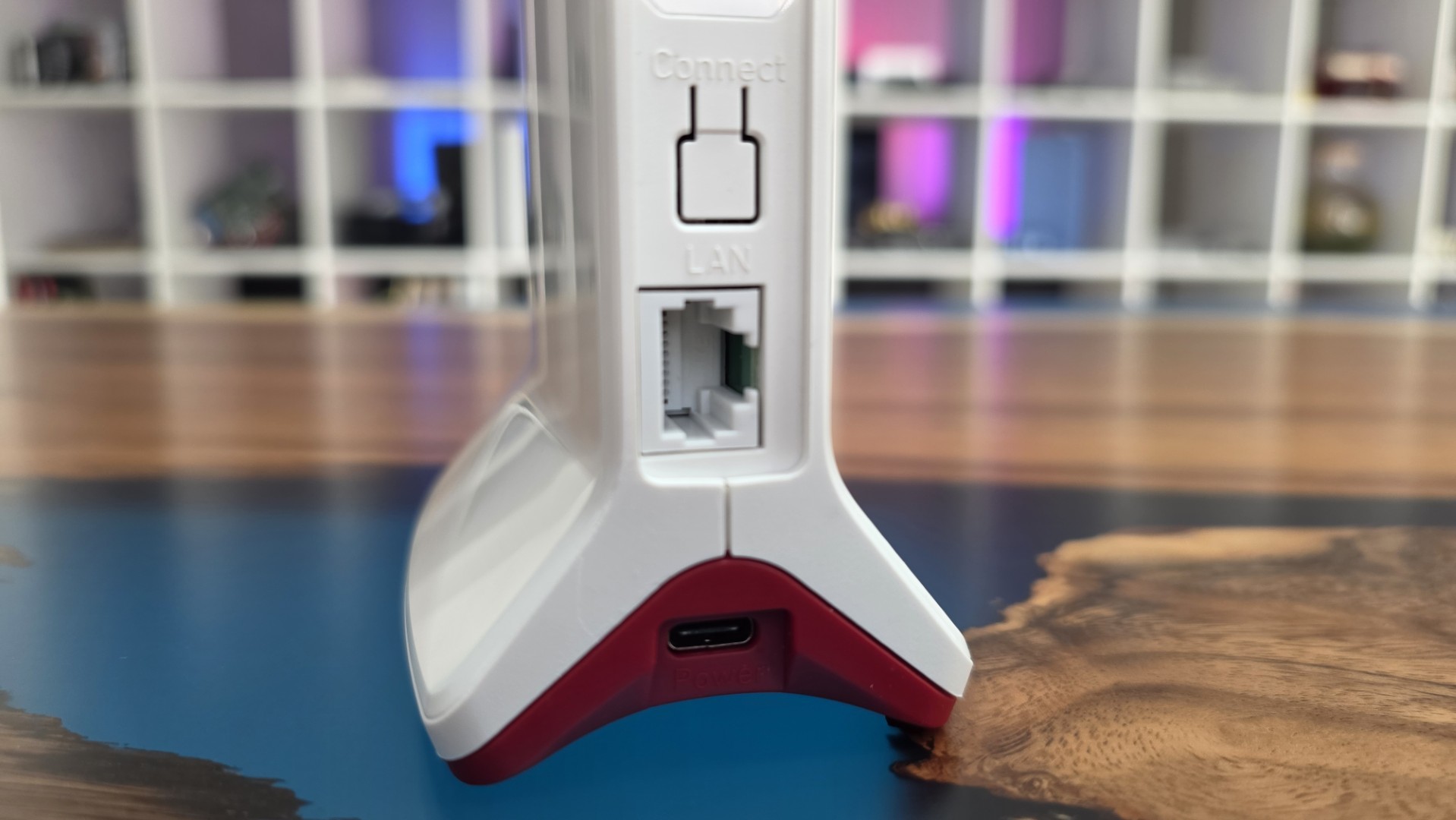
Power consumption is ridiculously low, rarely exceeding 4 watts under load, making it the ideal companion for nomadic work sessions in the middle of nowhere (nowhere, however, with a 4G connection, otherwise you won't get very far). On the software side, we find the usual, excellent FRITZ!OS, which brings Mesh support, VPN (WireGuard and IPSec), and a very handy alignment utility that helps you orient the box towards the nearest repeater to squeeze every single Mbps. However, we would have sincerely appreciated a connector for an external antenna, useful in those areas where the signal reaches only very slightly.
Field test
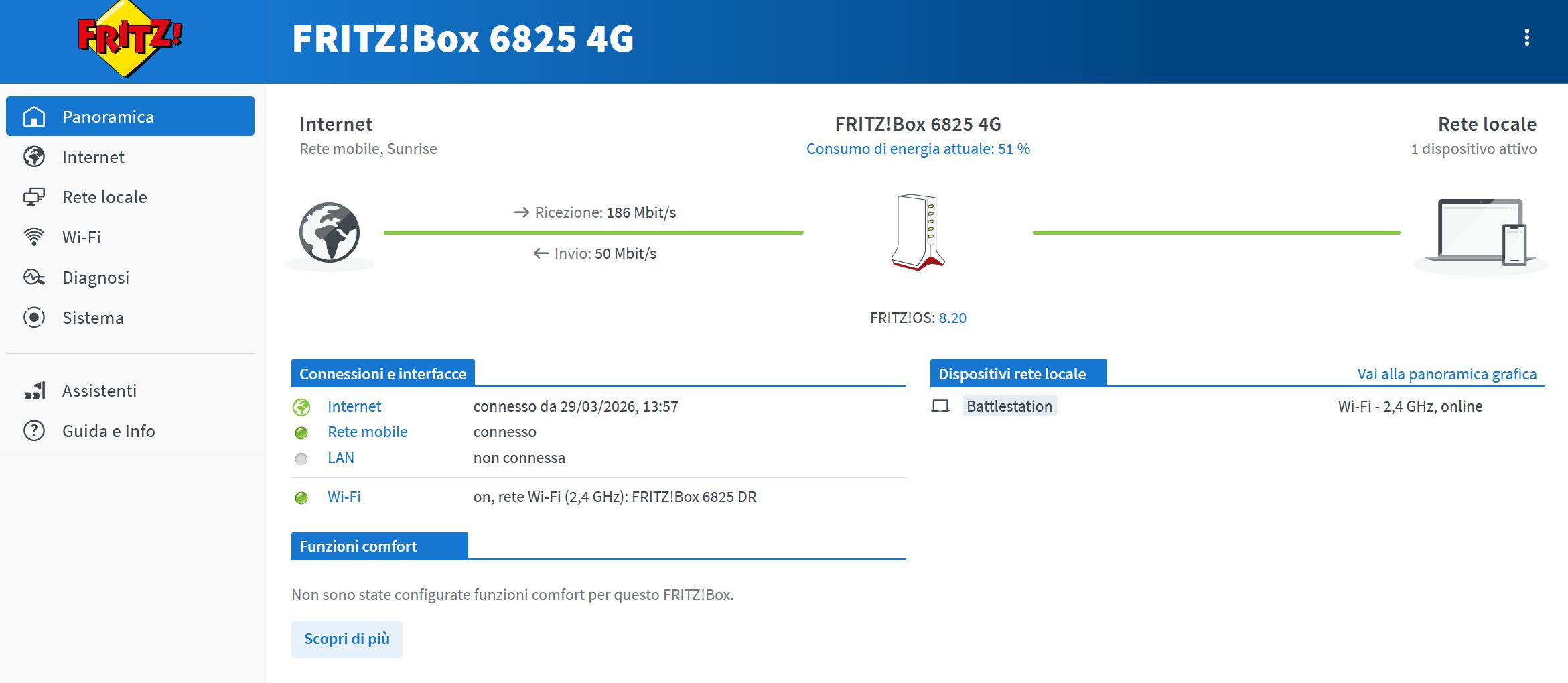
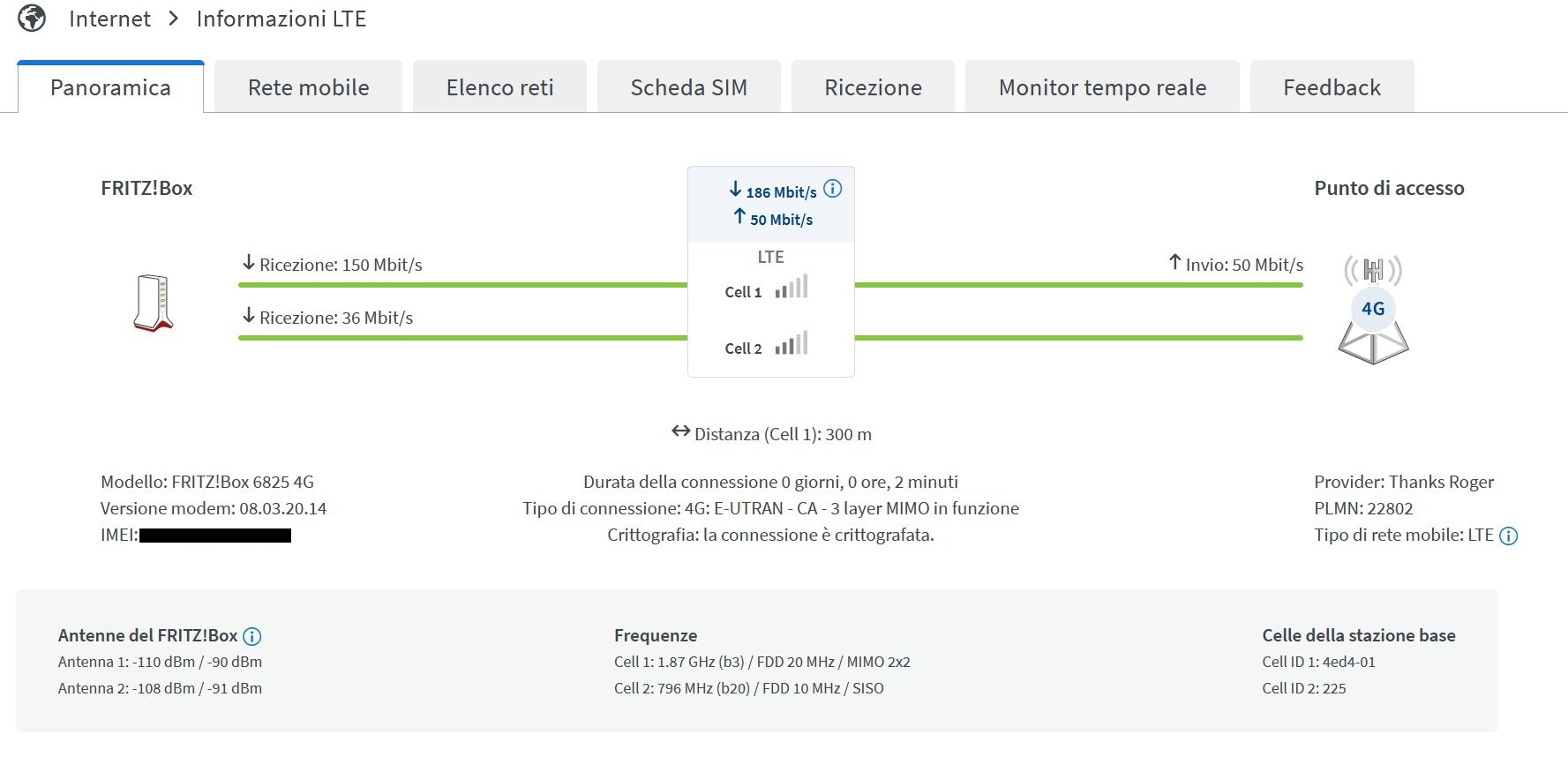
In the field, the FRITZ!Box 6825 performs well, ideal for situations where basic connections are required (think of the classic mountain cabin where you don't want to carry all your home infrastructure). In our tests, hooking up to a standard 4G cell, we achieved about 200 MBit/s download speeds while staying close to the router. The 2.4 GHz Wi-Fi range is adequate for covering a small office or an entire camper, but it suffers from the congestion typical of this frequency.
Conclusion
FRITZ!Box 6825 4G is not the router for those who want to break speed records, if money is no object, the 6860 5G It's infinitely more versatile and powerful, but it's a solid and intelligent product. The 2.4 GHz Wi-Fi limit is a real shame, especially when similarly priced devices support 5 GHz, but here you pay for the rock-solid stability of the German software. USB-C power delivery is the killer feature that sets it apart from much of the competition, making it the perfect purchase for travelers or anyone needing a reliable and easy-to-setup emergency connection.