
The gaming & tech site for Ticino and Italian-speaking Switzerland
The gaming & tech site for Ticino and Italian-speaking Switzerland
ASUS ROG GR70

✓ What we like
- 🟢 Powerful CPU
- 🟢 Powerful GPU
- 🟢 Access to internal components
- 🟢 Form factor
What we don't like
- 🔴 Only 8GB VRAM video
- 🔴 Very high list price (3000CHF+)
- 🔴 Very bulky external power supply
- 🔴 CPU temperature under heavy load
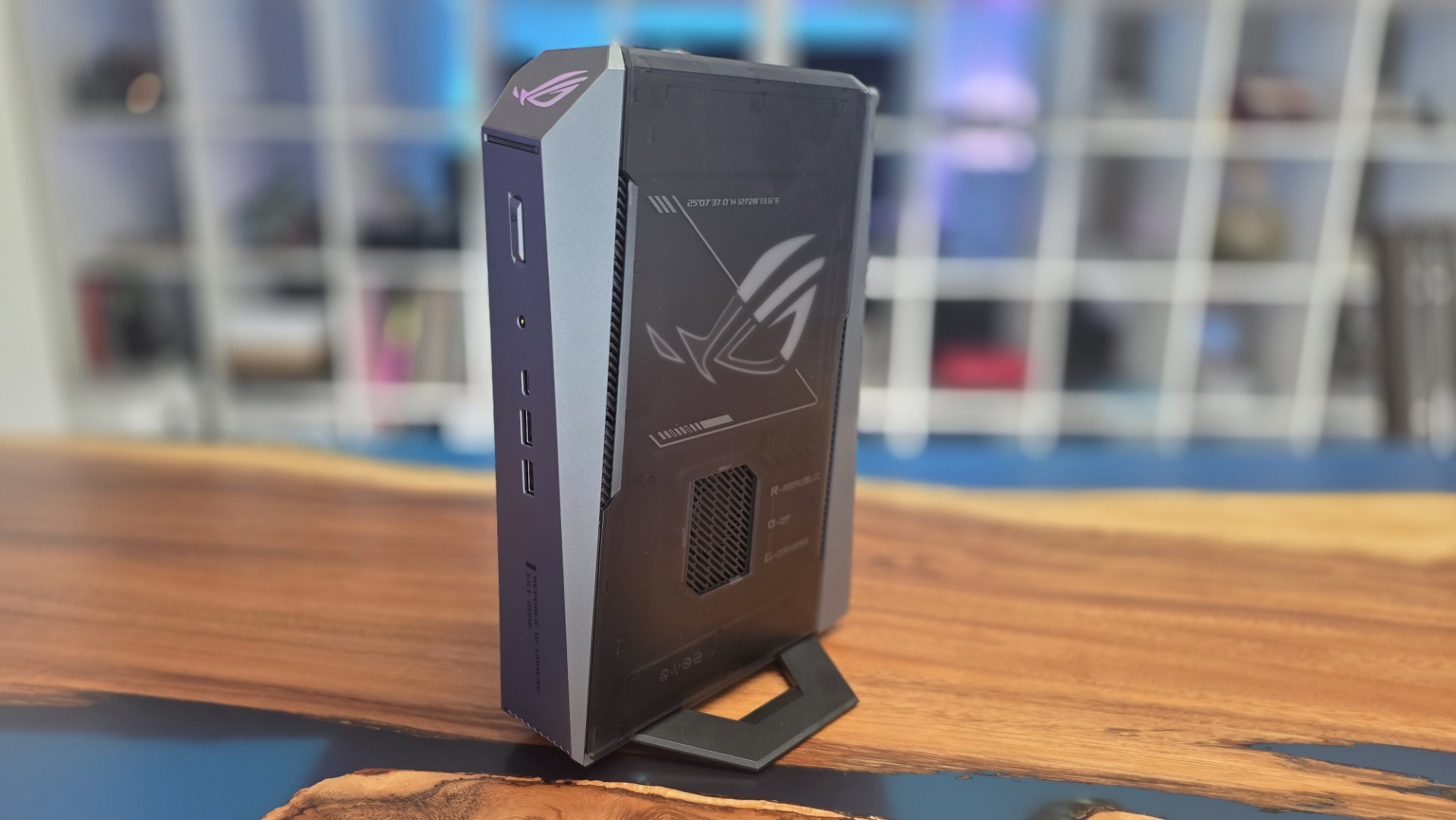
The ASUS ROG GR70 (N90010AN) represents the pinnacle of the brand's Small Form Factor philosophy, a true powerhouse that manages to condense brutal performance into a volume of less than 3 liters. Born from the technological transition following the NUC era, this mini PC is not just an exercise in style but a complete gaming station that challenges traditional desktop towers (while taking up less space).

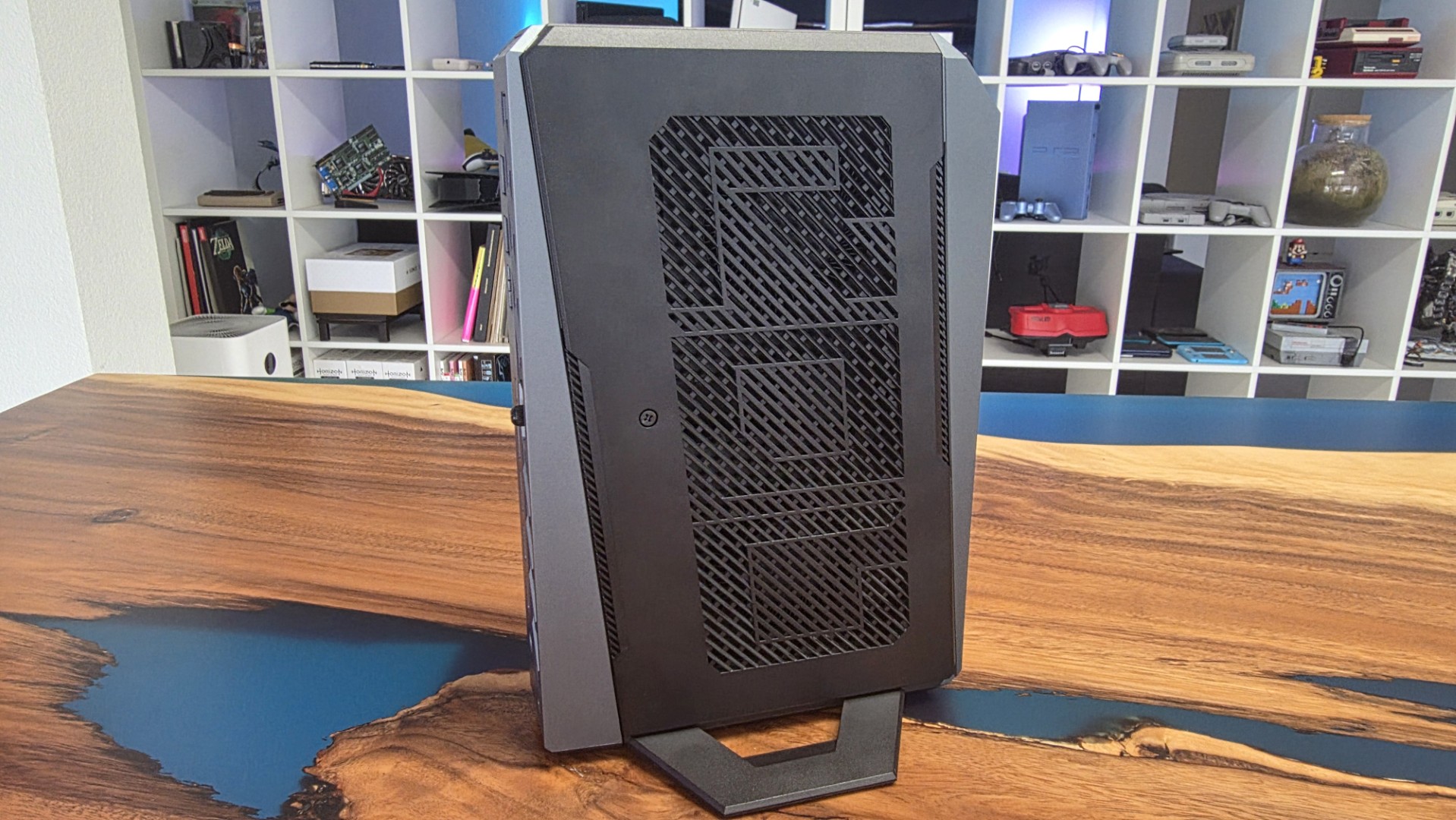
The construction philosophy is based on absolute density: cramming enthusiast-class hardware into a 2.75 kg chassis that can be positioned either vertically or horizontally (though we don't recommend the latter, given the fans on each side), making it perfect for those looking for a powerful yet discreet machine for the living room or minimalist desk. Despite its mobile core, the GR70 is optimized to unleash every single watt thanks to a heat dissipation system that doesn't have to make the compromises typical of ultra-thin laptops.
In the belly of the beast
Under the hood of this monster beats a heart that would make many desktop towers envious: we're talking about the AMD Ryzen 9 9955HX3D, a 16-core, 32-thread processor based on the Zen 5 architecture that leverages the now-legendary 3D V-Cache technology. Despite its laptop roots, Asus has configured it with a 70W cTDP, allowing it to push the envelope without the bottlenecks typical of ultra-thin systems.
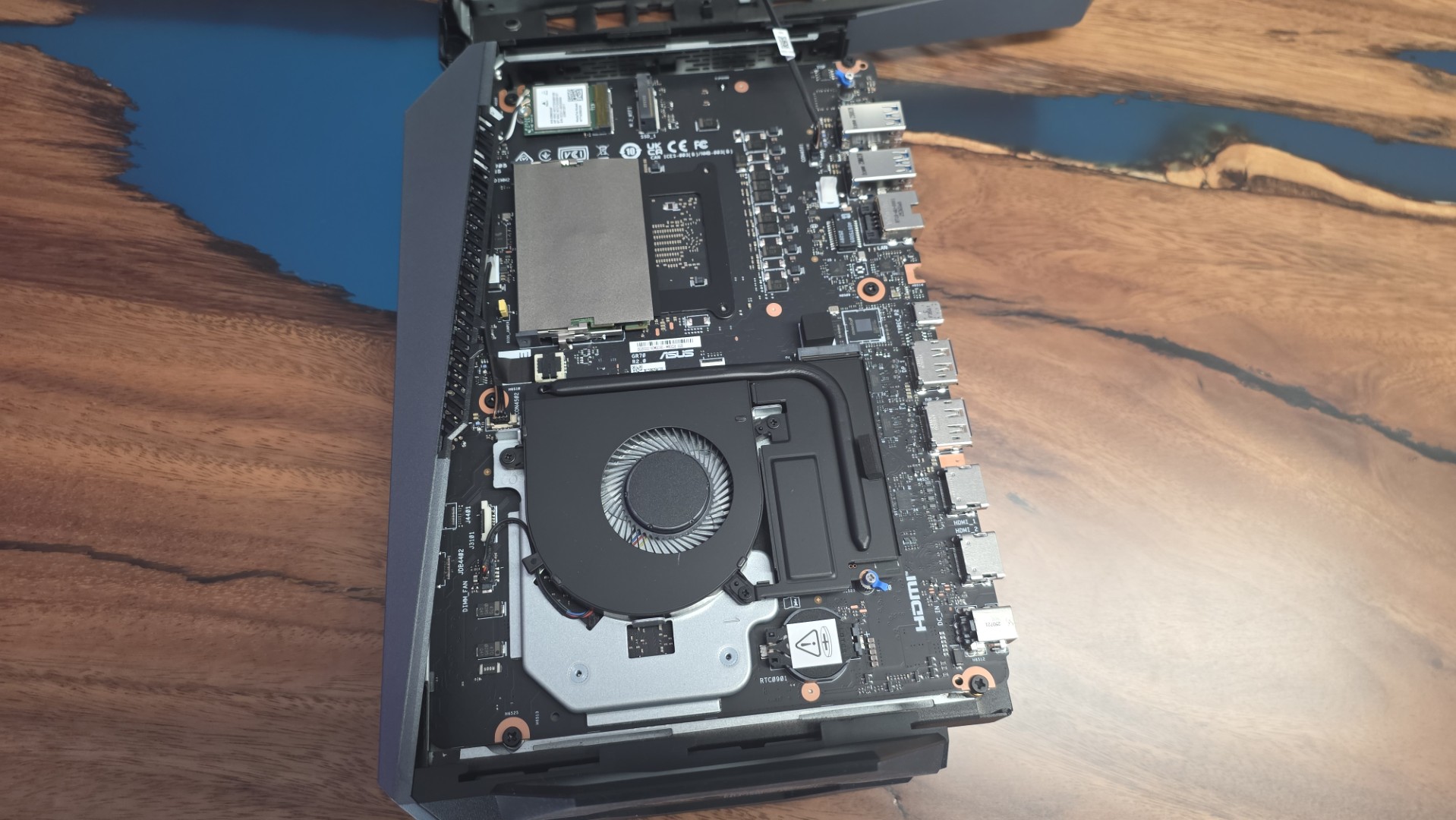
Alongside it is the NVIDIA GeForce RTX 5070 Laptop GPU, which despite being limited to 8GB of VRAM (a cardinal sin in 2026, let's face it), unleashes its full power with a TGP of 100W plus 15W of Dynamic Boost. The RAM is 32GB DDR5-5600 in SO-DIMM format, while storage is handled by a 2TB NVMe PCIe 5.0 SSD manufactured by Micron that promises mind-blowing speed (and indeed, in tests, it proved to be lightning fast). Wi-Fi 7, Bluetooth 5.4, and a 2.5G LAN port are also included, because latency is the absolute bane of all trades, and Asus knows it well.
ROG Design
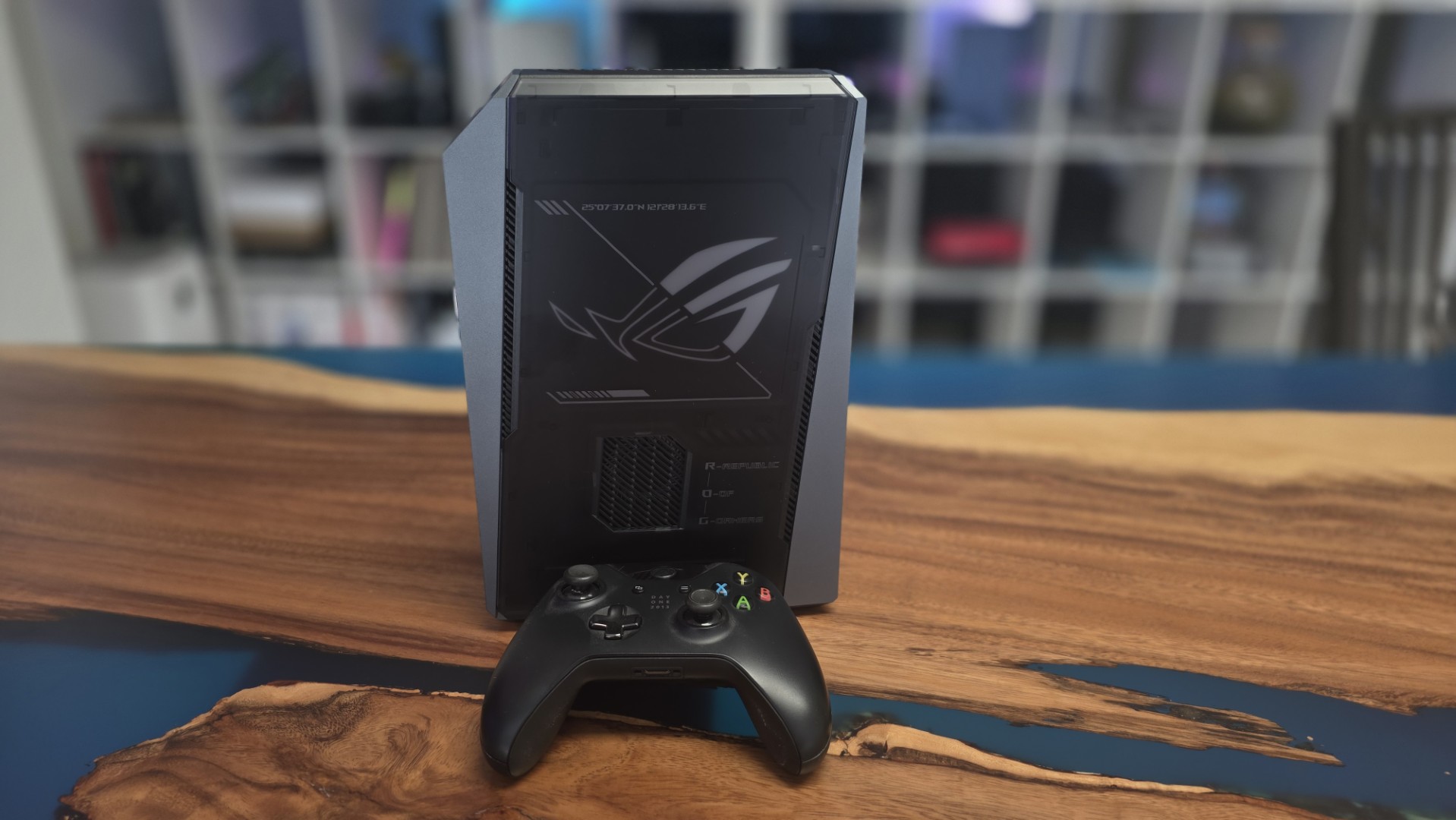
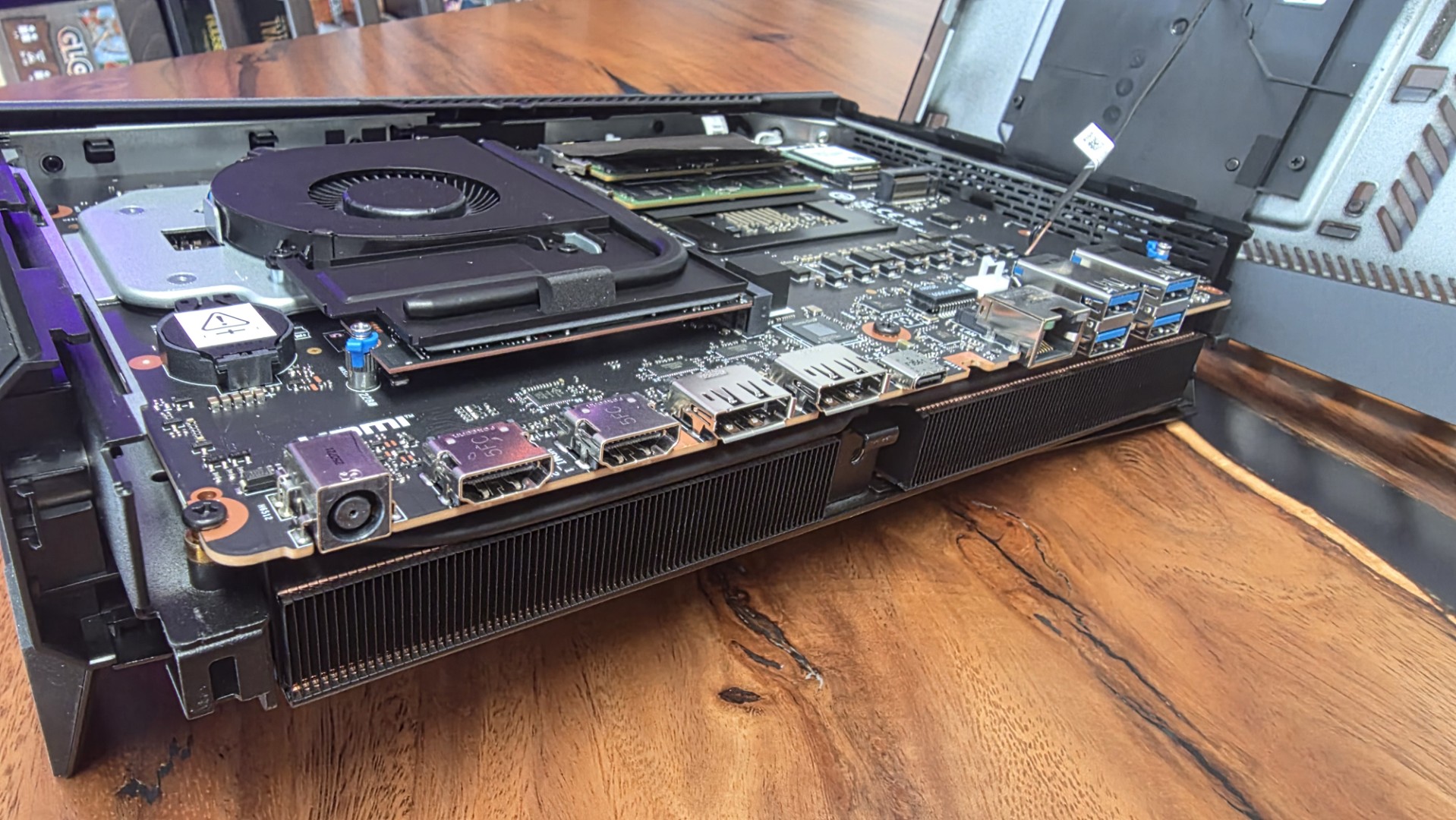
The design is very ROG, with an aggressive Star Grey aesthetic that you may or may not like (but certainly won't go unnoticed) and which encloses everything in a plastic and metal chassis with a volume of just 3 liters. With dimensions of 282.4 x 187.7 x 56.6 mm and a weight of 2.75 kg, it's a solid object that lends itself perfectly to being placed vertically next to the TV (making current consoles look awkward).
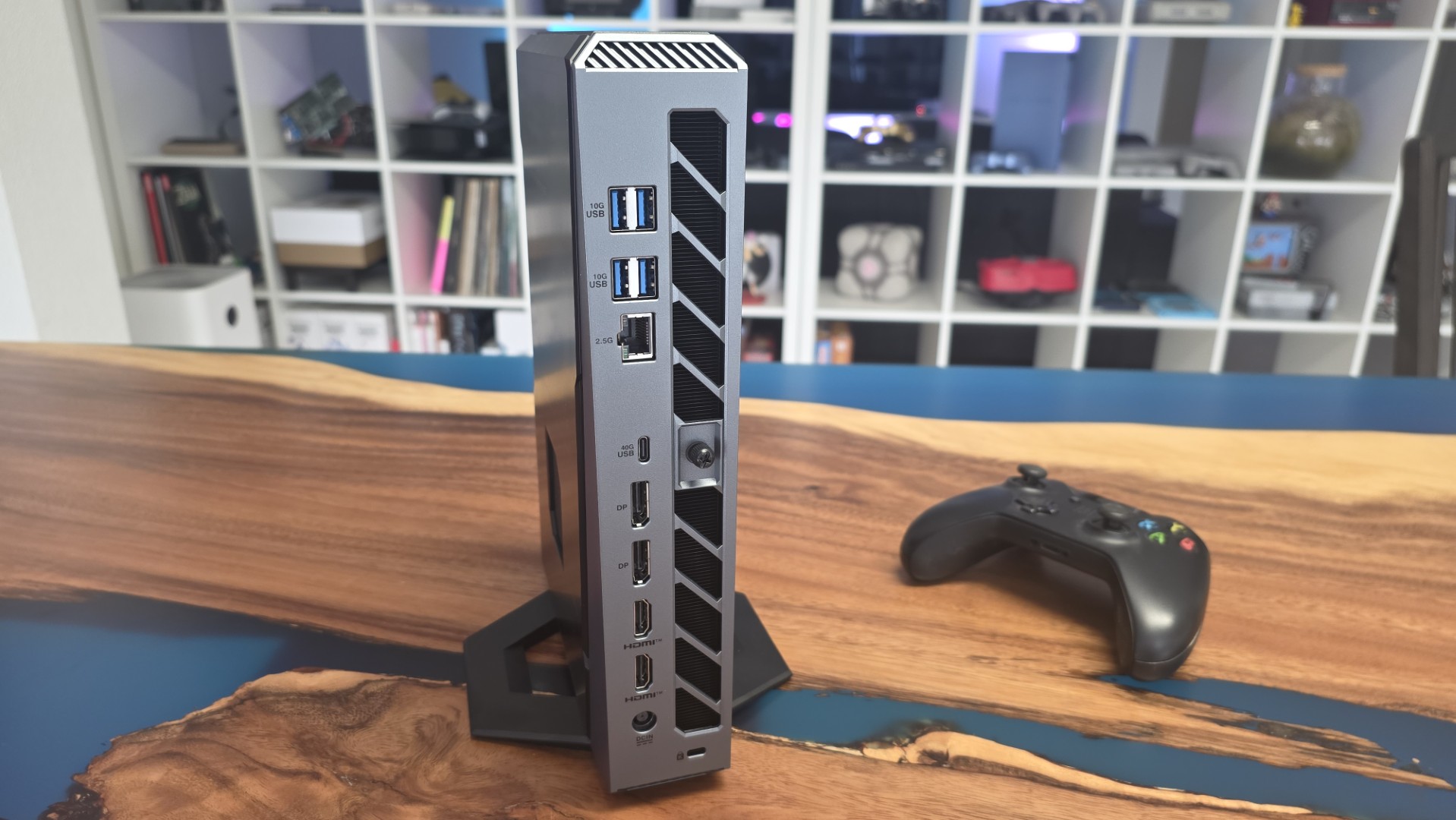
The internal ergonomics are brilliant: simply loosen a rear screw to slide the panel and reveal the RAM and SSD (a paradise for those who love quick upgrades). Cooling is handled by a three-fan Quiet Flow system, which, to be honest, does a great job, remaining surprisingly quiet during normal gaming, but is definitely noticeable when the CPU hits 100°C under extreme stress. The I/O is impressive, with a 40Gbps USB 4.0 Type-C port and four dedicated video outputs (two HDMI 2.1 and two DisplayPort 2.1) for a total of five monitors that can be driven simultaneously (if you really want to go all out).
In-game and synthetic tests
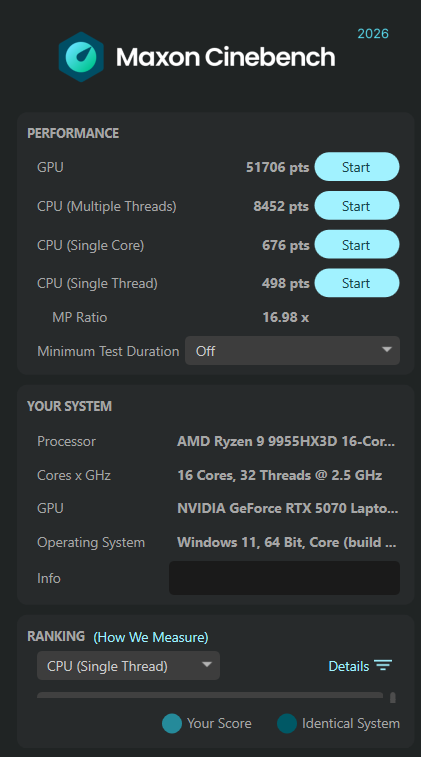
The data collected during our test sessions leave no room for interpretation: we are faced with a monster of power. Cinebench 2026 The Ryzen 9 9955HX3D scored 8,452 points in multi-threaded, 676 in single-core and 498 in single-threaded, with an impressive MP Ratio of 16.98x.
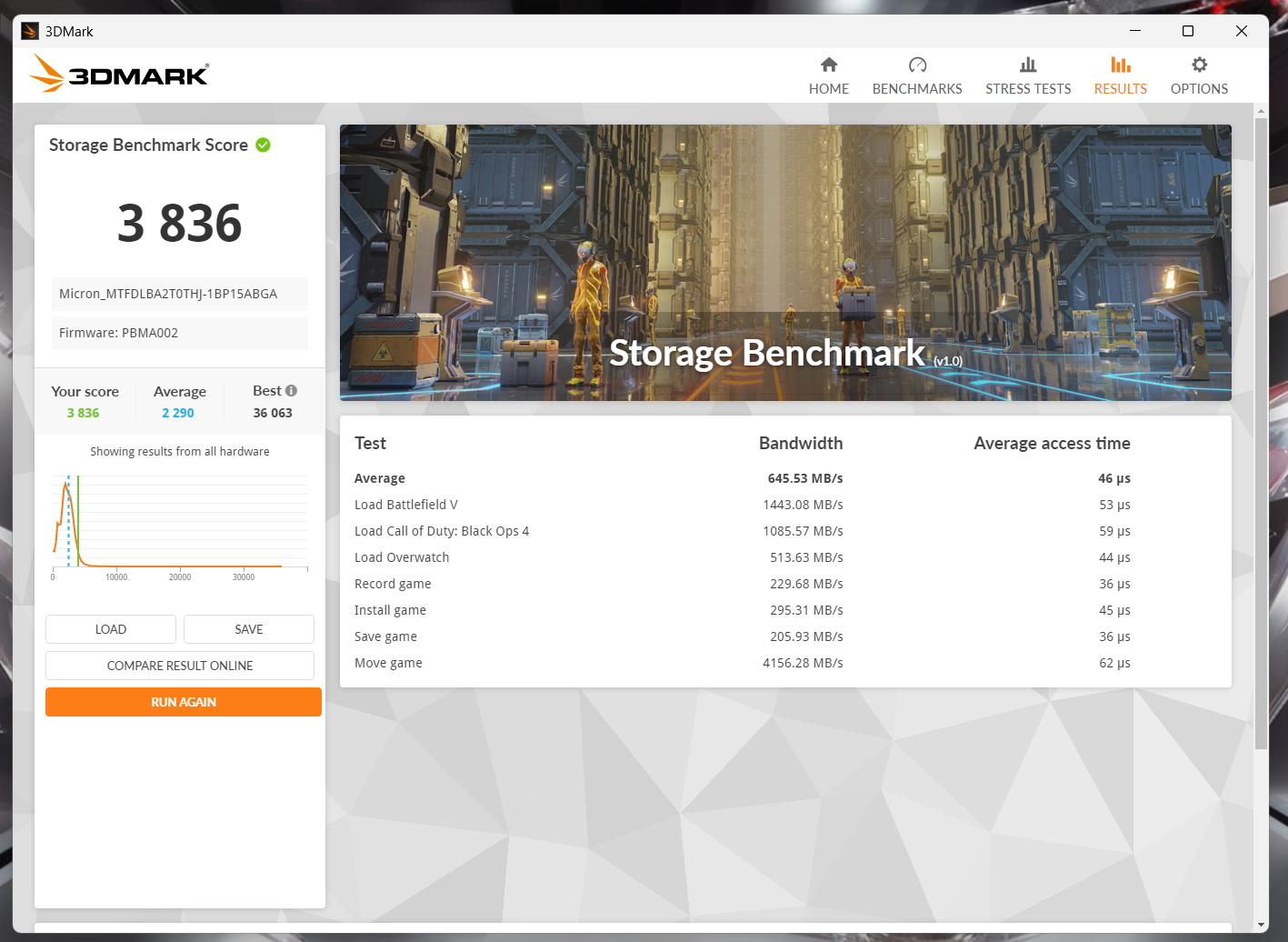
The test 3DMark CPU Profile confirmed the scalability of Zen 5 with 16,468 points at maximum threads, 15,440 at 16 threads, 8,926 at 8 threads, 4,827 at 4 threads, 2,482 at 2 threads and 1,252 in the single-thread test. The PCIe 5.0 SSD achieved a score of 3,836 in the 3DMark Storage Benchmark with lightning-fast loading, recording an average bandwidth of 645.53 MB/s.
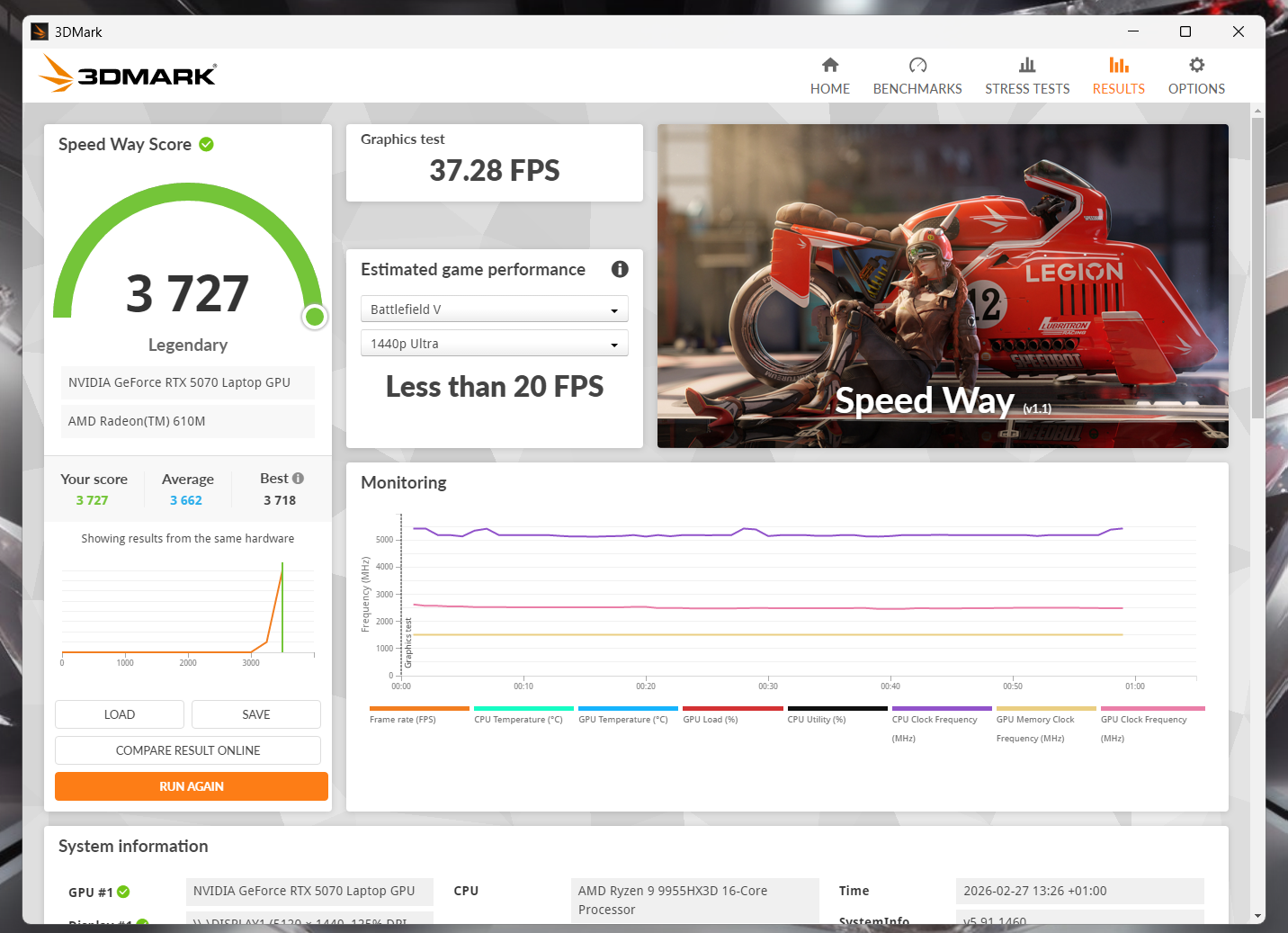
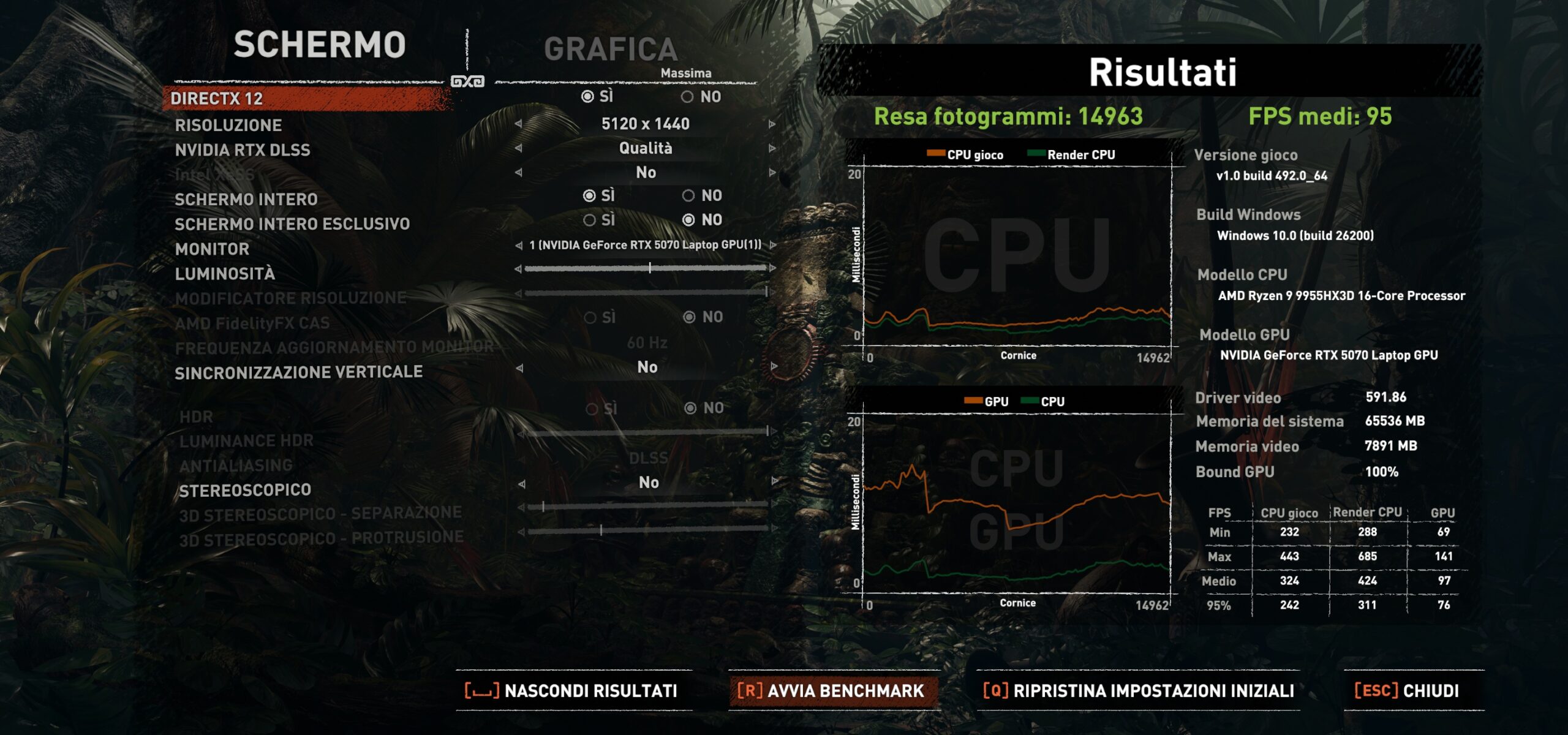
As for the graphics department, 3DMark Speed Way scored 3,727 points (37.28 FPS) while Steel Nomad reached 3,197 points (31.97 FPS). In game, Shadow of the Tomb Raider At the ultra-wide resolution of 5120×1440 it achieved an average of 95 FPS.
The benchmark NextVisuals (1080p DLSS) scored 5,141 points with an average of 36 FPS. Finally, PCMark 10 returned an overall score of 10,952, excelling in productivity with 18,635 points and digital content creation with 17,492. Doom Eternal, the machine flies at 170 FPS in Ultra Nightmare, although the 8GB VRAM prevents the use of Ray Tracing.
Conclusion
The ASUS ROG GR70 is the definitive answer for those looking for a living room PC without the performance compromises of home consoles. It's a ridiculous powerhouse packed into a compact design that, despite using laptop-derived components, manages to deliver high-end desktop performance thanks to thermal optimization and 3D V-Cache technology. Wi-Fi 7 connectivity is top-notch, and internal accessibility for maintenance is a plus that makes it a long-lasting investment.
However, you have to deal with a high price, a bulky 330W power supply, and CPU temperatures that can reach 100°C under maximum load (though this is unlikely to happen in gaming). It remains an incredible machine for TV gaming and an excellent candidate as an elite home server or professional content creation station.
