
The gaming & tech site for Ticino and Italian-speaking Switzerland
The gaming & tech site for Ticino and Italian-speaking Switzerland
Mario Tennis Fever

5.25
✓ What we like
- 🟢 Layered gameplay and even more solid than the previous one
- 🟢 Tons of content to unlock
- 🟢 Graphically it is very well made
- 🟢 Update for both single-player and multiplayer modes...
What we don't like
- 🔴 ...but the adventure mode isn't on the same level as its predecessors
- 🔴 we could have "dared" more with the comments of the Talking Flowers
Mario Tennis It was born on the Nintendo 64 and has always been a brand that has accompanied the arrival of a new console. Developed by the small Camelot team, the creators of the JRPG Golden Sun on Gameboy Advance, Mario Tennis could not be missing also for Nintendo Switch 2, which takes the same graphics as the previous one (Aces), raising it to new quality standards for a Nintendo console, thanks to the power of the new hybrid console. The return of a story mode is certainly interesting, in addition to the gameplay innovations regarding the frenzy rackets, the addition of SPs and the revised ball size, as well as a roster of 38 playable characters. Will this new installment succeed in bringing the Mushroom Kingdom-themed tennis sports brand back into fashion?
“I can't contain myself anymore because of the emotion”
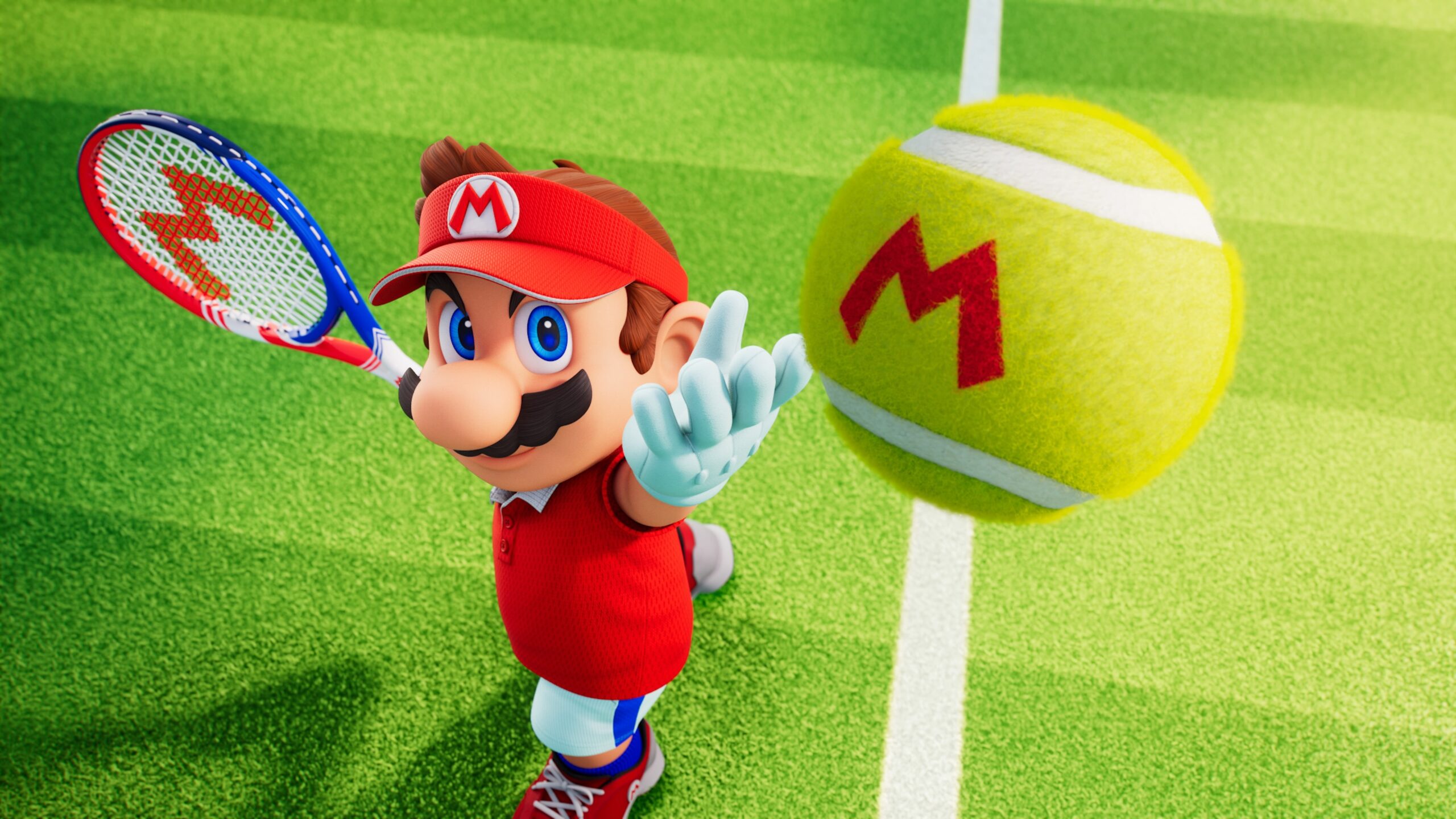
Mario Tennis has always stood out for its arcade but relatively core gameplay, especially when it comes to the feeling as soon as the character's racket touches the ball. With Mario Tennis Fever We feel we can say that, from the first minutes of the game, this chapter is no exception.. Rather, Camelot rises to the concept of precise arcade by introducing a heterogeneous button combo for every occasion, and it's up to the player to land, for example, a topspin or a flat shot depending on the opponents' position on the court. In fact, each front button corresponds to a specific effect: topspin for high and fast bounces (characterized by a red trail), backspin (characterized by a blue trail), slice for low and sliced trajectories, and flat for pure power. The combination of these effects, along with the ability to execute lobs and drop shots, creates a sort of tennis dance that requires constant concentration to maintain.
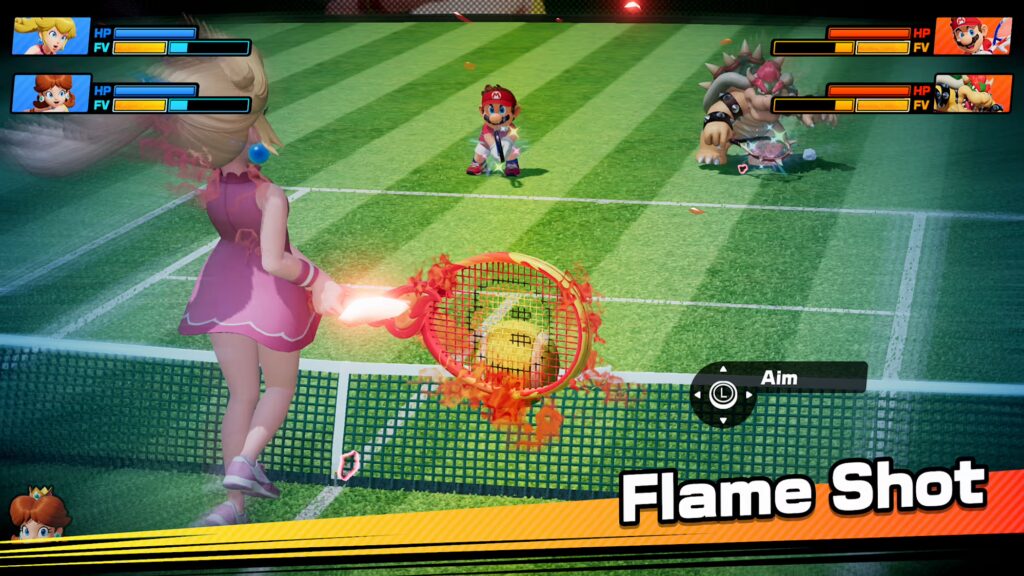
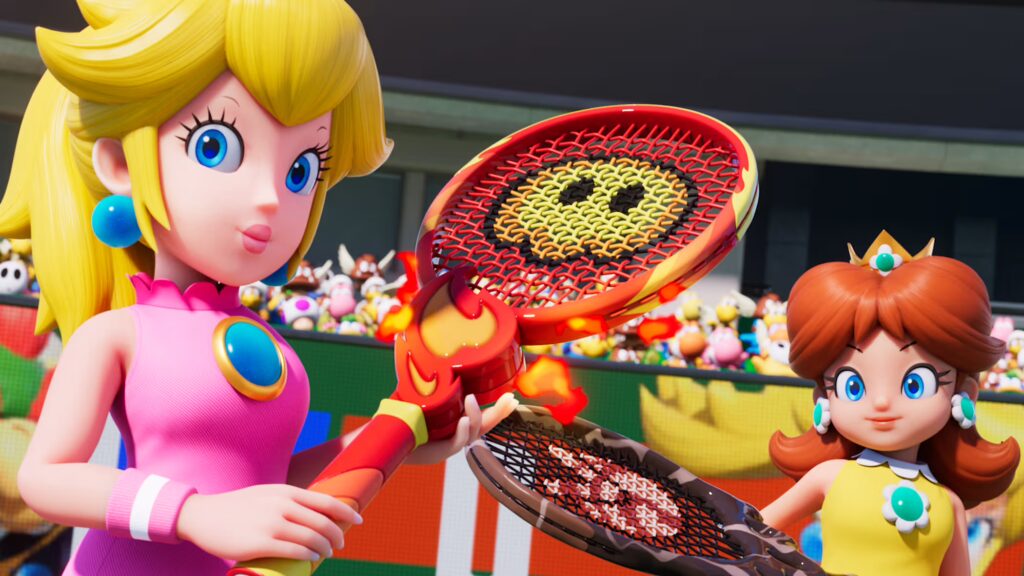
The precision just mentioned emerges more and more in the positioning of the character and in the way of translating the play into the opponent's field. The game itself rewards anticipation. Anticipating your opponent's moves also involves knowing how to timely launch a charged shot, which increases the ball's speed, making it harder to intercept, and also charges the Fever gauge. This allows you to land Fever/Frenzy attacks, giving the ball certain spins. Therefore, it all boils down to good reflexes combined with the ability to quickly read what's happening on the court. The most distinctive innovation is certainly the Frenzy Rackets system, which gives this chapter its name, Fever. There are 30 different rackets, each with an ability that can be activated once the appropriate meter is filled.. These aren't just cosmetic upgrades, but variables that can rewrite the rules of the game:
- Fire Racket: Transforms the court into an inferno. Where the ball bounces, burning embers remain, stunning your opponent if stepped on.
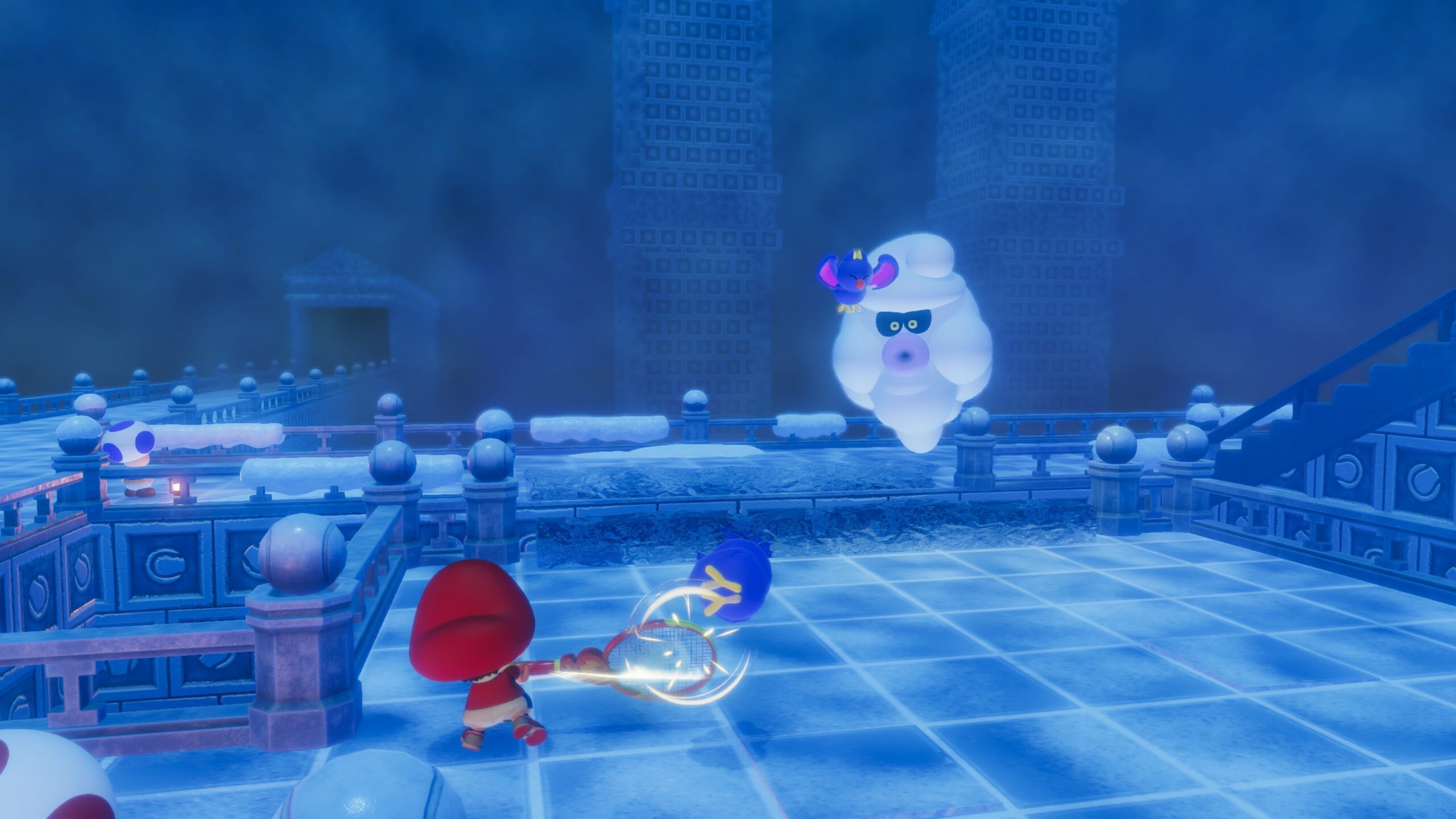
- Ice Racket: Freezes portions of the court, making the opponent's movements awkward and slippery.
- Snappy racket: Allows for prodigious shots, ideal for those who love an impenetrable defense.
- Shadow Racket: Perhaps the most insidious, it summons a dark double that helps cover the court, forcing the opponent to manage unpredictable trajectories.
- Metal Racket: Transforms the player into metal, granting invulnerability and increased attack power.
Each racket has its own countermeasure, and the game encourages experimentation, especially in doubles, where combining different rackets opens up new strategic possibilities. However, the balance and powers of some rackets tend to be more "broken" than others. There are, however, plenty of ways to counter a frenzy attack: as long as the ball doesn't touch the ground, the powers won't activate. In other words, you can always hit the ball back at the sender while under the frenzy effect, leading to quick rallies.
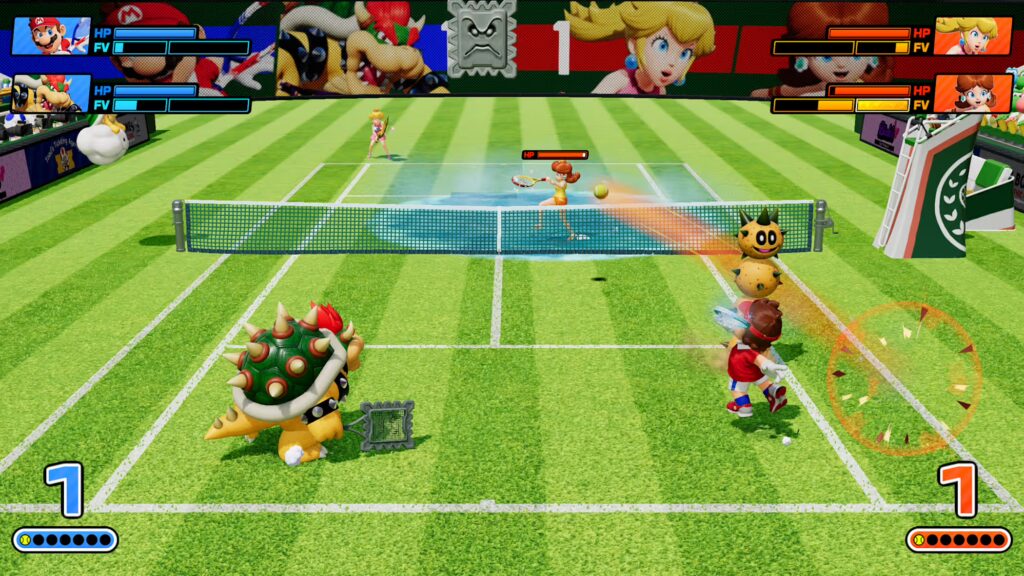
The roster of 38 characters is certainly one of the largest ever, in an operation that recalls that of Mario Kart World. In addition to the usual suspects, there are several outsiders like Kamek, Goomba, and many others. Among them, the introduction of Baby Waluigi stands out, making his first appearance in the Mario universe, endowed with surprising speed. Each character belongs to different classes: versatile, cunning, powerful, fast, defensive, and technical. Playing as Catenaccio means dominating the court with heavy slashes, while Tartosso can curve the ball in almost impossible ways, but is fragile against charged shots. Furthermore, the introduction of a health bar (HP) for each character adds a "fighting" layer: being hit by objects or special attacks consumes HP. Emptying the bar in single-player slows the character down, while in doubles play causes a timeout of a few seconds. In addition to the characters, there are three types of courts (hard, grass, and dirt) that offer different ball bounce characteristics, the latter divided into three categories (slow, normal, and fast).
Lots of modes and inspiration from the “Wonder” universe”
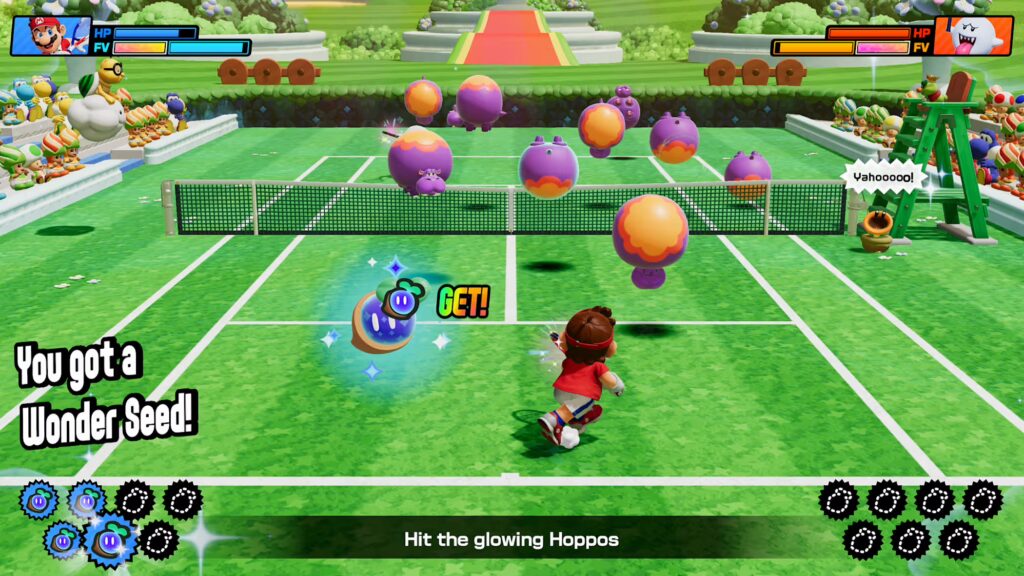
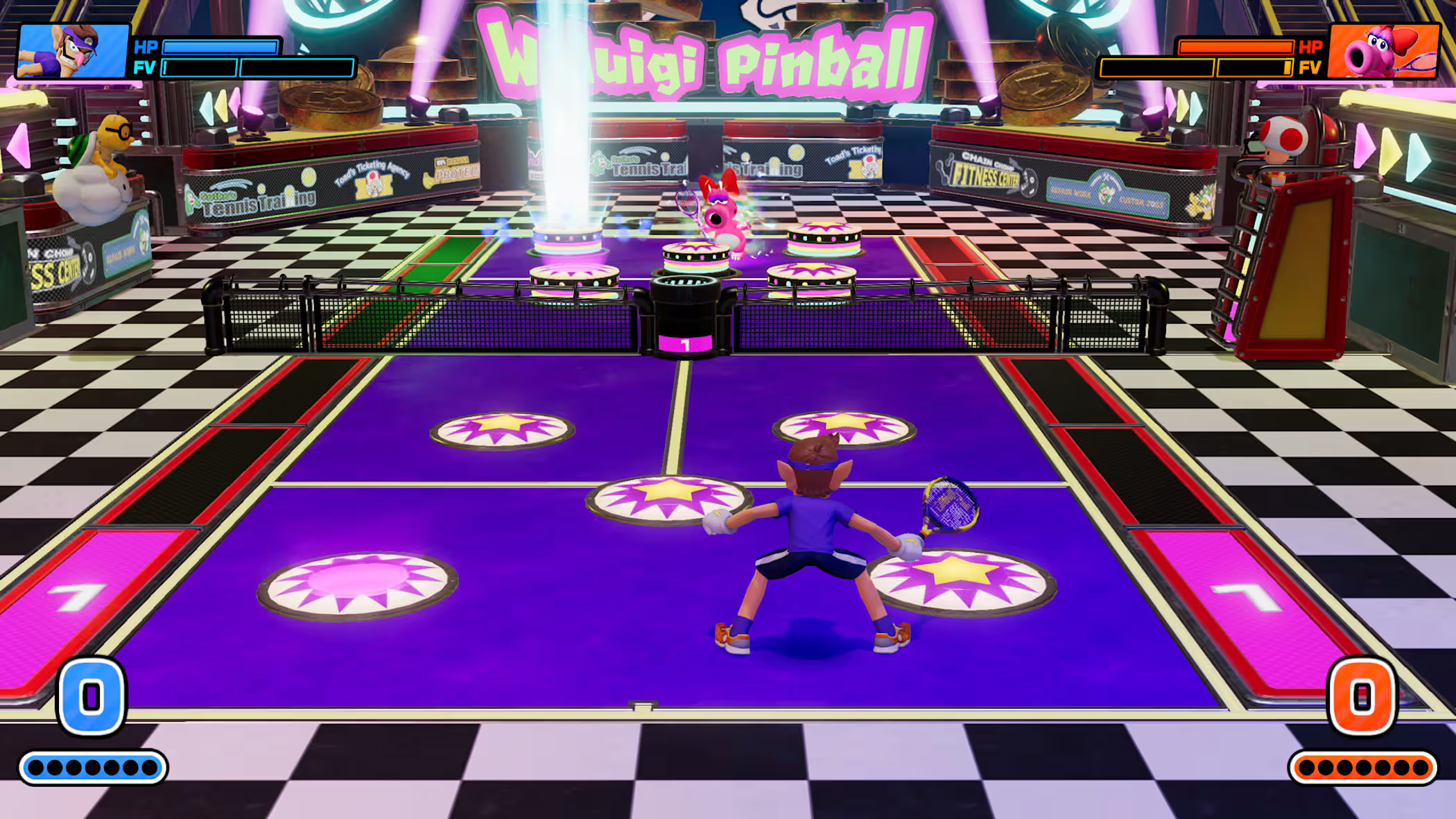
Where Mario Tennis Fever really shines is in Special Rules mode: here, the Nintendo-esque madness inspired by Super Mario Bros. Wonder explodes. Piranha Plants change the size of the court in real time, and there's a giant Waluigi-inspired pinball machine where bumpers and multiple balls turn tennis into pure chaos. There's also a Flower Kingdom-inspired court that introduces the Wonder Flower: activating it can transform the match into a giant Hoppo nightmare or a musical interlude. There's also a commentator during the match: none other than the Talking Flower, who can no longer contain his petals from excitement. This charming character can, however, be activated or deactivated at the user's discretion in the settings.
Convincing multiplayer, a little less so in single player…
Mario Tennis Fever offers several offline modes with split-screen and online. The online mode, which certainly seems more accessible than the previous installment, will determine the title's long-term success. For those who enjoy single-player, there's also the Tournament mode against the CPU and the Challenge Tower, which offer plenty of missions and post-game challenges.
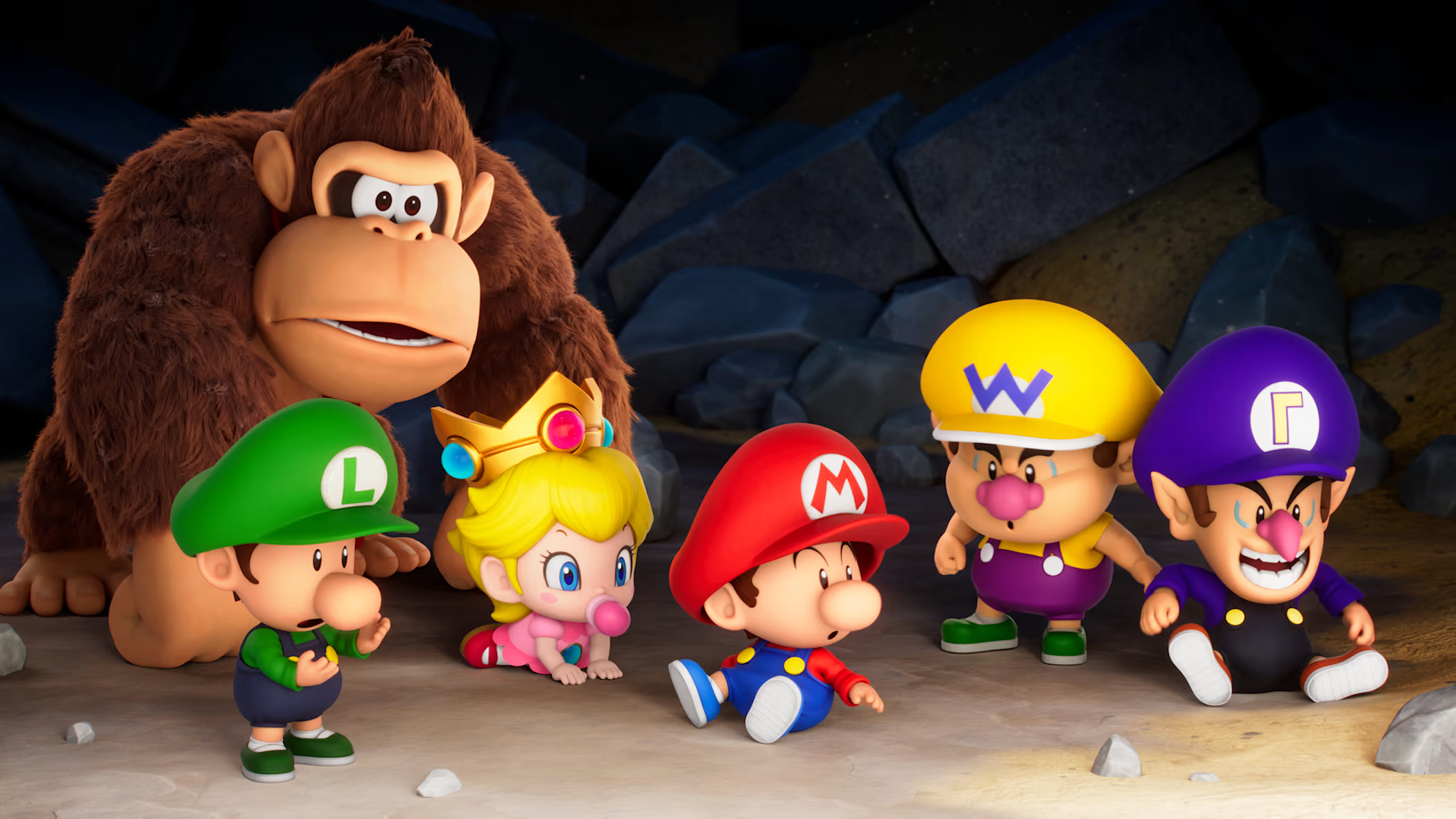
Adventure mode, however, was the one we found least convincing, despite its peculiar narrative opening: the protagonists are transformed into babies while attempting to cure Princess Daisy with a miracle apple. Consequently, Baby Mario and his friends are called upon to train at the tennis academy to regain their lost strength. In addition to the extremely linear structure, the connection between the plot and the minigames is somewhat strained. With a running time of just three hours, the minigames feel like nothing more than stretched-out tutorials. The RPG-style progression system feels like a mere pretext, as it's extremely guided and "calculated," leaving you with no sense of being able to invest in the parameters at your own discretion. Unfortunately, the concept remains far from the tennis RPG seen in the Game Boy Advance installment..
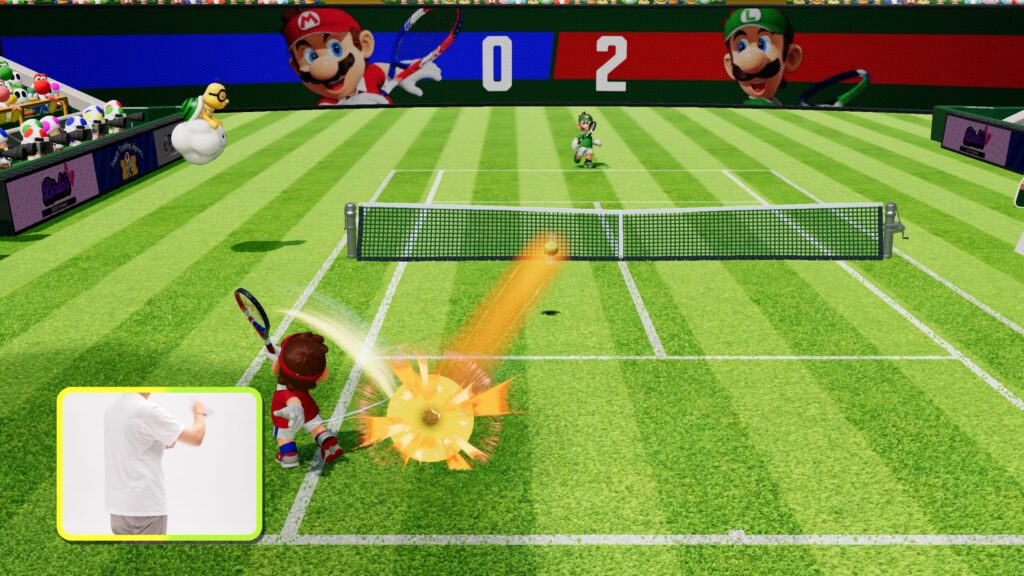
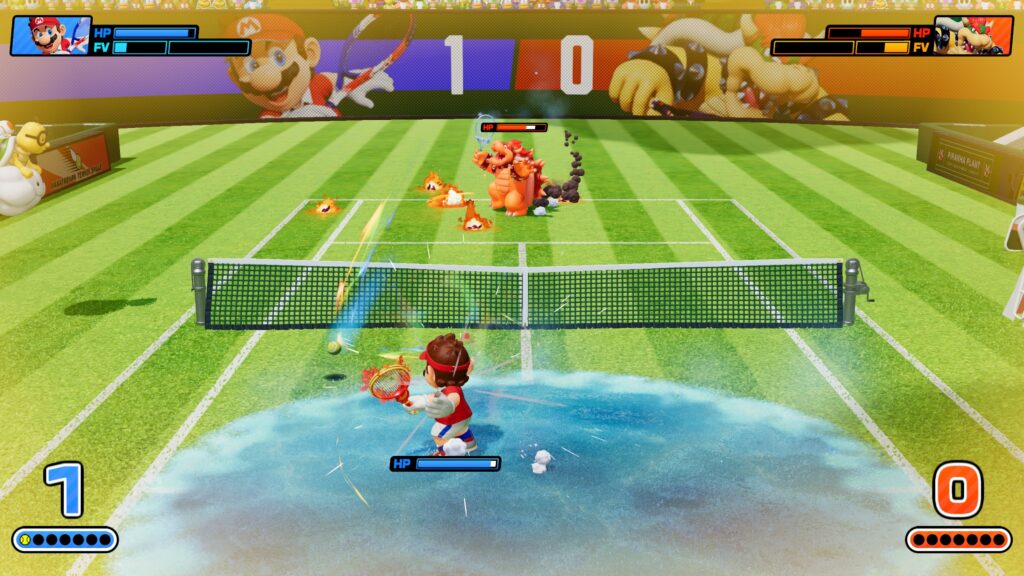
Graphically, the game is a riot of color and detail. The power offered by the Nintendo Switch 2 It allows for particle effects and transparencies on a whole new level compared to its predecessor. The framerate is virtually stable at 60 fps in both docked and portable mode. The graphics are accompanied by a truly impressive soundtrack, composed by the unmistakable Motoi Sakuraba, whose melodies—especially during battle—recall the style of Golden Sun.
Mario Tennis Fever isn't just an excellent tennis game; it brings a quality sports experience to Nintendo's new console. The solid gameplay, the addition of frenetic rackets, and the enormous amount of content make it accessible to all types of players. Camelot's work is monumental, and the experience is rewarding, enhanced by a soundtrack reminiscent of JRPGs of the past, especially Golden Sun, also from the creators of this game. It's just a shame that the story mode turns out to be a drawn-out tutorial rather than a true RPG adventure.
