The gaming & tech site for Ticino and Italian-speaking Switzerland
The gaming & tech site for Ticino and Italian-speaking Switzerland
ASUS ROG Swift OLED PG27AQWP-W

✓ What we like
- 🟢 Tandem WOLED Panel: Record-breaking HDR brightness and longer lifespan
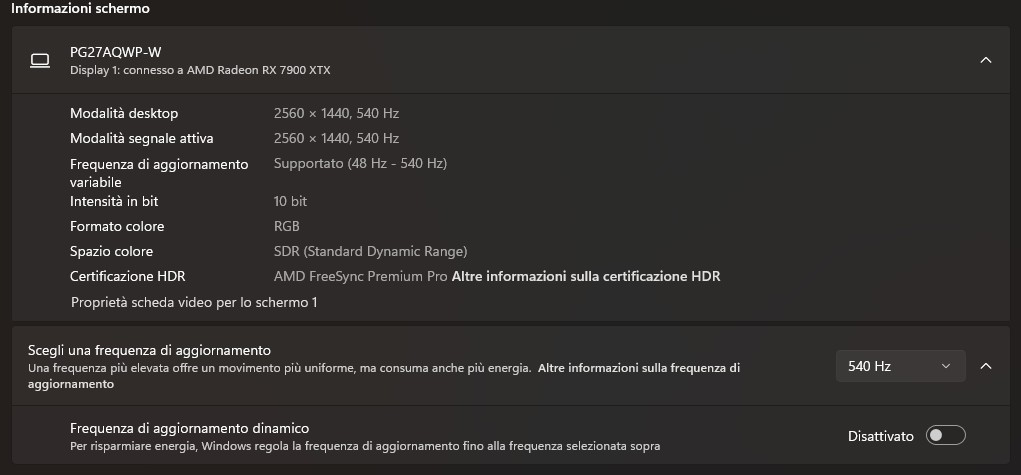
- 🟢 Native 540Hz refresh rate with unrivaled motion clarity
- 🟢 Futuristic design with transparent back and excellent accessories
- 🟢 Glossy TrueBlack finish that maintains perfect blacks even in ambient light
What we don't like
- 🔴 Complete absence of USB-C and KVM switch
- 🔴 Dual-Mode at 720Hz imposes excessive visual degradation (720p) for most
- 🔴 Highly visible direct reflections due to the glossy panel
The hertz war shows no signs of abating, and ASUS has decided to drop a nuclear bomb on the gaming monitor market. With the ROG Swift OLED PG27AQWP-W, the Taiwanese company isn't just pushing refresh rates to levels that until recently seemed like science fiction, but is also introducing a new panel technology that promises to address OLED's historical weaknesses: brightness and longevity.

We're talking about the world's first monitor capable of hitting 540Hz at 1440p resolution and even reaching 720Hz in Dual-Mode mode. It's an elite, expensive, and technically impressive product, designed for that niche of hardcore gamers who measure life in milliseconds.
Transparent!
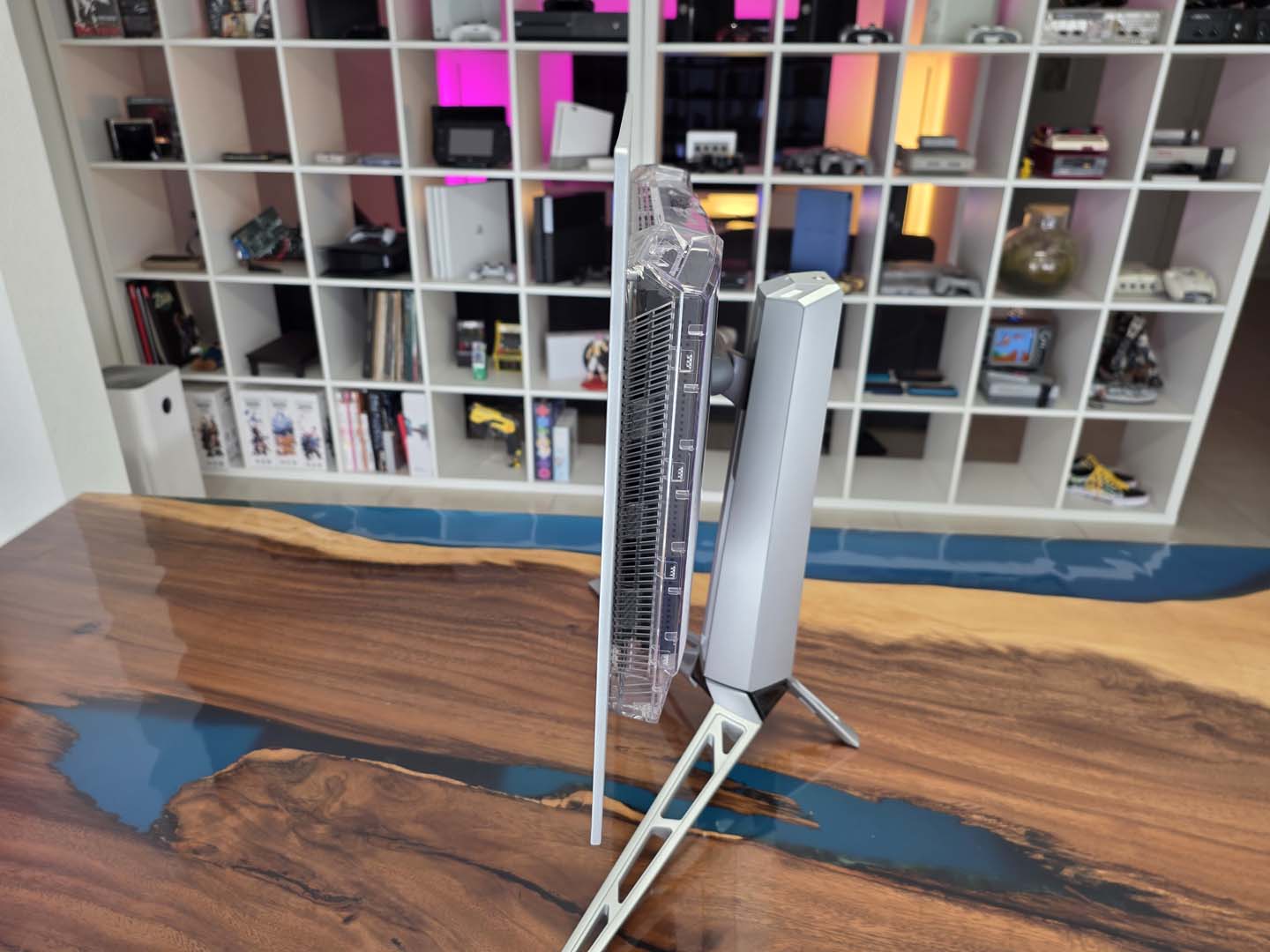
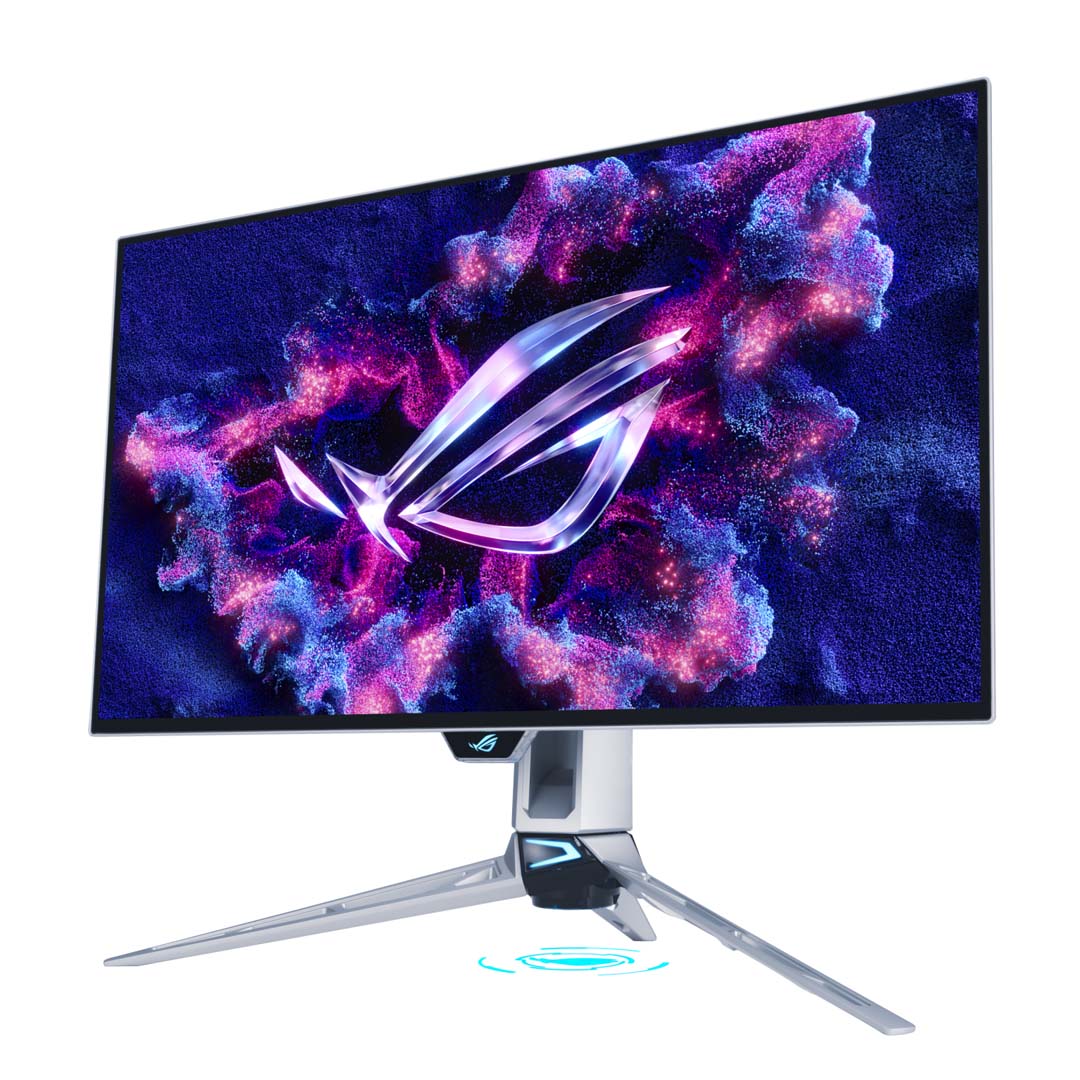
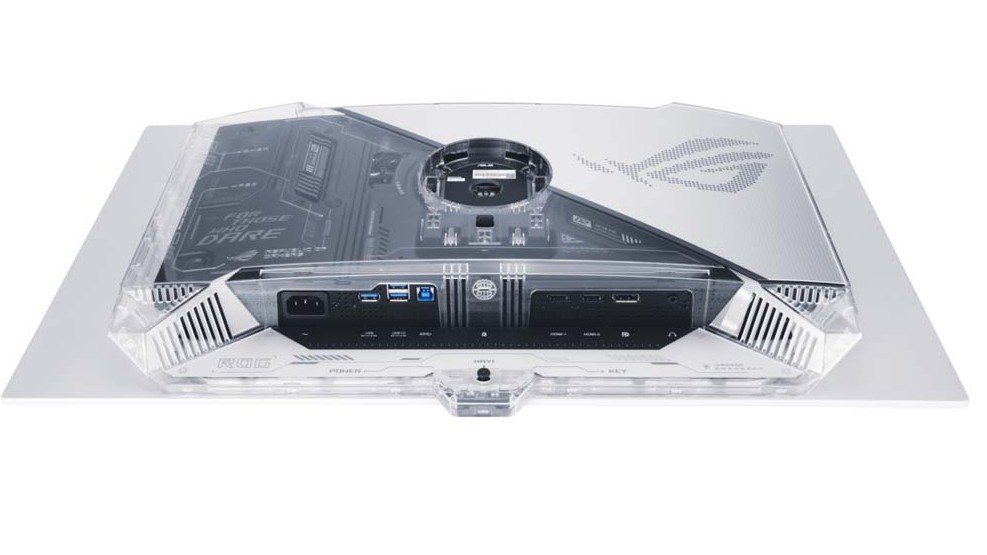
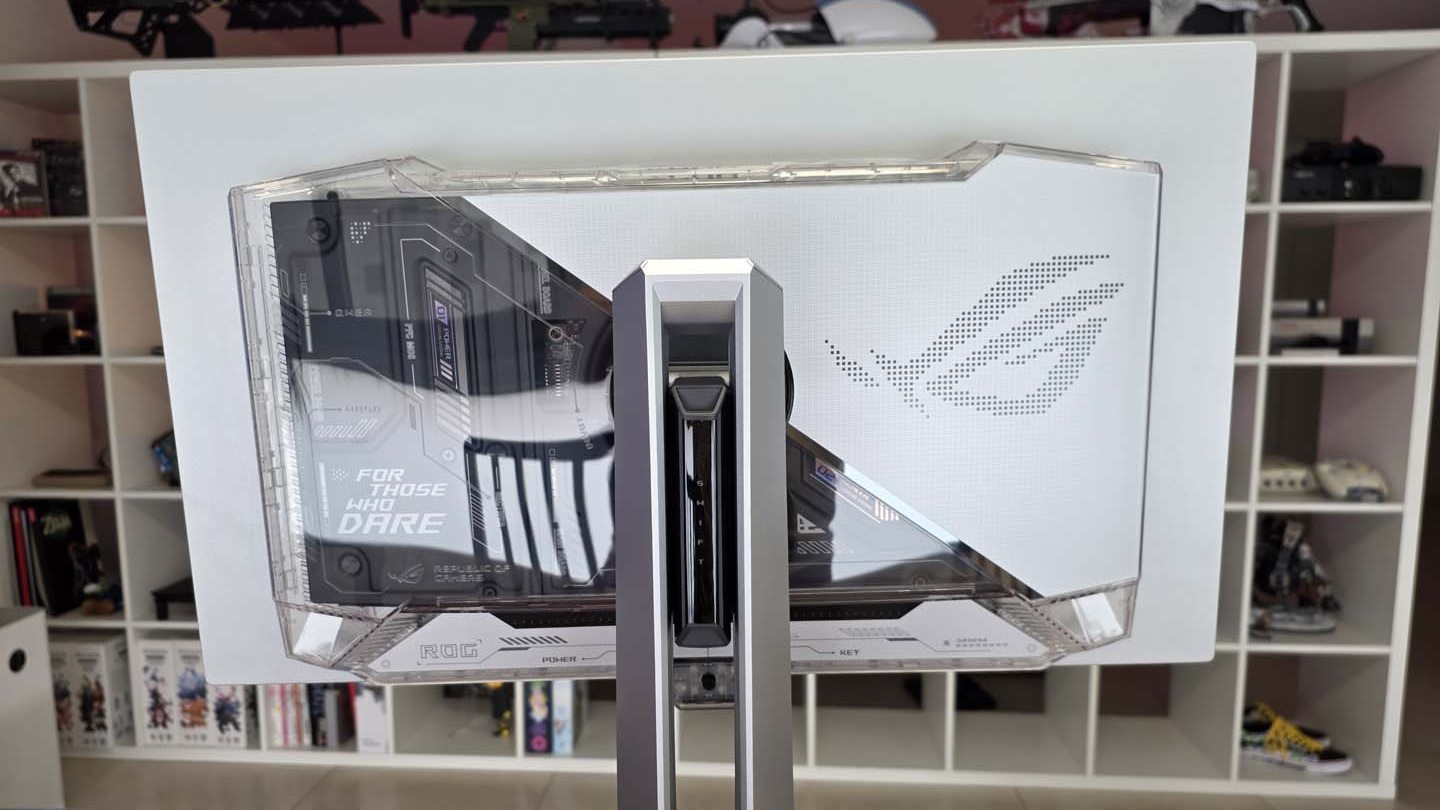
The first impression of the PG27AQWP-W is disorientating for those accustomed to the classic GAMER visual language of black plastic and red accents. ASUS has opted for a much more refined and futuristic aesthetic, dominated by a metallic silver and white finish. The build quality is impeccable, and there's an obsessive attention to detail, such as the presence of a semi-transparent back panel. This stylistic choice allows glimpses of the internal components and the PCB with a tech-naked effect reminiscent of premium electronics from the late '90s (like the Game Boy, in short), giving the monitor a unique character even when turned off.
The stand is a metal tripod with a hollowed-out structure to reduce weight while maintaining stability. It features a screw mount on the top for attaching a webcam or ring light, a touch we really appreciated. Thermal management has been completely revamped: thanks to a custom heatsink and intelligent airflow management, the monitor is fanless, eliminating the risk of annoying humming noises during late-night sessions. ASUS hasn't skimped on the equipment: the box contains high-quality cables (Ultra High Speed HDMI and DP 80Gbps) and everything you need for assembly.
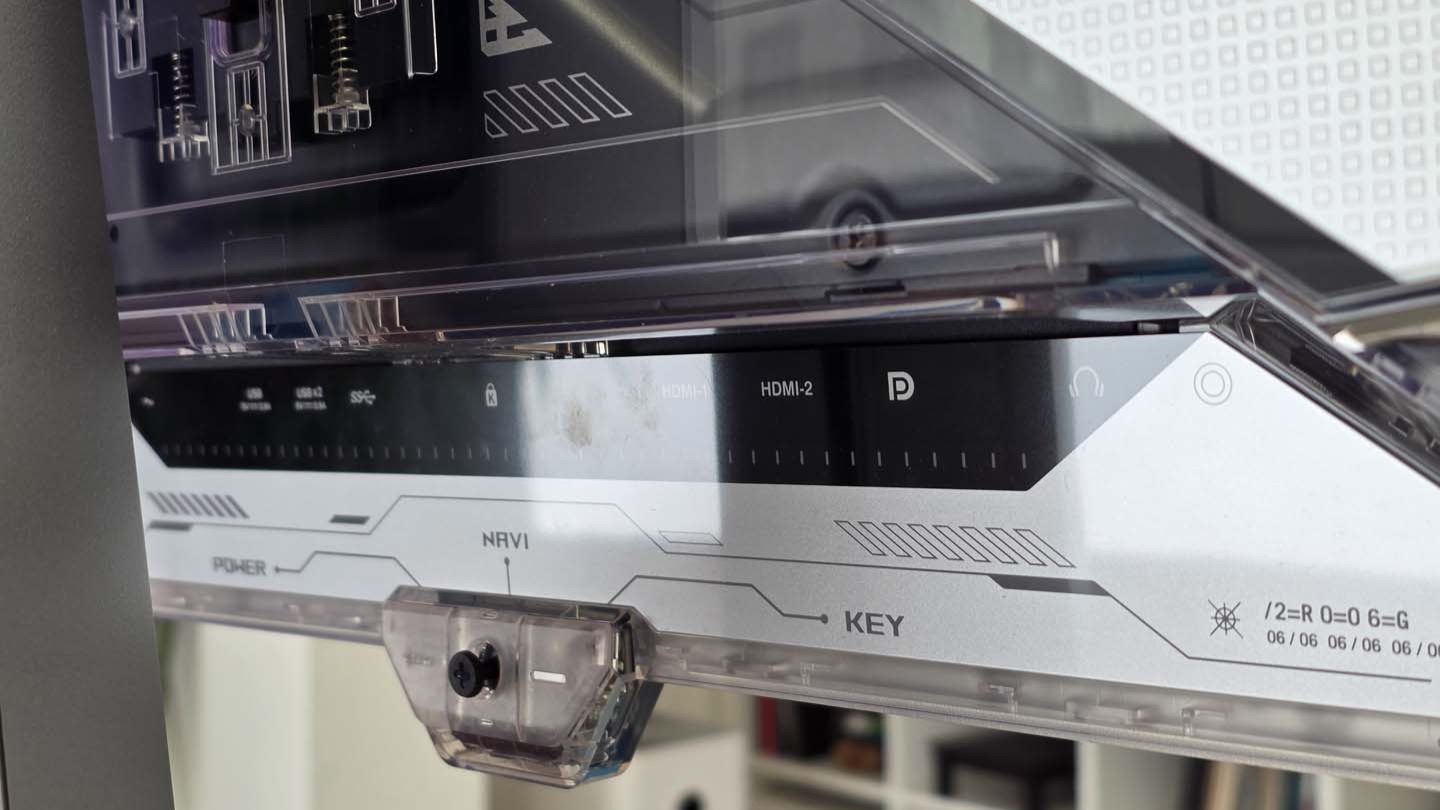
However, looking at the connections panel, the lack of a USB-C port with Power Delivery and, above all, the lack of a KVM switch are a notable shortcoming for a product in this price range, which slightly limits its versatility for those who alternate gaming and remote working. Instead, we find a DisplayPort 2.1 (UHBR20), two HDMI 2.1 ports, and a USB-A hub.
Tandem OLED and sub-pixel
The real revolution is invisible to the naked eye but crucial to performance. The panel used is a 4th-generation “Tandem” WOLED. This technology stacks two layers of emissive organic material on top of each other. The result is twofold: on the one hand, it achieves much higher peak brightness than traditional WOLEDs, on the other, it reduces stress on individual pixels for the same amount of light emitted, promising longer life and a drastically reduced risk of burn-in. Furthermore, ASUS has solved one of the historical problems of WOLED panels: text sharpness. Thanks to a new subpixel layout in RGWB order (instead of the usual RWBG) and the Clear Pixel Edge algorithm, reading documents and web pages is much sharper and free of the annoying color fringing effect that plagued previous models.
Glossy brightness
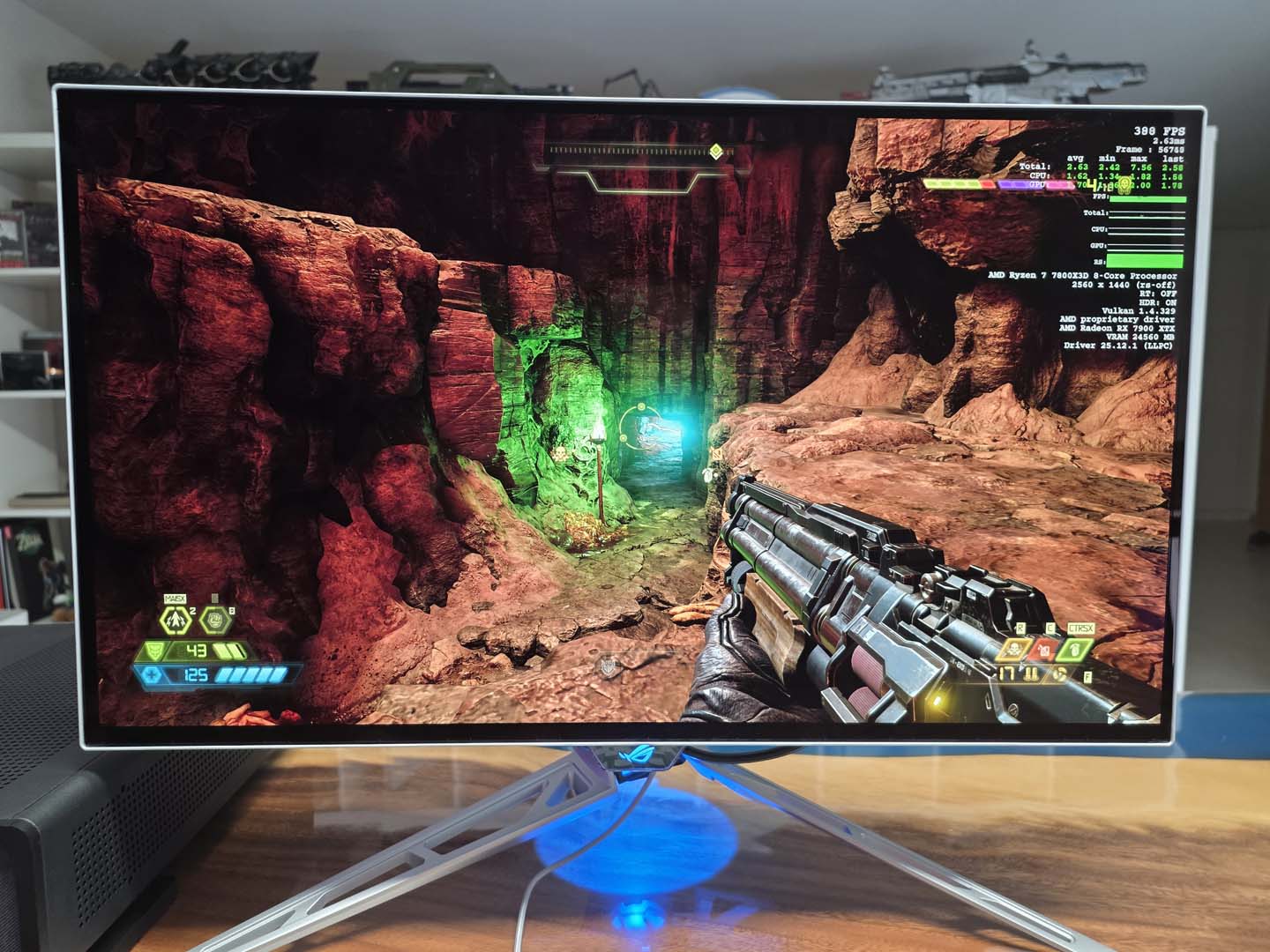
When you turn on the monitor, the first thing you notice is the panel finish. ASUS has adopted a TrueBlack Glossy coating with 0% haze. Unlike matte coatings that “smear” light, or QD-OLED panels that tend to raise the black level, making it appear gray in bright rooms, this finish maintains an inky, perfect black in any lighting condition, delivering truly impressive perceived contrast. The downside is that the panel behaves like a dark mirror: direct light sources are reflected sharply, so positioning in the room must be carefully considered.
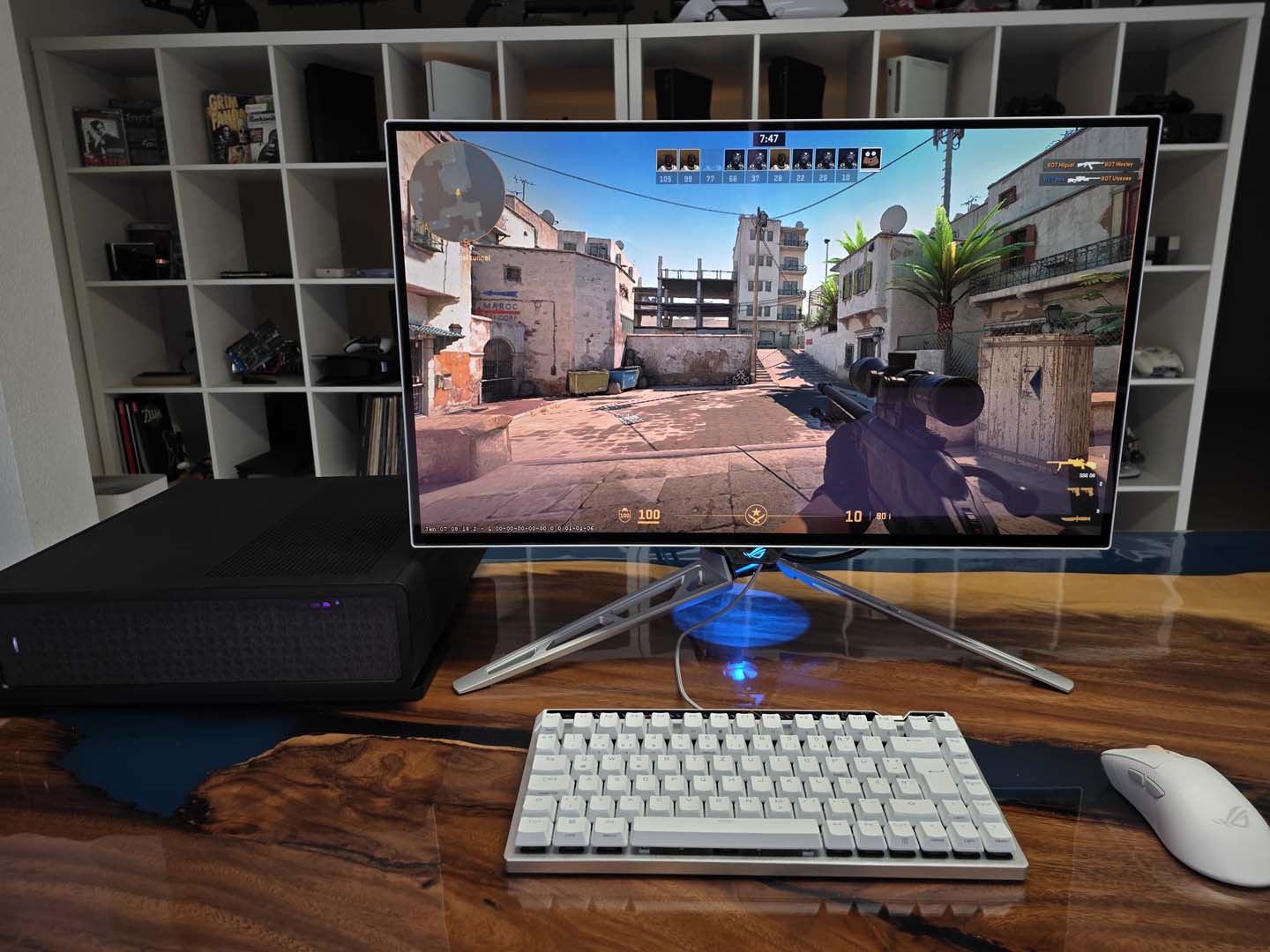
Brightness is class-leading: in SDR, the monitor sustains around 330 nits at full screen without the aggressive intervention of the Brightness Limiter (ABL), while in HDR we measured actual peaks between 1200 and 1300 nits on small windows, making highlights and particle effects incredibly vivid. Color coverage is complete, reaching 99-100% of the DCI-P3 space, with a factory calibration that offers an average Delta E of less than 2, ensuring color fidelity even for content creation work.
540Hz or 720Hz? The dual-mode dilemma
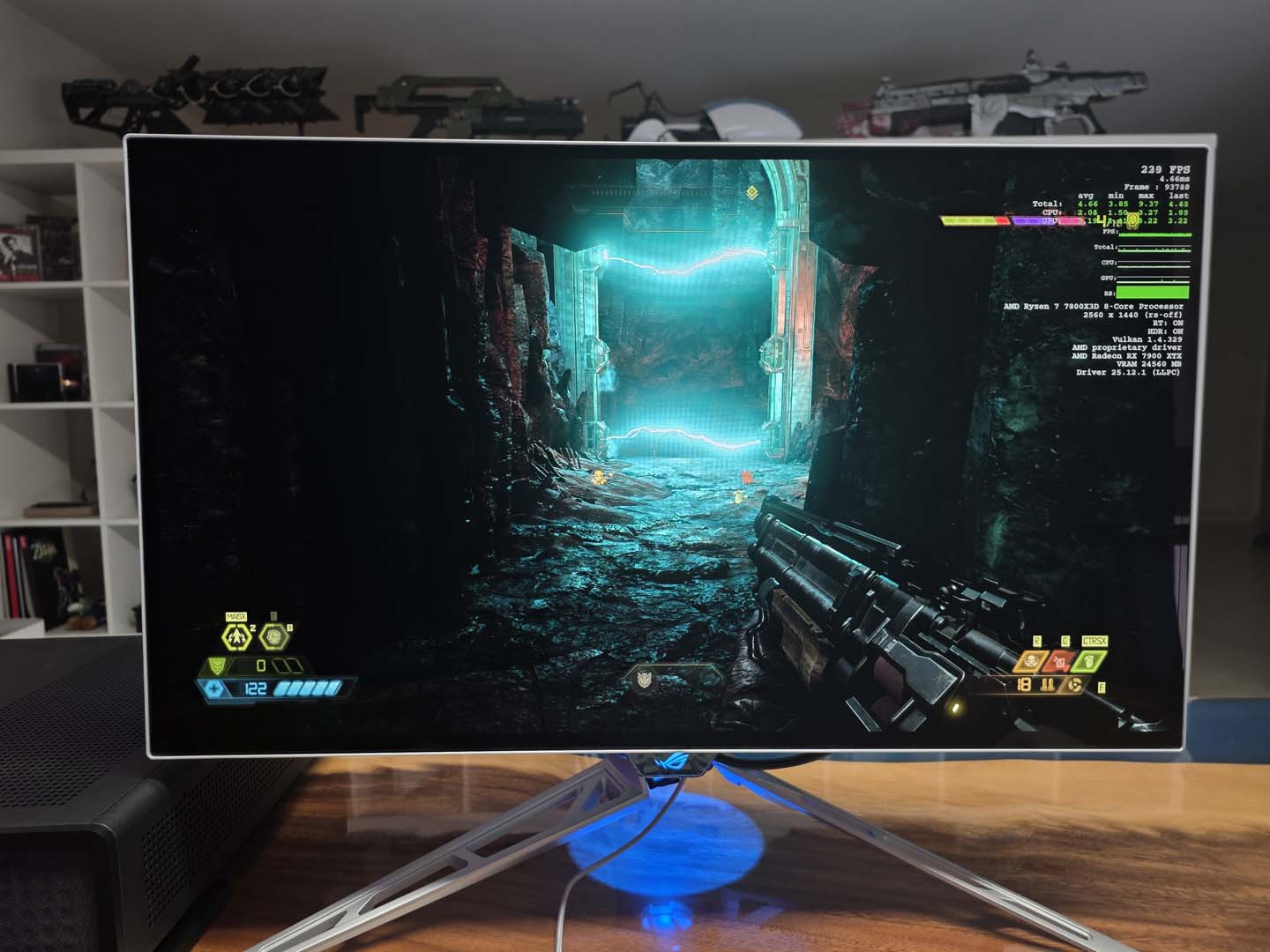
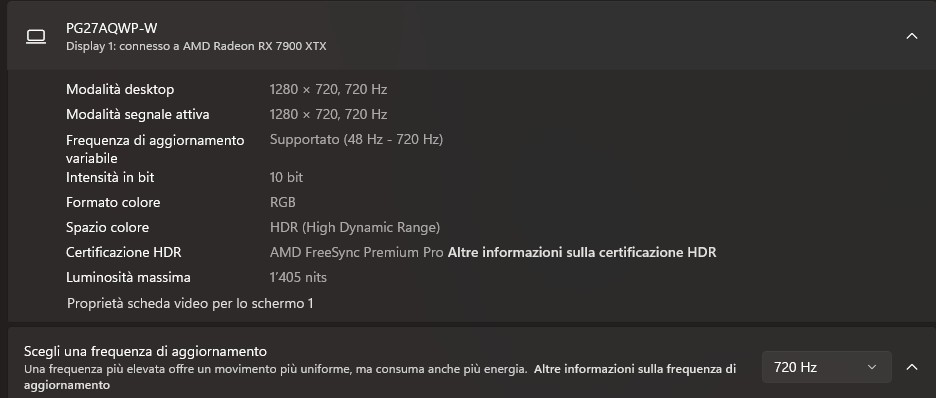
In gaming, the PG27AQWP-W is a beast. At a native 540Hz refresh rate at 1440p resolution, the fluidity is undeniable and the motion clarity is simply the best available on the market today, with pixel response times that are nearly instantaneous (0.02ms GtG) and a ridiculous overall input lag of around 2.29ms. For speed freaks, ASUS has implemented Dual-Mode. Activated via a dedicated button or the OSD, this feature “crops” the image to a resolution of 1280×720 (720p) but pushes the refresh rate up to 720Hz.
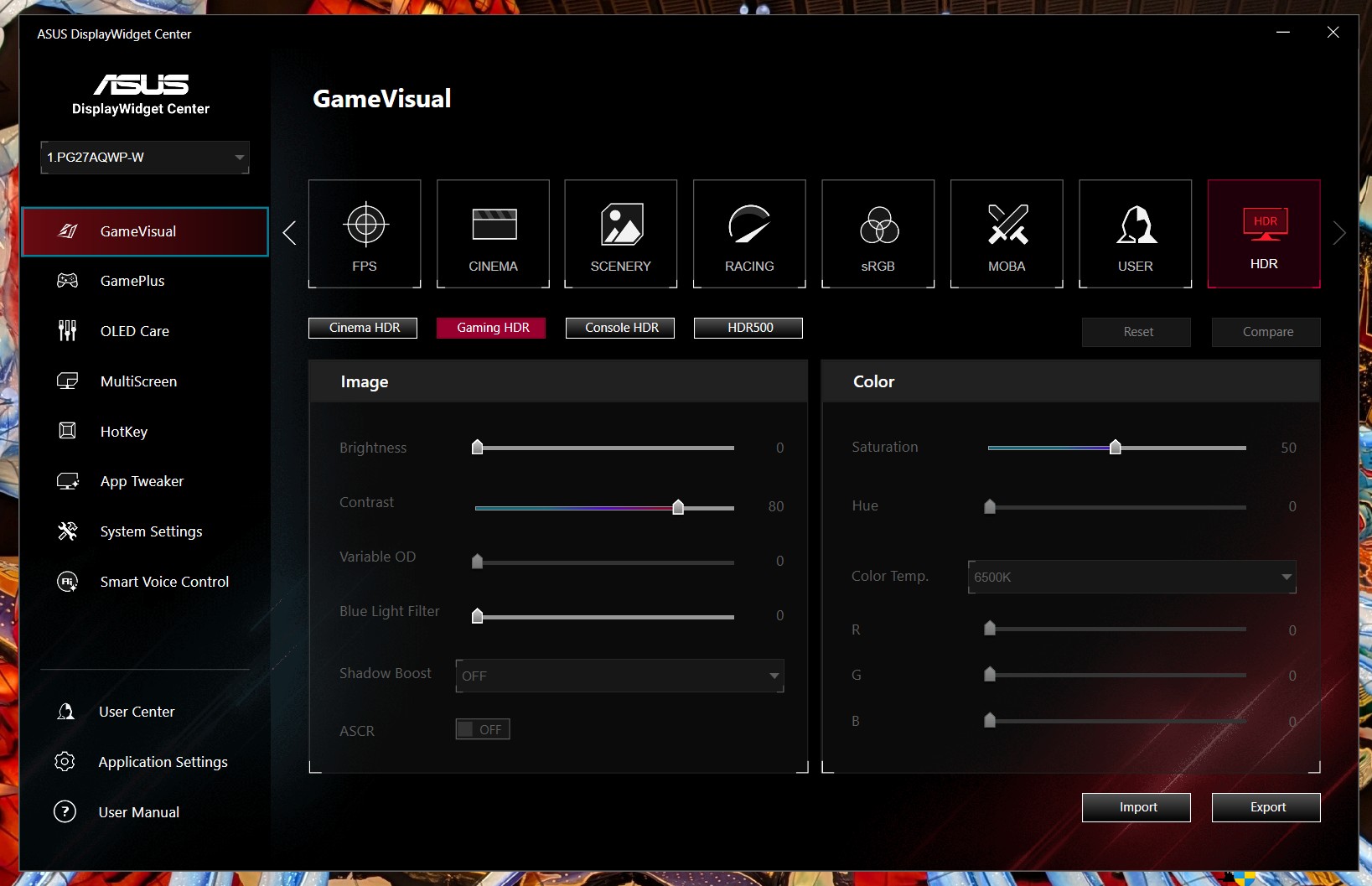
Let's be brutally honest: displaying 720p on a 27-inch display results in massive visual degradation, resulting in a grainy image lacking fine detail. While smoothness increases further, the competitive advantage over 540Hz is marginal and only noticeable to elite eSports athletes; for the vast majority of gamers, the resolution sacrifice isn't worth it.
Much more interesting for the general user is ELMB (Extreme Low Motion Blur) technology. This Black Frame Insertion feature operates at 270Hz (or 120Hz for consoles) and inserts black frames to clean up the moving image. The result is motion sharpness comparable to a native 540Hz but with half the GPU load, ideal for those titles where you can't generate a stable 500 frames per second. Unfortunately, ELMB can't be enabled in conjunction with VRR (G-Sync/FreeSync) and halves the brightness, but thanks to the power of the Tandem panel, the image is still bright enough for gaming.
Conclusion
The ASUS ROG Swift OLED PG27AQWP-W represents the state of the art in competitive monitors. The combination of the new Tandem WOLED panel, glossy finish, and advanced electronics creates an unprecedented visual and gaming experience. The price is undoubtedly elitist: we're talking about around 1000 CHF, a figure that puts it above many competitors. However, for those looking for the ultimate 1440p monitor, capable of combining the brightest OLED image quality ever with tournament-level responsiveness, there is no better option. It's a shame that it lacks business features like KVM and USB-C, but ASUS has clearly decided to sacrifice versatility for pure performance.